What Did the Prophet (PBUH) Say About Yemen?
 Collected Image
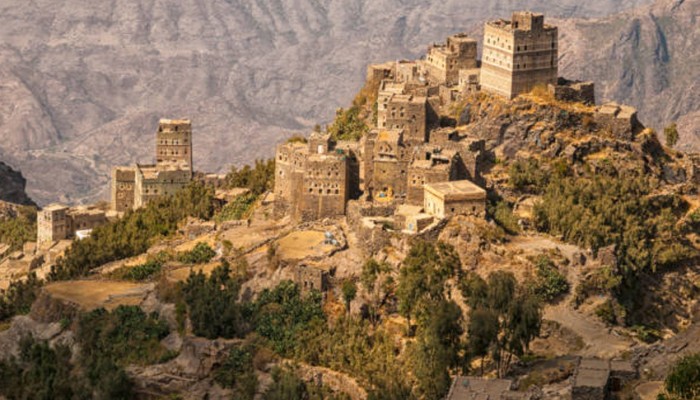
Located in the southwestern part of the Arabian Peninsula, Yemen holds a special place in Islamic history alongside its natural beauty and ancient heritage. Prophet Muhammad (PBUH) praised the faith, soft hearts, wisdom, and trustworthiness of the people of Yemen. He also prayed for blessings upon them. Furthermore, various Hadiths highlight the Prophet's special favor toward Yemenis regarding drinking water from the Hawd al-Kawthar (the Pond of Abundance) on the Day of Judgment.
Many may wonder: What is the story and reason behind this special favor shown by the Prophet (PBUH) toward the people of Yemen? Let us find out directly from the words of the Prophet (PBUH). Praising the Yemenis, the Messenger of Allah (PBUH) said:
"The people of Yemen have come to you. They are like clouds [soft and merciful]. They are the best of people. Their hearts are the softest and their feelings are the most tender." (Musnad Ahmad, Hadith: 16758)
This narration reflects the beauty of the faith and character of the Yemenis. Tenderness of heart, humility, and compassion toward people are core teachings of Islam. The Prophet (PBUH) praised the people of Yemen precisely for this generosity and softness of heart.
Alongside their tender hearts, their wisdom and religious knowledge have also been highlighted in various Hadiths. Abu Hurairah (R.) narrated that the Messenger of Allah (PBUH) said:
"The people of Yemen have come to you. They possess extremely soft hearts and gentle feelings. Both jurisprudence (fiqh) and wisdom belong to the Yemenis." (Bukhari, Hadith: 4390)
This Hadith places special emphasis on the kindness, gentleness, and religious insight of the people of Yemen. Merely acquiring knowledge is not enough; embodying that knowledge in life coupled with wisdom is an important Islamic teaching. The words spoken by the Prophet in praise of Yemenis serve as an acknowledgment of these very qualities.
Expressing a special fondness for Yemen, the Messenger of Allah (PBUH) said:
"Faith belongs to Yemen, and I too belong to Yemen." (Majma' al-Zawa'id, Hadith: 16624)
The description above indicates the special connection the Prophet (PBUH) had with Yemen. Scholars hold various opinions in explaining this; some mention genealogical ties, while others state that he said this to praise the faith, disposition, and characteristic traits of the Yemeni people.
Musafaha (handshaking) is one of the most beautiful expressions of building cordial and fraternal relationships among people. There is also a significant Hadith regarding handshaking with the people of Yemen. Anas ibn Malik (R.) said that when the people of Yemen came to the Messenger of Allah (PBUH), he remarked:
"The people of Yemen have come to you, and they are the first ones to introduce Musafaha (handshaking)." (Abu Dawud, Hadith: 5213)
This narration specifically highlights the act of handshaking with the Yemenis. Mutual greetings and warmth strengthen the bonds of love and harmony among people.
Another glowing example of the affection of the Prophet (PBUH) toward Yemen is his prayer for blessings upon the region. Narrated by Abdullah ibn Umar (R.), the Messenger of Allah (PBUH) prayed:
"O Allah, bless our Sham and our Yemen."
When those present asked him to pray for Najd as well, he reiterated his prayer for blessings upon Sham and Yemen. According to the narrator, he then mentioned earthquakes and tribulations arising from Najd, saying, "From there arises the horn of Satan." (Bukhari, Hadith: 1037)
This Hadith clearly highlights the supplication of the Messenger of Allah (PBUH) for the blessings of Sham and Yemen. His prayer also serves as a reminder of the special significance these two regions hold in Islamic history.
Trustworthiness (Amanah) is among the greatest character traits of human beings. The praise of this virtue in terms of loyalty and fulfilling responsibilities also appeared in the statements of the Messenger of Allah (PBUH). In a Hadith narrated by Abu Hurairah (R.), he said:
"Leadership belongs to the Quraysh, judicial authority belongs to the Ansar, the call to prayer (adhan) belongs to the Ethiopians, and trustworthiness belongs to the Azd tribe." (Tirmidhi, Hadith: 3936)
Here, the trustworthiness of the Azd tribe is praised. Historically, various branches of the Azd tribe have ties to Yemen. Therefore, this narration is also particularly noteworthy regarding the behavioral characteristics of the population of the Yemen region.
Drinking water from the Hawd al-Kawthar (basin/pond) by believing Muslims on the Day of Judgment will be a matter of supreme fortune. In this context as well, a Hadith mentions the special favor of the Prophet (PBUH) toward the people of Yemen.
Narrated by Thawban (R.), the Messenger of Allah (PBUH) said:
"I will stand by my basin, pushing people away for the sake of the people of Yemen. I will strike the water of the basin with my staff so that it flows toward them." (Muslim, Hadith: 5884)
This narration mentions making space for the people of Yemen beside the Hawd al-Kawthar. In explaining this Hadith, scholars have highlighted it as a sign of the special favor and honor bestowed by the Messenger of Allah (PBUH) upon the people of Yemen.
The affection of the Messenger of Allah (PBUH) for Yemen was not merely an expression of love for a geographical territory, but rather an acknowledgment of its people's faith, gentleness of heart, wisdom, and loyalty. The Prophet's prayers for blessings upon them and the mention of their special status concerning the Hawd al-Kawthar make the distinct position of Yemen and its people even more profound in Islamic history.

 Collected Image