Workers are demanding that the minimum monthly wage be raised to Tk30,000 from the existing Tk12,500, citing rising living costs
The new wages for readymade garment workers will be implemented in December, with workers expected to receive their revised salaries from January, representatives of owners and workers have said.
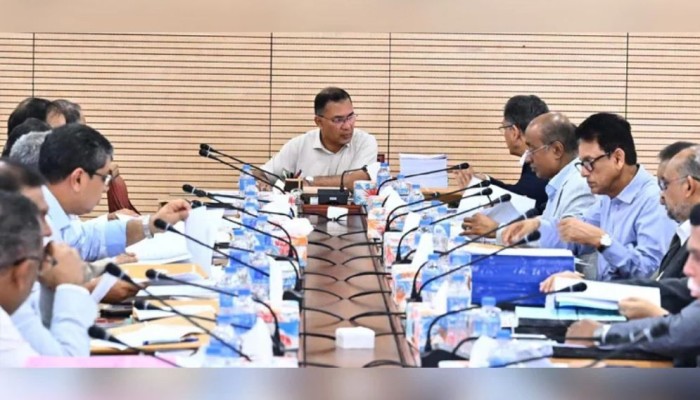
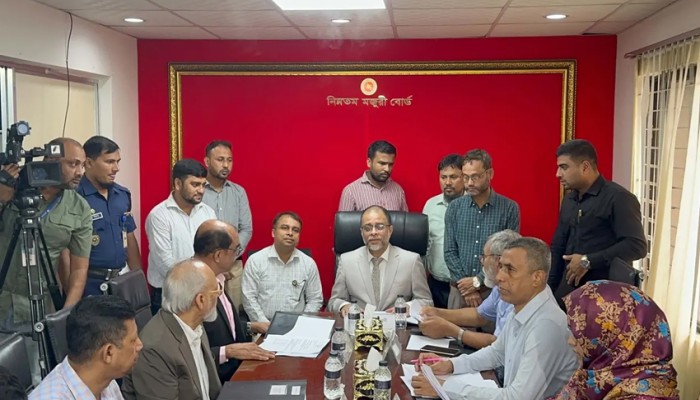
The agreement was reached at the first meeting of the newly formed Minimum Wage Board for garment workers at the board’s office in Dhaka’s Segunbagicha today (4 November).
Speaking to journalists after the meeting, Babul Akter, the workers’ representative on the board, said employers had agreed to the workers’ demand for implementing the new wage structure in December.
"New wages will be implemented in December. Workers will receive their new salaries from January," he said.
The first meeting of the newly formed wage board for garment workers is scheduled to be held today (4 November), amid ongoing protests by workers demanding higher wages.
ABM Shamsuddin, the representative of factory owners on the board, also agreed with Babul’s statement.
Following the meeting, labour leader Babul also urged workers to return to their respective factories and resume work.
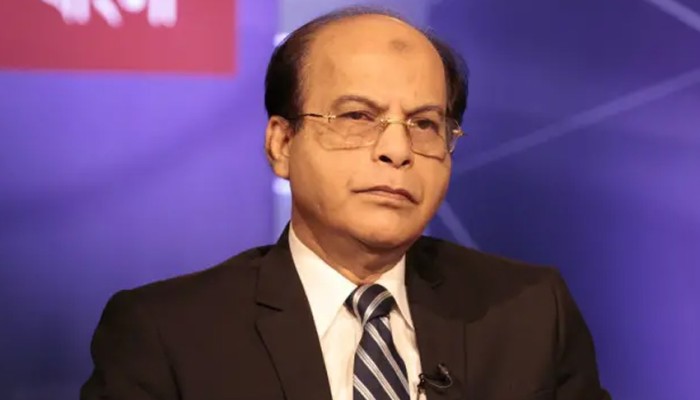
The meeting was chaired by Syed Azad Subhani, the new chairman of the Minimum Wage Board.
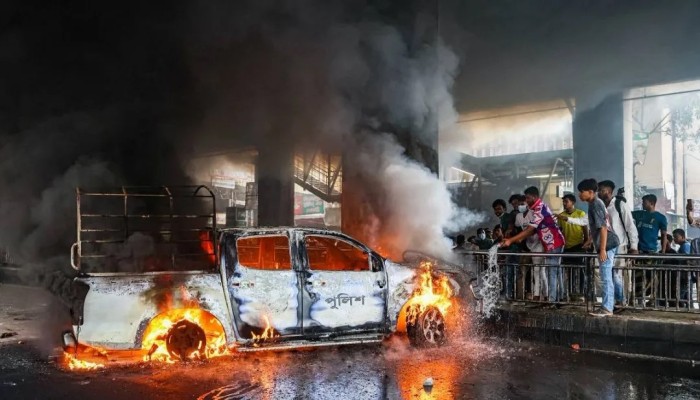
The agreement comes amid ongoing protests by garment workers across several industrial areas, including Dhaka’s Mirpur, Savar’s Ashulia and Hemayetpur, Gazipur, and Narayanganj, demanding an increased minimum monthly wage of Tk30,000 -- up from the current Tk12,500.
Earlier today, workers also clashed with law enforcement personnel in Savar, Gazipur, and Narayanganj.
The protesting workers have also called for an end to the blacklisting of workers and what they describe as unjust layoffs.
The government formed the six-member wage board on 1 November to review the salary structure following widespread demonstrations and clashes between workers and law enforcement agencies over the past few days.
The unrest has disrupted factory operations and triggered road blockades in several industrial areas, with hundreds of factories temporarily suspending operations amid the protests.

 Collected Image