Who was behind Tk49 lakh in Sergeant Sabiha’s bank account? Financial controversy deepens
 Collected Image
TDS Special:
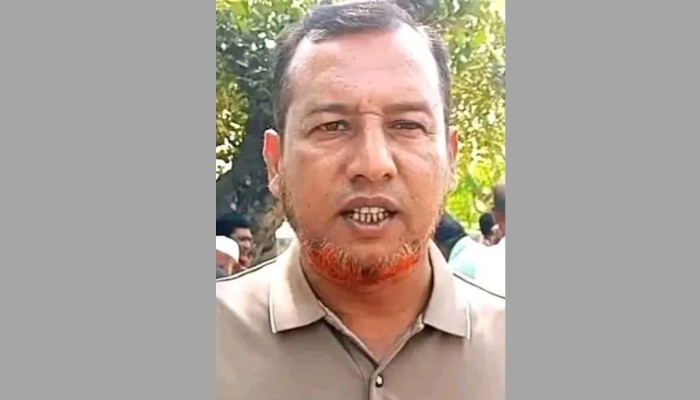
On Tuesday, August 30, 2022, Tk50 lakh was deposited in cash into the bank account of Neuron Nursing Coaching Centre at a private bank branch in Rajshahi city. Before the end of the day, Tk49 lakh of that amount was transferred to the personal BRAC Bank account of Sergeant Sabiha Akter, then serving in the Traffic Division of Rajshahi Metropolitan Police (RMP), through a digital transaction bearing the reference number ‘FT222422VB7P’. Exactly Tk1 lakh remained in the coaching centre’s account.
How compatible is a transaction of this magnitude with the legitimate government income of a police sergeant in Grade 10? Why was a coaching centre owner's bank account used as an intermediary to deposit Tk50 lakh in cash and transfer Tk49 lakh to a police officer's personal account? And why, after the matter came to light nearly four years later, did the officer meet the person who sent the money under the cover of night? An examination of the available documents, banking codes and conflicting statements from those involved raises a complex set of financial and institutional questions.
An analysis of the bank statement details published in the media and the 2023 and 2024 annual reports of EXIM Bank PLC provides some insight into the technical structure of the transaction. EXIM Bank uses Temenos T24 software for its core banking operations. The first five digits of the transaction description number, FT222422VB7P, are particularly significant in terms of timing. As 2022 was not a leap year, the 212 days from January to July, plus the 30 days of August, make the date the 242nd day of the year. Thus, the combination of 22 (year) and 242 (Julian day) points to August 30, 2022. However, as the published documents do not include a complete scan or identify the clearing channel, it remains necessary to independently verify from the original bank voucher whether the money was transferred to BRAC Bank through RTGS or BEFTN.
The Tk1 lakh that remained in the coaching centre's account also raises questions. Of the Tk50 lakh deposited in cash, Tk49 lakh was transferred, leaving 2 per cent of the original amount, or Tk1 lakh, in the coaching centre's account. As transfer fees through normal banking channels are negligible, questions have emerged over whether the Tk1 lakh was a form of intermediary fee for routing cash through the banking system or an adjustment for tax and VAT. Bank statements covering the days immediately after August 30 would help establish the subsequent movement of the Tk1 lakh.
Under the National Pay Scale 2015, the basic monthly salary of a police sergeant in Grade 10 ranges from Tk16,000 to Tk38,640. Even when measured against this basic salary range, Tk49 lakh is equivalent to approximately 10.6 to 25.5 years of a sergeant's total basic pay. Based on information that Sabiha had served in RMP for around eight years, and assuming she joined in 2018, an approximate calculation including house rent, medical, risk allowances and bonuses puts her cumulative gross government income between January 2018 and August 2022 at around Tk1,900,354.
This means the Tk49 lakh transferred in a single day was approximately 2.58 times her total government income during that period and equivalent to around 147.5 months of her gross monthly income in 2022. Even if the money came from legitimate savings, a documentary explanation—such as the sale of immovable property or inheritance—would be necessary to account for such a substantial amount after personal and family expenses. No party concerned has so far presented any such evidence.
Statements from three parties following the disclosure of the transaction have revealed apparent contradictions. At the RMP Traffic Office on the afternoon of November 9, 2026, Sergeant Sabiha Akter told journalists in the presence of Inspector (Administration) Anwar Hossain: “Why Tk50 lakh? Even Tk1 crore or Tk2 crore could enter my account. Ask the person who sent the money.” Although she claimed she was not obliged to answer to journalists, she showed an interest in speaking directly after they mentioned the bank documents.
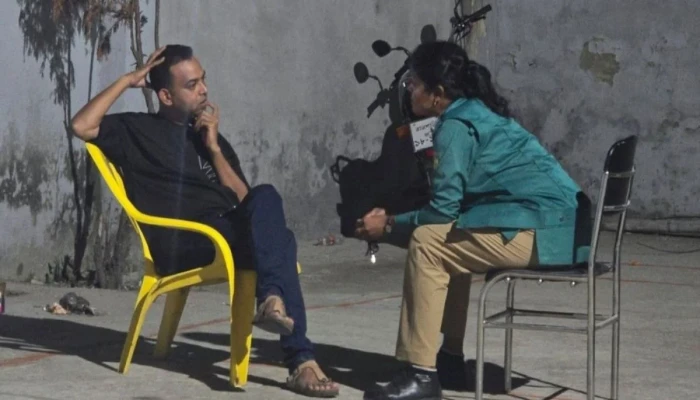
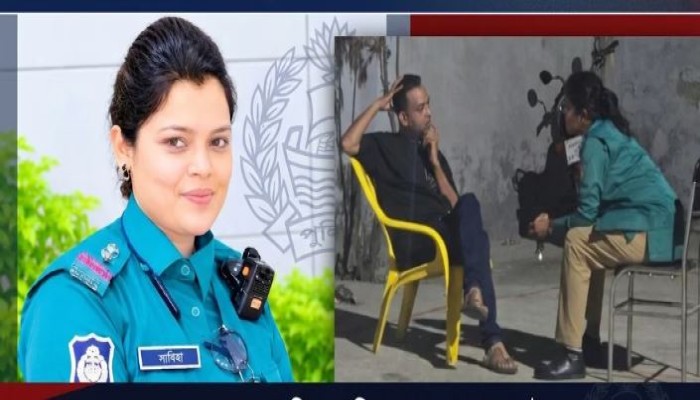
Yet within approximately 24 hours, at around 9pm on November 10, Sergeant Sabiha was seen meeting Mohammad Saiful Islam, founder and managing director of Neuron Nursing Coaching Centre, in front of a dental care facility at Jhautala intersection in Laxmipur, Rajshahi city. She was wearing her police uniform at the time. Photographs of the meeting, published in the media, have raised questions: why did an officer who declined to take responsibility for the transaction during the day meet the person who sent the money at night while wearing her uniform?
Another inconsistency emerged in subsequent statements. Sabiha reportedly told RMP spokesperson and Deputy Commissioner of Detective Branch Gaziur Rahman that she had not carried out any such transaction and that she currently had no bank account in her name. However, coaching centre owner Saiful Islam acknowledged the transaction to the media. He claimed that the person who provided the money had given him Tk50 lakh in cash because Sabiha did not want to receive the money directly from that individual. Saiful said he then used his own bank account to transfer Tk49 lakh to Sabiha's account.
This raises a significant legal question: could the use of a business account to conceal the identity of the actual source of funds, particularly in a transaction involving a government official, amount to concealment of the origin of money? It is worth noting that Saiful Islam did not hold any political position when the transaction took place. In November 2025, however, he became convener of the Rajshahi district committee of the National Citizen Party (NCP) and later lost the post amid internal party controversy. He is currently a former convener of the committee.
RMP spokesperson Gaziur Rahman has said that the matter would be examined. At the same time, he reportedly said the police do not investigate anyone's personal bank account in the absence of a complaint and that the financial aspect falls under the jurisdiction of the Anti-Corruption Commission (ACC). This seemingly divided position of the administration raises further questions when considered against the country's existing financial and administrative regulations.
According to Bangladesh Financial Intelligence Unit (BFIU) circulars, banks are required to submit a Cash Transaction Report (CTR) when Tk10 lakh or more is deposited in cash into an account in a single day. As Tk50 lakh was deposited in cash on August 30, 2022, the transaction should have been recorded in EXIM Bank's CTR records for that day. The subsequent transfer of 98 per cent of the deposited amount to a police officer's account could also warrant scrutiny under the criteria for a Suspicious Transaction Report (STR).
Furthermore, Section 25 of the Money Laundering Prevention Act, 2012, requires banks to preserve customer identification (KYC) and transaction records for at least five years, even after an account is closed. Consequently, the original voucher and records relating to the August 30, 2022 transaction should remain preserved by both banks at least until August 2027.
In addition, under the Government Servants (Conduct) Rules, 1979, and a directive issued by the Ministry of Public Administration in September 2024, officials in Grade 10 were required to submit their asset declarations by November of that year. It is therefore important to establish whether Sabiha Akter disclosed the BRAC Bank account and the Tk49 lakh transaction in her declaration.
However, one distinction must be maintained during the verification of information. A news report published in April 2026 concerning allegations of fraud and abuse in the name of marriage against an officer-in-charge (OC) in Rajshahi identified Sergeant Sabiha as the complainant and alleged victim. The allegations against the OC in that case must not be conflated with the present financial transaction.
Who will be held accountable?
At this stage of the investigation, the lack of original documents and action by regulatory authorities remains a major obstacle. As of November 14, 2026, no confirmed information was available about the formation of a formal RMP inquiry committee or the initiation of departmental proceedings. Meanwhile, the identity of the “third person” whom coaching centre owner Saiful Islam says provided the money remains unknown.
The ACC, Criminal Investigation Department (CID) and BFIU, however, have legal avenues to examine the original bank vouchers, identify the person who signed the cash deposit slip and verify the officer's asset declaration. Unless the actual owner of the Tk49 lakh routed through a coaching centre's account into a police sergeant's bank account is identified, concerns over institutional transparency and accountability are likely to deepen.
Whose money was the Tk49 lakh? Why was it transferred to a police sergeant's account? And why was the identity of the actual source of the funds allegedly kept concealed? Without answers to these three questions, the incident cannot simply be dismissed as a private financial transaction.
If the source of the money was legitimate, documentary evidence should be able to explain it. If there were irregularities, it is the responsibility of the banks concerned, the BFIU, the ACC and the police administration to establish the facts. Ultimately, the issue is not merely about the bank account of an individual sergeant; it concerns the financial transparency of law enforcement personnel and the institutional accountability of the state.


 Collected Image