Australian home affairs minister questioned over visa for Jamaat chief
 Collected Image
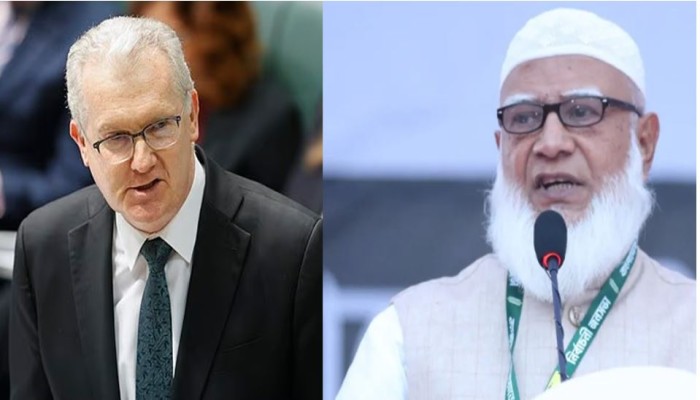
Australia's Home Affairs Minister Tony Burke has come under scrutiny over the visa granted to Bangladesh Jamaat-e-Islami chief and opposition leader Dr Shafiqur Rahman, following concerns raised by Jewish and Hindu organisations in the country over his visit.
The organisations questioned Rahman's entry into Australia, citing alleged praise for deceased Hamas leader Yahya Sinwar and his remarks describing former Jamaat leaders convicted of crimes against humanity during Bangladesh's 1971 Liberation War as “martyrs”. They have also demanded an explanation from Burke over the visa approval.
The UK-based Daily Mail reported on the issue on Monday (November 23). The Australian and The Times of Israel also published separate reports on the controversy.
According to the Daily Mail, Burke has faced criticism over Rahman's visit to Australia, where the Jamaat chief reportedly planned to meet government officials during a five-day trip. Organisations representing Jewish and Hindu communities have questioned why his visa was approved.
The Daily Mail report cited remarks allegedly made by Rahman in praise of former Hamas leader Yahya Sinwar. Rahman reportedly said Sinwar had “fought like a hero until his last breath for the freedom of Palestine” and that his martyrdom had deeply saddened him.
Sinwar was widely identified as one of the key planners of Hamas's October 7, 2023, attack on Israel, in which around 1,200 people were killed, according to the report.
The report also cited Rahman's alleged description of former Jamaat leaders convicted of crimes against humanity during Bangladesh's 1971 Liberation War as “martyrs”.
In a joint statement, the Australian Jewish Association (AJA) and the Australian Hindu Association (AHA) expressed “deep concern” over Rahman's visit.
The organisations questioned the visa approval, recalling Burke's pledge that applicants' backgrounds would be thoroughly scrutinised before visas were granted.
The Times of Israel reported that Rahman had praised Sinwar as a “hero and martyr” following his death. The joint statement also alleged that Rahman had mourned the death of another Hamas leader, Ismail Haniyeh, and expressed hope that he would attain martyrdom.
The statement also raised concerns over Jamaat-e-Islami's historical record, noting that some of the party's former leaders had been convicted of war crimes and crimes against humanity.
The organisations said they had learned that the Australian National Imams Council (ANIC) hosted Rahman at a luncheon in Sydney on November 21, reportedly attended by several Australian parliamentarians.
They sought clarification from the Australian government on why Rahman had been permitted to enter the country and whether any government representatives had met with him.
Australian Jewish Association President Robert Gregory criticised the government's decision. He referred to restrictions previously imposed on former Israeli justice minister Ayelet Shaked and the cancellation of the visa of Israeli parliamentarian Simcha Rothman, arguing that the government's approach raised questions about consistency in dealing with individuals whose statements have sparked concerns over social cohesion.
Gregory questioned why an elected political leader accused of publicly glorifying Hamas figures was welcomed in Australia despite those earlier decisions.
Australian Hindu Association President Amendra Singh said incidents involving killings, assaults, arson, abductions, looting and intimidation against Hindus in Bangladesh, allegedly involving extremist groups, were well known.
He warned that welcoming individuals who support or remain silent about such atrocities could deepen divisions among Australians and undermine social cohesion.
The Daily Mail also reported that Sydney immigration consultant Raymond Salomon had formally petitioned Burke to cancel Rahman's visa. Salomon alleged that the Jamaat chief did not meet Australia's character requirements and that his presence could pose a risk to social cohesion.
Speaking to The Australian, Salomon said Burke had promised Australians greater vigilance but had failed to deliver. He also raised concerns over what he described as a potential conflict of interest, noting that Lakemba and Bankstown fall within the minister's electorate.
Salomon argued that the home affairs minister was responsible for protecting Australians and securing the country's borders and should be held accountable for the visa decision.
The Daily Mail said it had contacted Australia's Home Affairs Department for comment. The report did not indicate whether a response had been received.


 Collected Image