Bangladesh's priority is to restore a guarantee clause similar to the one included in the 1977 water-sharing agreement
Bangladesh has called for a guaranteed water-flow provision in a new Ganges water-sharing agreement with India as the 30-year treaty between the two neighbours is set to expire on December 12, with no formal negotiations yet underway on its renewal or replacement.
With less than three weeks remaining before the treaty expires, the Bangladesh authorities said Dhaka is ready for negotiations with New Delhi and wants a stronger agreement to safeguard its fair share of Ganges water, particularly during the dry season when river flows decline.
Bangladesh's priority is to restore a guarantee clause similar to the one included in the 1977 water-sharing agreement, ensuring that Bangladesh receives a minimum amount of water even when the Ganges flow falls significantly.
Water Resources Minister Md Shahid Uddin Chowdhury Anee told BSS that Bangladesh wants to secure its legitimate share of the river's water through a new agreement.
"Restoring a guarantee clause, similar to the one in the 1977 agreement, is a priority for Bangladesh. We are ready to hold talks with India and hope to reach a long-term and mutually acceptable solution," he said.
The minister said he had written to his Indian counterpart, urging an early start to formal negotiations.
Under the 1977 agreement, Bangladesh was entitled to receive at least 80 percent of its stipulated share during any 10-day period when water availability at Farakka during the dry season. However, the 1996 treaty did not include such a guarantee clause.
Bangladesh wants a similar safeguard incorporated into the new arrangement to protect its water entitlement during periods of scarcity.
Meanwhile, the 91st regular meeting of the India-Bangladesh Joint Rivers Commission (JRC), held in Dhaka last Sunday, finalised the annual report on the implementation of the Ganges water-sharing treaty for 2026.
The report will be submitted to the governments of both countries within the stipulated timeframe. However, treaty renewal was not discussed at the meeting, as negotiations on a new agreement fall under the jurisdiction of the two governments and their political leadership.
Dr Md Anwar Kadir, member of the Joint Rivers Commission, Bangladesh, and head of the Bangladeshi delegation to the joint committee, said regular information exchange, river-flow monitoring and joint reviews were essential to ensuring effective implementation of the existing agreement.
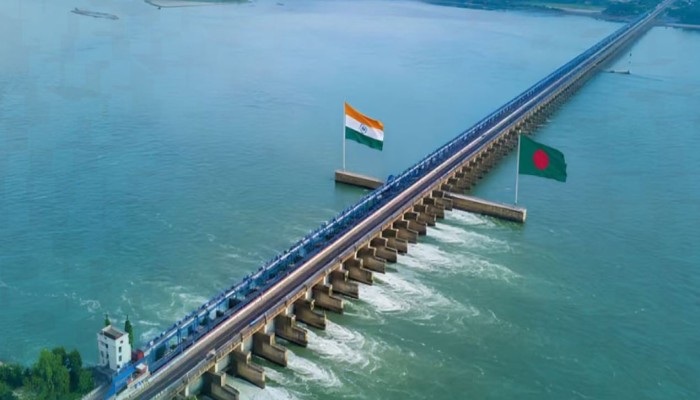
Signed on December 12, 1996, the treaty provides for monitoring water flows at the Farakka Barrage in India and the Hardinge Bridge point in Bangladesh from January 1 to May 31 each year.
Under its existing sharing formula, water is allocated every 10 days based on the flow recorded at Farakka point. When the flow is 70,000 cubic feet per second (cusecs) or less, the two countries share it equally. If the flow ranges between 70,000 and 75,000 cusecs, Bangladesh receives 35,000 cusecs, with India taking the remaining one. When the flow reaches 75,000 cusecs or more, India receives 40,000 cusecs and Bangladesh gets the rest.
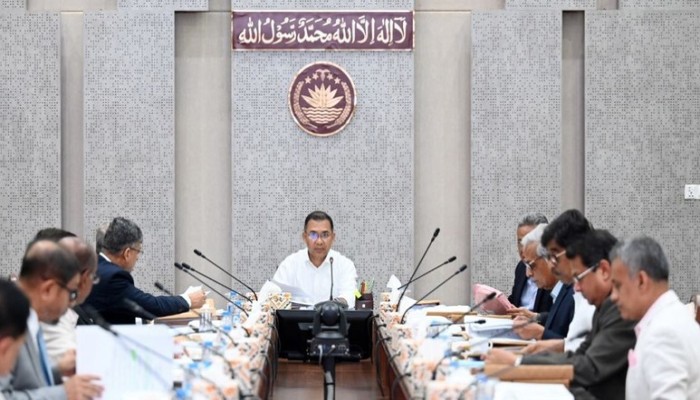
Bangladesh has already formed a high-level technical committee to prepare for negotiations. The committee is led by Prime Minister's Adviser on Finance and Planning Professor Rashed Al Mahmud Titumir and includes representatives from relevant ministries and river experts.
Bangladesh formally proposed negotiations to India in June. India requested the formation of a technical committee in August, while the Bangladeshi water resources minister sent another letter on November 17 urging an early start to negotiations. New Delhi has yet to provide a specific timetable.
Talking to BSS, Professor Titumir said the Ganges water-sharing was not merely a water-resource issue but was closely linked to agriculture, food security, the environment and the economy.
"We want an agreement that guarantees Bangladesh's fair share of water during the dry season and protects the country's interests in the long term," he said.
The negotiations could also be influenced by regional and local political considerations in India, particularly the water requirements of West Bengal and Bihar.
Water experts warn that the expiry of the treaty without a new understanding could create uncertainty over water availability in Bangladesh's southwestern region, where agriculture, irrigation, fisheries, navigation and ecological balance depend heavily on the Ganges.
Reduced dry-season flows could aggravate salinity, disrupt agricultural and fish production and worsen navigability problems, they said.
Dr Ataur Rahman, a professor of the Department of Water Resources Engineering at Bangladesh University of Engineering and Technology (BUET), said a water-sharing formula alone would not be sufficient without a clear commitment to maintaining minimum river flows.
"Without a guarantee clause, ensuring Bangladesh's fair share of water could become difficult," he said.
Bangladesh and India share 54 transboundary rivers, but the Ganges remains the only river for which the two countries have a water-sharing treaty. Despite years of discussions, a proposed Teesta water-sharing agreement has yet to be signed.
Under the Article 12 of the Ganges treaty, the agreement remains effective for 30 years and can be renewed only by mutual consent. It does not provide for automatic extension.
The experts said a new agreement should address not only water-sharing allocations but also minimum flow guarantees, information exchange, dry-season shortages and the management of excessive flows during the monsoon.
For Bangladesh, the immediate challenge is to begin formal negotiations with India before the December 12 deadline and secure long-term protection of its water rights, they said.


 Collected Image