A doctor’s mission to restore the Bhairab, awaken public conscience
 Collected Image
Jessore:
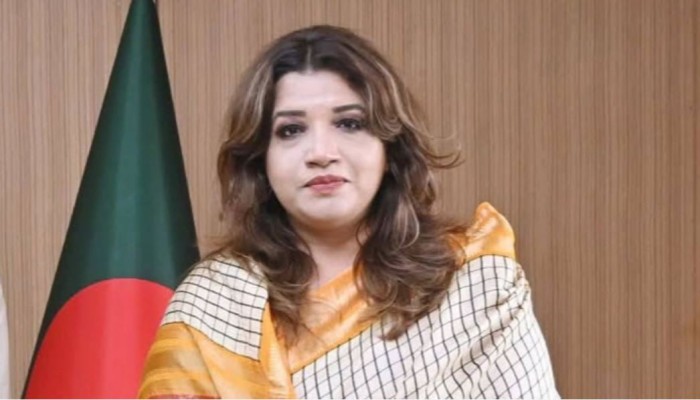
A thick green carpet of water hyacinths covers much of the Bhairab River beneath the Daratana Bridge in Jessore. The little water visible through the gaps is dark and discoloured. For many city residents, the sight has become so familiar that it hardly draws attention. But when physician Sheikh Sadia Monowara Usha returned to Jessore for a few days off, the condition of the river troubled her. She felt that something needed to be done.
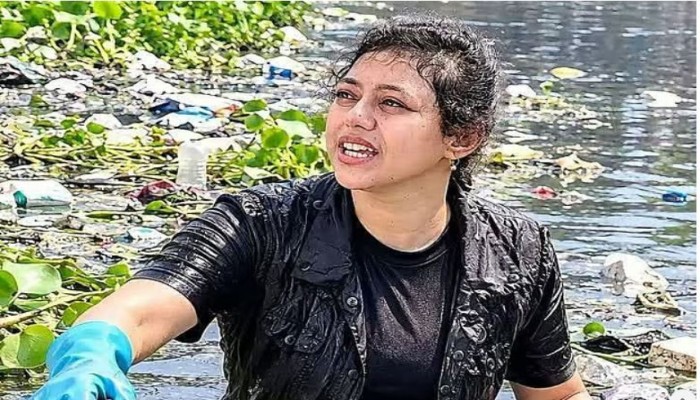
On November 5, she posted on Facebook about an initiative to clear the water hyacinths choking the river, seeking suggestions and support from the public. The appeal soon turned into a clean-up campaign. Armed with bamboo poles, ropes and hooks, Sadia entered the river herself. Local residents and volunteers gradually joined her.
Between November 6 and 22, the team removed water hyacinths from around 800 metres, or slightly more, of the river between Daratana Bridge and Kathar Pul in the heart of the city. For the first time in a long while, parts of the water surface became visible again.
A medical officer of the Directorate General of Health Services, Sadia was born and raised in Jessore. She remembers seeing the Bhairab flowing freely during her childhood. Her family still rents a home on the riverbank. A BCS cadre physician, she served last year in a United Nations peacekeeping mission in the Democratic Republic of the Congo. On social media, she is known to many as the “Bhairab daughter” and the “daughter of Jessore”.
An 800-metre campaign with a wider message
The stretch targeted by the campaign is an important part of the city. A market stands on one side, a hospital on the other, and a slaughterhouse is also nearby. According to Sadia, different types of waste, including market refuse and medical waste, are dumped into the river, damaging its environment and obstructing the natural flow of water.
The Bhairab stretches about 133 kilometres from Taherpur in Jessore’s Chougachha to Rupsha in Khulna. Although the river has been dredged, its normal flow remains obstructed in the urban stretch. Sadia believes that bridges such as Daratana and Kathar Pul, which are narrow in comparison with the river’s width, are among the factors affecting water movement.
She describes the manual removal of water hyacinths with bamboo, ropes and hooks as a symbolic effort rather than a major technological achievement. The main purpose, she says, was to make the river’s deteriorating condition visible and revive public discussion about its future.
“I did it out of emotion and love. The initiative has created a stir among people and has, at least to some extent, awakened their conscience. People are now thinking about the Bhairab as a source of pride for Jessore. Hopefully, a proper plan will emerge soon,” she says.
However, she believes that removing water hyacinths alone cannot restore the river. She has urged residents to take part in cleaning other stretches, while stressing that a sustainable effort will require proper planning, modern equipment and coordinated action.
A doctor sees the river as a wound
Sadia draws a comparison between her medical experience and the condition of the Bhairab. To her, the river resembles a wound or an infected area that needs treatment at its source.
“As a physician, when I see a wound or an infection, I first try to stop the bleeding. Then I clean the wound and identify the source of the infection so that it can be addressed. I felt the same approach was needed for the Bhairab. The first step was to remove the water hyacinths and make the river visible to people,” she says.
She believes the river needs a natural flow, current and tidal movement, along with its own colour and vitality, so that people can recognise it as a living river.
The physician also links environmental protection to public health. In hospitals, infections sometimes require repeated antibiotic treatment, but microorganisms can develop resistance. Prevention, therefore, is as important as treatment, she says. Similarly, a river cannot recover unless the sources of pollution are addressed.
Protecting flowers, birds, rivers and the natural environment is ultimately connected to human health, she argues. A polluted environment will inevitably affect people's well-being.
Family support and volunteers help sustain the campaign
Sadia says her family supported the initiative from the beginning. Her father, Sheikh Abdus Samad, is a businessman, while her mother, Rownak Raihana, is a homemaker. Her brother, Sheikh Ejazul Mumeet, serves as a captain in the Bangladesh Army, and her sister, Sheikh Samia Imrana, studies at the Bangladesh University of Engineering and Technology.
Initially, a shortage of equipment and manpower made the work difficult. The campaign gained momentum after local residents and volunteers from organisations such as We Are Bangladesh and BD Clean joined the effort.
“Those who removed the water hyacinths or helped clean the river were not really standing with me; they were standing with the Bhairab,” Sadia says.
Photographs and videos of the campaign have inspired people on social media to consider similar initiatives. But she has also urged caution. Although the volunteers who worked with her had experience of carrying out such tasks in the water, she says the work can be dangerous for inexperienced people.
Sadia acknowledges that she herself entered the river despite the risks. However, she does not encourage others to do the same without the necessary experience and safety arrangements.
Criticism, threats and refusal to accept cash
The campaign has drawn both praise and criticism on social media. Some people have accused Sadia of undertaking the initiative to gain popularity. She rejects the allegation, saying she had long shared her creative work, travel experiences, photography, family moments and medical writing online. Seeking viral attention, she says, was never her motivation.
“Criticising the work from the riverbank is easy. But once you put one foot into the water, you realise how difficult it is,” she says.
She also says some people made intimidating remarks over the phone, in addition to online criticism. Nevertheless, she has not abandoned the initiative.
Sadia was also determined from the outset not to handle large funds or cash donations for the campaign. When State Minister for Power, Energy and Mineral Resources Anindya Islam Amit offered Tk 100,000, she declined the money.
She says she had decided that anyone wishing to help could provide equipment, food or manpower, but she would not accept cash directly.
“We requested people not to hand money directly to us. I also conveyed the same request to the state minister in an open letter,” she says.
Sadia also spoke about the response from the local administration regarding the removal of the water hyacinths collected from the river. She said she had been informed that the deputy commissioner had instructed the municipality to remove the plants using two trucks every day. However, she did not see such an operation taking place. She had heard that administrative officials visited the site at different times, but said she had not met them directly.
A glimpse of moonlight and a hope for recovery
Beyond the physical work, the campaign has carried a personal meaning for Sadia. After posting her appeal on Facebook, she first cleared a small patch of water beside her family’s home. There, she saw the reflection of clouds on the exposed water. It made her imagine how beautiful the entire river could look if its surface were cleared.
On November 22, she finally saw moonlight reflected on the Bhairab. After a full day of labour, the volunteers were soaked with water and sweat. Their boat and bamboo poles were wet, and some had cuts on their hands and feet. Yet the sight of moonlight falling on the river made the exhaustion worthwhile.
“We had worked hard all day and were soaked in sweat and water. The boat and bamboo were wet, and our hands and feet were cut. In that moment, the moonlight fell on the river. It felt as though all our happiness was merging into the water with the moonlight,” she recalls.
Asked about her plans for the future, Sadia says: “Even if everyone says one day that we will no longer work, I will continue to think about the Bhairab in my own way.”
She hopes to see the sky reflected in the river again and moonlight shimmering across its water. She has also urged people to stop dumping waste into the Bhairab.
Her campaign has exposed a larger challenge: clearing water hyacinths can make a river visible, but restoring it will require sustained action to control pollution, ensure the natural flow of water and protect the river for future generations.


 Collected Image