SpaceX gets approval to launch one million satellites for orbital data centres
 Collected Image
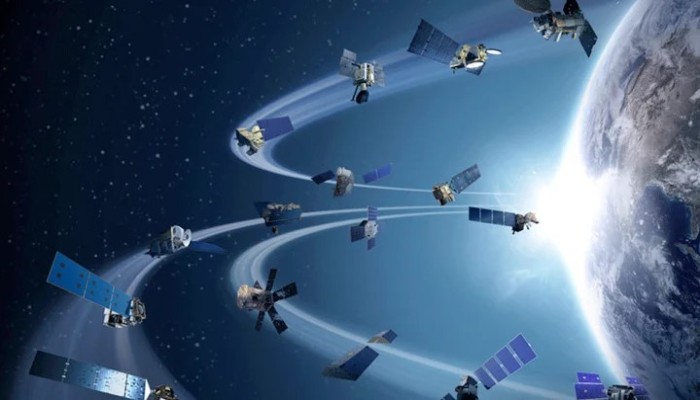
Elon Musk's SpaceX has received approval to deploy up to one million satellites in Earth's orbit to build data centres in space, marking the first authorisation of its kind by the US Federal Communications Commission (FCC).
According to a BBC report, the project, named ‘Starmind’, will use satellites powered by sunlight to process artificial intelligence (AI)-related data before transmitting the information back to Earth.
The FCC said the project would support the rapidly expanding AI economy and help the United States strengthen its position in the race for superintelligence.
SpaceX argues that building data centres in space is the most cost-effective and energy-efficient way to meet the growing demand for computing power required by AI. The company says this demand is increasingly exceeding the capacity of existing infrastructure on Earth.
FCC Chairman Brendan Carr said the project would open up new possibilities for the computing infrastructure needed to sustain US technological leadership and economic growth.
Following the announcement, Musk described the initiative in a post on X as a major asset for the United States and the world.
Under the FCC licence, SpaceX must begin launching the satellites by November 2033. The company is required to deploy at least 10 per cent of the authorised constellation by November 2035 and 50 per cent by November 2038.
SpaceX has said it plans to launch the first Starmind satellite next year. However, it remains unclear whether the company will eventually deploy the full one million satellites.
The Starmind satellites are expected to operate in low Earth orbit at altitudes ranging from 500 to 2,000 kilometres. They will communicate with SpaceX's existing Starlink network to transmit processed data to Earth. Starlink currently provides high-speed internet services through a constellation of more than 10,000 satellites.
Technical feasibility under scrutiny
Despite the approval, questions remain over the project's technological feasibility and its viability on such a massive scale.
Professor Sir Martin Sweeting, founder and executive chairman of Surrey Satellite Technology Ltd, told BBC Radio 4 that building data centres in space was technically possible, but its practicality on a large scale required further assessment.
He said the technology needed to transfer vast amounts of data between Earth and satellites through laser links had yet to reach the required level of development.
Astronomers warn of impact on night sky
The American Astronomical Society (AAS) has opposed the project, warning that a sharp increase in the number and size of satellites could make them highly visible in the night sky for extended periods.
The organisation said this could disrupt astronomical research and limit the public's ability to observe the night sky. It also warned that decades of government investment in astronomical research could be put at risk.
Jan Hasselman, a senior attorney at environmental non-profit organisation Earthjustice, said a massive expansion of satellite deployment could have far-reaching consequences for people's daily lives and the future of the planet.
Amazon, a competitor of SpaceX, has also criticised the proposal, describing it as more of an ambitious aspiration than a realistic plan.
Growing interest in space-based data centres
Several other technology companies, including Google and Blue Origin, are also exploring the possibility of establishing data centres in space.
The concept is being promoted as a potentially more environmentally friendly alternative to conventional data centres, which consume vast amounts of electricity and water for cooling. The rapid expansion of AI has further increased demand for data storage and processing capacity.
Meanwhile, securing land for new data centres on Earth is becoming increasingly difficult, while opposition from local communities is also growing.
However, establishing data centres in space presents significant challenges. Experts say launching equipment into orbit is extremely expensive, while protecting and cooling the hardware and ensuring a reliable power supply would require complex infrastructure.
The growing amount of space debris also poses risks to equipment. An increase in the number of spacecraft in low Earth orbit could raise the likelihood of collisions, potentially damaging satellites and generating debris that could eventually fall back to Earth.
Concerns over orbital congestion
SpaceX's Starlink network has already faced criticism over allegedly contributing to congestion in Earth's orbit. Musk has rejected the allegations, including claims that his satellites occupy excessive orbital space and restrict competitors' access to space.
Source: BBC


 Collected Image