Worker unrest, rising costs drive garment orders away from Bangladesh: Reuters
 Collected Image
International brands are shifting garment orders away from Bangladesh amid worker unrest, production disruptions and rising manufacturing costs, with global retailers such as Zara and H&M among those moving orders elsewhere. Around $254 million worth of garment orders were reportedly diverted from Bangladesh to other Asian countries during the first 18 days of November, with a significant share going to neighbouring India. Reuters reported the development.
Three garment factory owners told Reuters about the order transfers, describing them as a major setback for one of Bangladesh’s key export sectors. They warned that the impact could persist even after the current unrest subsides.
Industry insiders say rising wages, energy shortages and political uncertainty are gradually eroding Bangladesh’s competitive advantage in terms of relatively low production costs. As a result, international buyers are increasingly turning to alternative sourcing destinations. Bangladesh is currently the world’s second-largest garment exporter after China.
According to the Bangladesh Garment Manufacturers and Exporters Association (BGMEA), worker unrest has caused production losses worth more than $400 million in the garment sector. The industry accounts for more than 80% of the country’s total export earnings and is linked to nearly 40% of employment in the manufacturing sector.
India is emerging as the biggest beneficiary of the order transfers. Industry leaders also said international buyers were increasingly turning to Vietnam, Cambodia and Indonesia to reduce supply-chain risks and ensure timely deliveries.
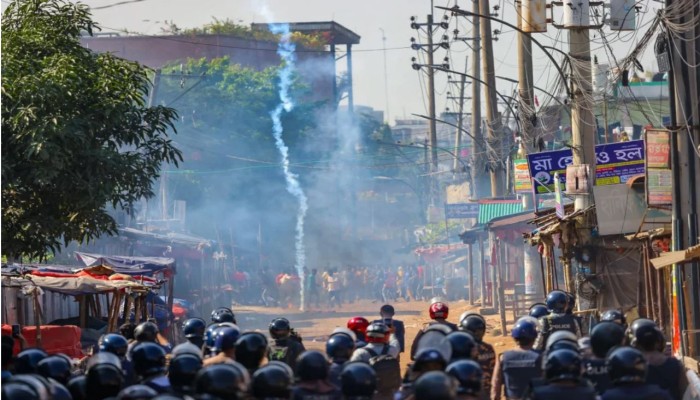
The Bangladesh government approved a 36% increase in the minimum wage for garment workers last Wednesday. However, the increase is the lowest in four decades. Workers had demanded more than a doubling of their wages. As a result, discontent has not subsided even after the new wage structure was announced, with fresh clashes between workers and police reported.
Abdur Rahman Tarafdar, secretary of the Ministry of Labour and Employment, described the wage increase as “satisfactory”. He expressed hope that garment workers would return to work from Saturday.
Industry insiders said the wage increase would further narrow Bangladesh’s labour-cost advantage over India. However, labour organisations argue that wages in Bangladesh remain significantly lower than international standards in the garment industry.
Three factory owners, speaking to Reuters on condition of anonymity for fear of damaging their business relationships with international buyers, said brands including Zara, H&M, Marks & Spencer and Celio had shifted orders to other countries amid the ongoing unrest. India has received a significant portion of those orders.
Inditex, the parent company of Zara, Marks & Spencer, H&M and Celio did not respond to Reuters’ questions on the matter.
BGMEA Director M. Mohiuddin Chowdhury said garment manufacturers were facing mounting pressure as wages, electricity, energy and raw-material costs continued to rise.
“Buyers are demanding lower prices while competition from rival countries is intensifying. At the same time, wage increases have further raised production costs,” he said.
BGMEA President Mahmud Hasan Khan declined to name the brands involved. However, he said factory owners were temporarily shifting some orders to other countries in an effort to maintain business relationships with international buyers and minimise financial losses.


 Collected Image