Political deadlock, rising debt push France into recession
 Collected Image
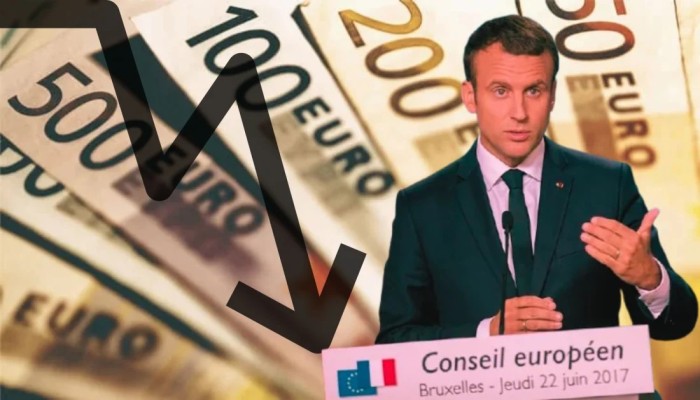
France, Europe's third-largest economy, has slipped into a technical recession amid rising debt-servicing costs, political deadlock and nationwide protests. Revised figures show that the country's economy contracted in both the second and third quarters of this year, meeting the conventional definition of a technical recession, The Telegraph reported.
France's gross domestic product (GDP) shrank by 0.2 per cent in the third quarter, from July to September, compared with an earlier estimate of a 0.1 per cent contraction.
The revised figures also showed that the economy contracted by 0.02 per cent in the second quarter, overturning the previous estimate of zero growth. France's economy had already shrunk by 0.2 per cent in the first three months of the year.
The economic downturn comes amid nearly two months of political instability and nationwide protests. At the same time, the cost of servicing government debt has continued to rise. Last month, yields on France's 10-year government bonds crossed 5 per cent, reaching their highest level in 24 years.
Charlotte de Montpellier, senior economist at Dutch bank ING, warned that France's average economic growth could be just 0.1 per cent in 2026. In contrast, investment bank Morgan Stanley has forecast that the UK economy could expand by 1.6 per cent over the same period.
While Germany and the UK are showing signs of stronger growth among Europe's major economies, France's economic performance continues to weaken.
De Montpellier said there was little prospect of a significant improvement in France's economic situation in 2027. The country has lost 94,400 salaried jobs over the past year, while the private sector has been hit even harder, shedding 109,000 jobs during the same period.
She warned that weakness in the labour market would increasingly undermine consumer confidence, household incomes and spending. Difficult borrowing conditions, coupled with uncertainty over future taxation and government spending, are also adding to the pressure on the economy.
France's budget deficit could reach 5.5 per cent of GDP this year, the highest among eurozone countries.
Against this backdrop, President Emmanuel Macron is seeking to introduce constitutional provisions imposing stricter controls on public spending before leaving office next year. His departure is scheduled for May, following the presidential election, which is due to begin in late April.
Economic difficulties are also expected to feature prominently in the next presidential election. Far-right leader Marine Le Pen is ahead in opinion polls, with support reportedly nearly twice that of far-left leader Jean-Luc Mélenchon, who is in second place.
De Montpellier said voters could be heading to the polls against a backdrop of a weak economy. She noted that there were few strong drivers capable of generating a significant recovery in domestic demand over the coming quarters.
"France will enter the new year without economic momentum. Even if quarterly growth turns slightly positive, that will not be enough to ensure strong growth over the year," she said.
De Montpellier forecast that France's average GDP growth could reach only 0.4 per cent in 2027, adding that the risks surrounding the outlook remained tilted to the downside, indicating a greater possibility of further deterioration.


 Collected Image