106 border points across 21 dists turns to drug trafficking transit routes
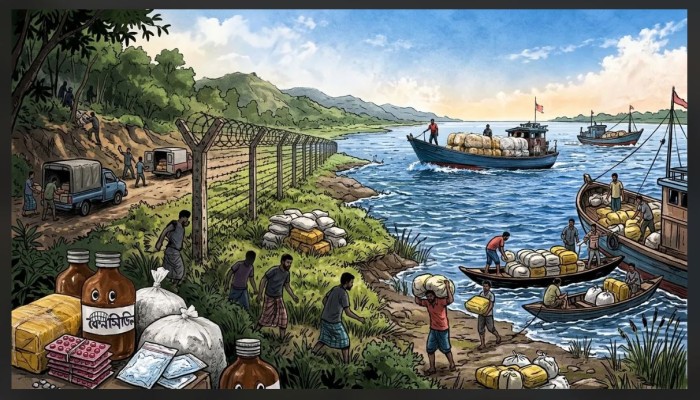
 AI Generated Symbolic Image
Border Guard Bangladesh (BGB) has identified 106 land-border routes across 21 districts as vulnerable to drug smuggling. Various narcotics, including yaba, crystal meth, phensedyl, heroin and cannabis, are entering the country through these routes along the borders with India and Myanmar. However, smugglers are not confined to land routes. Rivers in the Sundarbans and the Bay of Bengal are also being used to transport drugs into Bangladesh.
Separate reports by the BGB and the Coast Guard have outlined the routes used for drug trafficking. The reports were recently presented at a meeting of the parliamentary standing committee on the Ministry of Home Affairs. The Department of Narcotics Control (DNC) also submitted a report at the meeting, detailing the drug-smuggling situation along the country's land borders, coastal areas and waterways.
At the meeting held on November 15, the parliamentary committee recommended effective measures to curb drug trafficking. Home Minister Salahuddin Ahmed said the government had taken an initiative to construct and modernise 108 kilometres of border fencing along the Bangladesh-Myanmar border as part of its anti-drug efforts.
106 vulnerable routes across 21 districts
According to the BGB report, Bangladesh's geographical location makes its land and maritime borders highly vulnerable to drug smuggling. Narcotics of various kinds are entering the country from neighbouring India and Myanmar. The force has identified 106 points or routes across 21 districts as vulnerable to drug entry.
Of these, 25 routes in Cox's Bazar and Bandarban districts have been identified as vulnerable. Yaba, crystal meth and opium are the main drugs trafficked through these routes.
The BGB has identified 39 vulnerable locations in Cumilla, Brahmanbaria, Feni, Sylhet, Sunamganj, Moulvibazar and Habiganj districts. Phensedyl, cannabis, liquor, beer and intoxicating syrups are mainly smuggled through these areas.
Another 22 border routes in Jashore, Satkhira, Jhenaidah, Meherpur, Chuadanga and Kushtia districts are considered vulnerable. Phensedyl, heroin, cannabis and liquor are the main drugs entering through these routes.
The force has also identified 20 vulnerable locations in Rajshahi, Chapainawabganj, Joypurhat, Dinajpur, Kurigram and Lalmonirhat districts. Heroin, cannabis, phensedyl and intoxicating tablets are smuggled through these areas.
The BGB report said the force seized more than 24.1 million yaba pills between February and October. During the same period, it recovered 32 kilogrammes of crystal meth, 25,330 bottles of phensedyl and 64,551 bottles of foreign liquor. A total of 1,377 people were arrested during the period.
Drugs also smuggled through rivers and sea
The Coast Guard report has revealed that smugglers are using rivers and maritime routes alongside land borders to bring drugs into the country. It identified Cox's Bazar, which shares a border with Myanmar, as one of the major vulnerable areas.
According to the report, yaba and crystal meth enter through the waters around Teknaf, the Naf River, Shah Porir Dwip and Saint Martin's Island.
A section of local fishermen along the southeastern border allegedly use fishing boats to smuggle cement, fertiliser and food supplies into Myanmar. On their return, they bring yaba and crystal meth into Bangladesh.
The Coast Guard has also found evidence of phensedyl and cannabis entering through Kaikhali in Satkhira and internal waterways in the Sundarbans.
The report said organised smuggling groups use fishing trawlers, cargo vessels and local associates to transport and distribute the drugs.
Sources of different drugs
The DNC report has also identified border districts as vulnerable to drug trafficking and provided information about the sources of different narcotics.
According to the report, yaba containing amphetamine enters Bangladesh from Myanmar's Maungdaw, Naikhongdia, Sitargola, Sittwe and Al Le Than Khaya areas. It also recorded the entry of crystal meth from Myanmar since 2020.
Border areas adjoining Assam, Karimganj, Cooch Behar and Agartala in India have been identified as sources of cannabis. Most of the heroin, meanwhile, enters through the border areas of Murshidabad district in West Bengal.
The report further stated that poppy cultivation had reportedly increased in the hilly areas of Myanmar following a decline in cultivation in Afghanistan. This has contributed to increased heroin smuggling through the Teknaf border, it said.
All three agencies have stressed the need to strengthen surveillance along the borders to prevent drug trafficking. The BGB has proposed expanding intelligence surveillance and using drones and technology-based systems alongside regular border patrols.
The Coast Guard has recommended intensified patrols in coastal and maritime waters, greater use of modern technology and more intelligence-led operations. The DNC, meanwhile, has emphasised coordinated action, including raids, filing cases and arresting suspects, to disrupt drug supplies.
The parliamentary committee has also recommended stronger coordinated surveillance and operations to prevent drug smuggling. It called for investigations into the financial networks linked to the drug trade and the flow of proceeds from criminal activities. The BGB, Coast Guard, police and DNC have been asked to work together in this regard.
Committee chairman Zainul Abedin said the authorities had been asked to identify the specific routes used to bring drugs into the country and take effective measures. The committee has recommended that necessary steps to control drug trafficking be taken within the next three months.


 AI Generated Symbolic Image