

Gas crisis to persist until 2035, threatening power and industry
- Update Time : Sunday, December 7, 2025
Staff Correspondent:
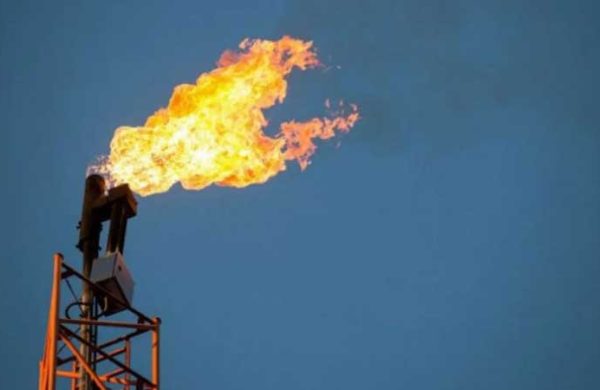
Petrobangla remains unable to bridge the widening gap between the country’s natural gas demand and supply, with its long-term planning documents projecting severe shortfalls every year through 2035.
Energy specialists warn that the sustained deficit poses a growing threat to Bangladesh’s power generation capacity and industrial output, and that failure to secure alternative fuels could leave key sectors exposed to chronic instability.
According to Petrobangla data for the current fiscal year, national gas demand stands at around 3,800 million cubic feet per day (mmcfd), while supply reaches only 2,900 mmcfd.
Of this, domestic fields contribute roughly 1,850 mmcfd, while imported LNG accounts for 1,050 mmcfd – a level that officials acknowledge is not consistently achievable.
In practice, the actual daily deficit exceeds 900 mmcfd, leaving industries and power producers scrambling for supply.
DEFICIT TO WIDEN AHEAD
Petrobangla’s forward projections show that the gas deficit will continue to widen unless substantial new supply sources are added.
The plan sets demand at 3,850 mmcfd in FY2025–26 and 3,875 mmcfd in FY2026–27, but assumes supply will remain stagnant.
As a result, the shortfall is expected to rise to 925 mmcfd and 950 mmcfd, respectively.
A senior Petrobangla official said the corporation plans to drill at least 100 new wells to boost domestic output.
“If all goes as planned, we expect an additional 100 mmcfdbetween 2027 and 2030,” he said.
However, LNG supply during this period is projected to remain unchanged at 1,050 mmcfd, leaving the deficit largely unresolved.
By FY2028–29, demand is projected at 3,875 mmcfd, creating a shortfall of 875 mmcfd, which will climb to 900 mmcfd the following year as demand increases to 3,925 mmcfd.
LNG EXPANSION STALLED
Petrobangla’s plan anticipates the commissioning of a new LNG terminal in Maheshkhali in FY2030–31, adding 400 mmcfd of regasification capacity.
Domestic supply is also expected to increase to 2,000 mmcfd.
With demand estimated at 3,975 mmcfd that year, the deficit would temporarily fall to around 500 mmcfd, still a significant gap.
The government had previously discussed building a parallel pipeline from Maheshkhali to strengthen transmission capacity.
Although feasibility studies were initiated earlier, no progress has been made during the two years of the interim government, according to officials familiar with the matter.
From 2031 to 2035, Petrobangla’s plans show little increase in gas supply, while demand is projected to rise by 25 mmcfdannually, pushing the deficit up to 550–575 mmcfd.
PLANTS BUILT WITHOUT FUEL
Energy experts say years of policy misalignment are now catching up with the sector.
The previous government approved large gas-fired power plants without securing corresponding fuel supplies.
Four new 450MW plants in Meghnaghat and an 800MW plant in Khulna have come online, creating substantial new gas demand that Petrobangla cannot meet.
Gas shortages have also hit industries, where demand has risen sharply but remains unmet.
“With the current state of our demand and supply, it will not be possible to overcome this crisis in the near future,” a Petrobangla official admitted.
Energy Adviser at the Consumers Association of Bangladesh (CAB), Shamsul Alam, said Bangladesh is now facing a structural energy insecurity.
“This crisis was not created overnight. There were plans to strengthen Bapex using the Gas Development Fund, but instead foreign companies were brought in for exploration, such as in Bhola.”
“If investment had been channeled properly, Bapex would be in a far stronger position today,” he told journalists.
He added that the current administration is repeating the policy failures of the past.
“The plan itself acknowledges a long-term deficit. To fill this gap, the government will import more LNG – but high-priced LNG for power and industry will inevitably lead to higher tariffs. Ultimately, the burden will fall on ordinary citizens.”
Despite repeated warnings, Petrobangla’s long-term plan still relies heavily on LNG imports while domestic exploration remains slow and uncertain.
Experts caution that unless Bangladesh urgently diversifies its fuel mix and strengthens domestic gas exploration, the country’s industrial growth and power security could face significant disruptions in the coming decade.








Editor & Publisher: Golam Mostafa Jibon
News & Commercial Office:
Railgate, Sirajganj & 2 R. K Mission Road, Dhaka.
Hotline: 01715-319996, 01558-314179
E-mail : [email protected]