
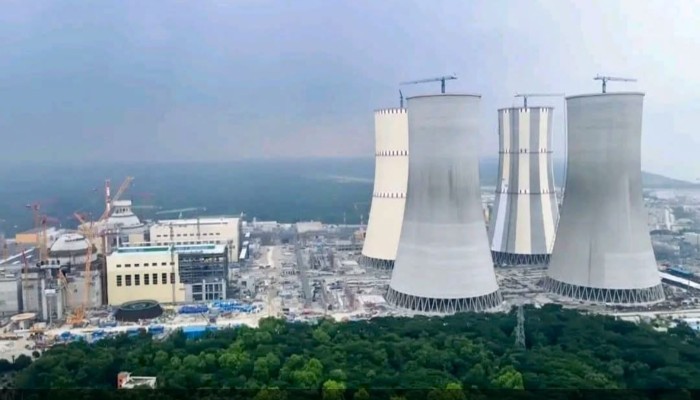
After years of construction, testing and overcoming various technical hurdles, the first unit of the Rooppur Nuclear Power Plant has received regulatory authorisation to begin the process of initiating its first controlled nuclear reaction.
The Bangladesh Atomic Energy Regulatory Authority (BAERA) granted the B2 sub-stage authorisation on Thursday (8 October), allowing the 1,200MW Unit 1 to move to the next phase of commissioning.
The process will eventually lead to the reactor's first criticality, when a self-sustaining nuclear chain reaction is established under controlled conditions to generate heat.
Confirming the development, BAERA Chairman Mahmudul Hasan told that the regulator has approved the B2 stage for Unit 1.
"B1 has been completed, and consent has now been given to proceed to B2. After that, there are C and D stages," he said.
"We hope to complete B2 quickly. Overall, it may take around two to three months," he added.
Zahedul Hassan, managing director of Nuclear Power Plant Company Bangladesh Limited (NPCBL), said the B2 authorisation allows the plant to proceed with the process of initiating the nuclear reaction needed to generate heat.
"B2 has been issued. To explain it simply, electricity generation first requires heating water, which turns it into steam. The high-pressure steam then spins a turbine, and a generator connected to the turbine produces electricity," he said.
"In a nuclear power plant, however, the process is different. A nuclear reaction has to take place to generate heat. That heat is then used to boil water and produce steam, which spins the turbine and generates electricity," he explained.
Zahedul added, "Simply put, we have now reached the stage where authorisation has been sought to start the nuclear reaction to generate heat. We have received approval to initiate the nuclear reaction. Once that happens, heat will be generated, which can then be used to produce steam."
According to the managing director, the plant's operators will closely monitor the reaction after it begins to ensure it is occurring at the correct location and under the required conditions.
There are a number of predefined criteria that must be met when the reaction takes place. We will check whether all those criteria are being properly followed and monitor the prescribed procedures.
The approval granted now is specifically for the B2 sub-stage, and work under the authorisation has already begun. However, there are further stages after B2. Once the B2 sub-stage is successfully completed, the process of generating heat will begin. The heat will then be increased gradually.
Once the reactor reaches the prescribed level, around 37% thermal power, the plant can move to the next stage of the electricity generation process.
"By gradually increasing the heat, once we reach the prescribed level, around 37% thermal power, we can move to the next stage and proceed with electricity generation," he said.
Zahedul further said it would be premature to give a fixed timeline for reaching the electricity generation stage. "The entire process could take approximately six, seven, eight, nine or 10 weeks to reach the production stage. But this is not a fixed timeframe."
"We will try to move to the next stage of electricity generation as quickly as possible. However, every stage of a nuclear power plant has to be completed through prescribed safety standards and tests," he added.
He also clarified that the approval should not be described simply as a licence.
"It is not just a licence. It is an authorisation or approval. This authorisation has been issued through the process involving the Bangladesh Atomic Energy Commission and the relevant nuclear regulatory authorities," he said.
From nuclear reaction to electricity
The nuclear reaction inside the reactor will generate heat, which will be used to produce steam. The high-pressure steam will drive turbines connected to generators, ultimately producing electricity.
The reactor's power output will be increased gradually through different commissioning stages rather than immediately operating at its full 1,200MW capacity.
Once the prescribed commissioning procedures are successfully completed, Unit 1 is expected to initially supply around 300MW of electricity to the national grid, officials said.
B1 stage largely completed
Built with Russian assistance, Unit 1 has largely completed Stage B1 of the commissioning process in line with International Atomic Energy Agency (IAEA) guidelines.
The latest complications involving tests of the automatic pressure relief valve have also been resolved.
The valve was successfully tested at high pressure on Wednesday (30 September), marking another important step in the commissioning process.
Zahedul said the successful completion of the test marked an important milestone in the commissioning of the first unit.
The B2 stage will now involve further preparations and tests before the reactor's power is gradually increased.
Uranium fuel shipments continue
Meanwhile, uranium fuel shipments for the Rooppur plant are continuing.
A new shipment of uranium fuel arrived at the plant site in Ishwardi, Pabna, on Saturday (3 October) under tight security.
The special convoy carrying the uranium entered the plant premises at around 12:20pm. Project Director Kabir Hossain and Zayedul Hasan, managing director of Nuclear Power Plant Company Bangladesh Limited, along with senior officials, formally received the shipment.
Earlier, a special cargo aircraft carrying the radioactive fuel from Russia landed at Hazrat Shahjalal International Airport in Dhaka at around 11:45pm on Friday.
The convoy left Dhaka for Rooppur by road at 7:15am on Saturday under security provided by the army.
The shipment was initially scheduled to arrive on 24 September but was delayed because the aircraft reportedly lacked the required permission to use Pakistan's airspace.
The schedule was subsequently revised several times before the aircraft landed in Dhaka late Friday night.
According to sources concerned, the latest shipment was transported by air, with scheduled stops in Kazakhstan, Afghanistan, Pakistan and India.
Telecommunications and Information Technology and Science and Technology Minister Fakir Mahbub Anam said all uranium fuel shipments for the Rooppur plant were expected to arrive within the next seven to 10 days.
He also said the plant was expected to begin generating electricity between December and January.
The minister shared the information over the phone with a private television channel.
Officials said Unit 1, which has a capacity of 1,200MW, is expected to initially generate 300MW of electricity.
Under the plant's fuel supply plan, nine cargo flights are scheduled to transport an additional 48 uranium assemblies for Unit 1 and 163 assemblies for Unit 2 to Bangladesh by December.
Russia's state nuclear energy corporation Rosatom has said the entire fuel supply process will be completed by December as scheduled.
Bangladesh moves closer to first nuclear-generated electricity
The latest authorisation brings Bangladesh closer to generating electricity from its first nuclear power plant.
Fuel loading at Unit 1 began in April this year, marking a major milestone in the commissioning process and paving the way for the country's first nuclear-generated electricity.
However, the unit must pass through several more commissioning stages and meet the required safety and operational criteria before electricity can be supplied commercially to the national grid.
The Bangladesh Atomic Energy Regulatory Authority (BAERA) granted the B2 sub-stage authorisation on Thursday (8 October), allowing the 1,200MW Unit 1 to move to the next phase of commissioning.
The process will eventually lead to the reactor's first criticality, when a self-sustaining nuclear chain reaction is established under controlled conditions to generate heat.
Confirming the development, BAERA Chairman Mahmudul Hasan told that the regulator has approved the B2 stage for Unit 1.
"B1 has been completed, and consent has now been given to proceed to B2. After that, there are C and D stages," he said.
"We hope to complete B2 quickly. Overall, it may take around two to three months," he added.
Zahedul Hassan, managing director of Nuclear Power Plant Company Bangladesh Limited (NPCBL), said the B2 authorisation allows the plant to proceed with the process of initiating the nuclear reaction needed to generate heat.
"B2 has been issued. To explain it simply, electricity generation first requires heating water, which turns it into steam. The high-pressure steam then spins a turbine, and a generator connected to the turbine produces electricity," he said.
"In a nuclear power plant, however, the process is different. A nuclear reaction has to take place to generate heat. That heat is then used to boil water and produce steam, which spins the turbine and generates electricity," he explained.
Zahedul added, "Simply put, we have now reached the stage where authorisation has been sought to start the nuclear reaction to generate heat. We have received approval to initiate the nuclear reaction. Once that happens, heat will be generated, which can then be used to produce steam."
According to the managing director, the plant's operators will closely monitor the reaction after it begins to ensure it is occurring at the correct location and under the required conditions.
There are a number of predefined criteria that must be met when the reaction takes place. We will check whether all those criteria are being properly followed and monitor the prescribed procedures.
The approval granted now is specifically for the B2 sub-stage, and work under the authorisation has already begun. However, there are further stages after B2. Once the B2 sub-stage is successfully completed, the process of generating heat will begin. The heat will then be increased gradually.
Once the reactor reaches the prescribed level, around 37% thermal power, the plant can move to the next stage of the electricity generation process.
"By gradually increasing the heat, once we reach the prescribed level, around 37% thermal power, we can move to the next stage and proceed with electricity generation," he said.
Zahedul further said it would be premature to give a fixed timeline for reaching the electricity generation stage. "The entire process could take approximately six, seven, eight, nine or 10 weeks to reach the production stage. But this is not a fixed timeframe."
"We will try to move to the next stage of electricity generation as quickly as possible. However, every stage of a nuclear power plant has to be completed through prescribed safety standards and tests," he added.
He also clarified that the approval should not be described simply as a licence.
"It is not just a licence. It is an authorisation or approval. This authorisation has been issued through the process involving the Bangladesh Atomic Energy Commission and the relevant nuclear regulatory authorities," he said.
From nuclear reaction to electricity
The nuclear reaction inside the reactor will generate heat, which will be used to produce steam. The high-pressure steam will drive turbines connected to generators, ultimately producing electricity.
The reactor's power output will be increased gradually through different commissioning stages rather than immediately operating at its full 1,200MW capacity.
Once the prescribed commissioning procedures are successfully completed, Unit 1 is expected to initially supply around 300MW of electricity to the national grid, officials said.
B1 stage largely completed
Built with Russian assistance, Unit 1 has largely completed Stage B1 of the commissioning process in line with International Atomic Energy Agency (IAEA) guidelines.
The latest complications involving tests of the automatic pressure relief valve have also been resolved.
The valve was successfully tested at high pressure on Wednesday (30 September), marking another important step in the commissioning process.
Zahedul said the successful completion of the test marked an important milestone in the commissioning of the first unit.
The B2 stage will now involve further preparations and tests before the reactor's power is gradually increased.
Uranium fuel shipments continue
Meanwhile, uranium fuel shipments for the Rooppur plant are continuing.
A new shipment of uranium fuel arrived at the plant site in Ishwardi, Pabna, on Saturday (3 October) under tight security.
The special convoy carrying the uranium entered the plant premises at around 12:20pm. Project Director Kabir Hossain and Zayedul Hasan, managing director of Nuclear Power Plant Company Bangladesh Limited, along with senior officials, formally received the shipment.
Earlier, a special cargo aircraft carrying the radioactive fuel from Russia landed at Hazrat Shahjalal International Airport in Dhaka at around 11:45pm on Friday.
The convoy left Dhaka for Rooppur by road at 7:15am on Saturday under security provided by the army.
The shipment was initially scheduled to arrive on 24 September but was delayed because the aircraft reportedly lacked the required permission to use Pakistan's airspace.
The schedule was subsequently revised several times before the aircraft landed in Dhaka late Friday night.
According to sources concerned, the latest shipment was transported by air, with scheduled stops in Kazakhstan, Afghanistan, Pakistan and India.
Telecommunications and Information Technology and Science and Technology Minister Fakir Mahbub Anam said all uranium fuel shipments for the Rooppur plant were expected to arrive within the next seven to 10 days.
He also said the plant was expected to begin generating electricity between December and January.
The minister shared the information over the phone with a private television channel.
Officials said Unit 1, which has a capacity of 1,200MW, is expected to initially generate 300MW of electricity.
Under the plant's fuel supply plan, nine cargo flights are scheduled to transport an additional 48 uranium assemblies for Unit 1 and 163 assemblies for Unit 2 to Bangladesh by December.
Russia's state nuclear energy corporation Rosatom has said the entire fuel supply process will be completed by December as scheduled.
Bangladesh moves closer to first nuclear-generated electricity
The latest authorisation brings Bangladesh closer to generating electricity from its first nuclear power plant.
Fuel loading at Unit 1 began in April this year, marking a major milestone in the commissioning process and paving the way for the country's first nuclear-generated electricity.
However, the unit must pass through several more commissioning stages and meet the required safety and operational criteria before electricity can be supplied commercially to the national grid.