
Rehennuma Tarannum:
A suspected question-leak syndicate involving government officials has come under scrutiny following allegations of widespread leaks in public recruitment examinations, with investigators reportedly tracing a network linked to at least 11 recruitment tests.
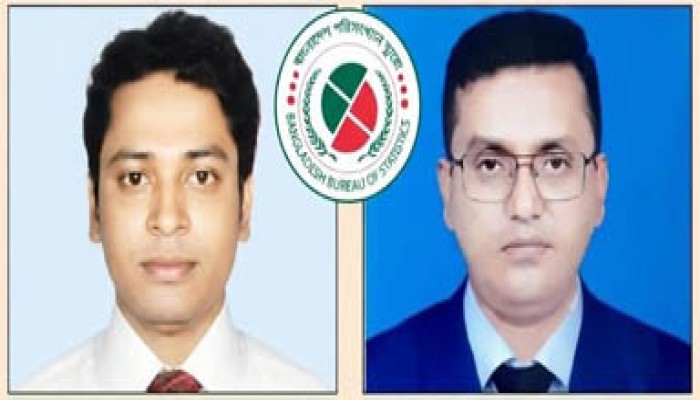
Sirajganj District Food Controller Harun-or-Rashid, a 36th Bangladesh Civil Service (BCS) cadre officer, has also been accused of involvement in the alleged racket.
The allegations emerged during an investigation into the leaking of questions for the recruitment examination for the post of Assistant Upazila Youth Development Officer under the Department of Youth Development.
The investigation has reportedly identified a network centred on Sujit Ghosh, a statistics officer at the Bangladesh Bureau of Statistics (BBS), who is alleged to have coordinated the operation.
The Special Response Battalion (SRB) has arrested seven people in connection with the alleged racket: Rubel Islam, Mofizul Islam, Hasinur Rahman Sujon, SM Emdadul Rahman, Asadul Islam, Noor Mohammad and Jahangir Alam.
Harun-or-Rashid could not be reached for comment despite repeated phone calls.
According to information attributed to the investigation, Sujit Ghosh allegedly played a central role in obtaining and circulating examination questions and coordinating a network of intermediaries. Investigators are reported to have found indications of the network’s direct involvement in question leaks involving at least 11 government recruitment examinations.
The alleged operation is suspected of generating illicit earnings worth crores of taka by exploiting the aspirations of jobseekers. Sujit Ghosh and several alleged associates are reportedly evading arrest. Investigators believe questioning the suspected ringleader could help establish the network’s full reach and determine whether others in influential positions were involved.
ALLEGED NETWORK OF INTERMEDIARIES
Information from the inquiry suggests that several individuals allegedly maintained direct contact with Ghosh and helped distribute leaked questions and answers.
Those identified in the report include Asadul Habib, an office assistant at the Ministry of Defence; Noor Mohammad, an employee of a tax firm; Jahangir Alam, a lower-division assistant or peshkar at the National Board of Revenue (NBR); and SM Emdadul Rahman, described as a key member of the alleged network.
Emdadul Rahman allegedly arranged concealed booths in the Motijheel area where candidates assigned to examination centres nearby were taken and made to memorise answers to leaked questions.
At the next stage, the questions allegedly passed to Mofizul Islam, also known as Rafi, and Hasinur Rahman Sujon. They are accused of forwarding the material to Mohammad Rubel Islam, a data entry operator at the Department of Environment.
Rubel allegedly supplied questions to Sohag Fakir, an assistant director in charge of administration at the Bangladesh Agricultural Research Council.
The report further alleges that Sohag Fakir worked with Harun Or Rashid to circulate questions through another layer of the network. Other individuals named in connection with this alleged stage include Mohammad Kajal Ahmed, a data entry operator at the Bangladesh Council of Scientific and Industrial Research (BCSIR); Mohammad Rafiul Islam, an assistant director at the Microcredit Regulatory Authority; and Hari Prasad Ray, a senior teacher at Bhartakhali High School.
Rafiul Islam allegedly supervised a concealed booth on Kalshi Road in Mirpur where candidates were made to memorise leaked examination questions and answers.
The allegations against the individuals named in the report have not all been established in court. Their precise roles and the extent of their involvement remain matters for investigators to verify.
INVESTIGATION FOLLOWING RECRUITMENT EXAM LEAK:
The alleged syndicate came to light following the filing of a case over the leakage of questions for the Assistant Upazila Youth Development Officer recruitment examination.
The seven arrests by the SRB mark a significant development in the investigation. Authorities are continuing efforts to locate and arrest Ghosh, who is alleged to have coordinated the network.
Investigators hope that further arrests and questioning will help establish how examination questions were obtained, who distributed them, how candidates were selected for access to the material, and whether any additional individuals facilitated the operation.
The case has raised concerns about the integrity of government recruitment examinations and the possible involvement of public officials in a racket that could undermine fair competition for public-sector jobs.
A comprehensive account of the alleged network, including the roles of those named and the possible involvement of other individuals, will depend on the findings of the ongoing investigation and any subsequent court proceedings.