
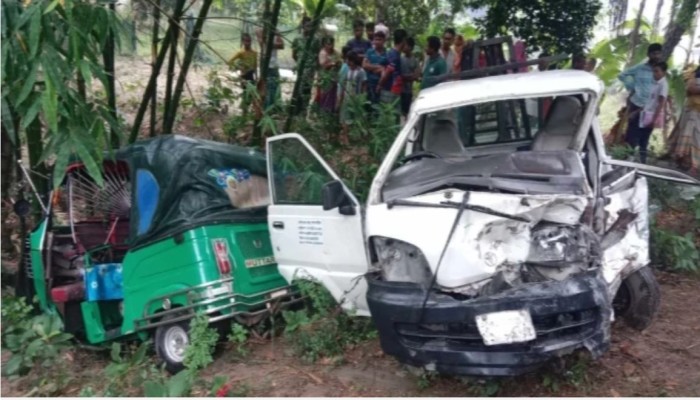
A total of 7,963 children lost their lives in road accidents across Bangladesh between 2020 and September, 2026, highlighting the alarming risks children face due to poor road management and a lack of awareness about traffic rules, according to a report by the Road Safety Foundation (RSF).
The report was prepared based on information from nine national dailies, 17 national and regional online news portals, electronic media and the foundation’s own data.
An analysis of child fatalities showed that 2,958 children, or 37.14 percent, were killed while riding or driving motorcycles, while 2,812 (35.31%) died as pedestrians after being hit by vehicles while crossing or walking along roads.
Among child pedestrians killed in road accidents, three-wheelers, including CNG-run autorickshaws, autorickshaws and locally made vehicles such as Nasimons and Bhotbhotis, accounted for the highest number of deaths at 1,271, or 45.19 percent.
Heavy vehicles, including buses, trucks, covered vans and pickups, were responsible for 1,126 pedestrian child deaths (40.04 percent). Private cars, microbuses, ambulances and jeeps accounted for 317 deaths (11.27 percent).
An analysis of the types of roads where children were killed found that rural roads accounted for the highest number of deaths, with 2,713 children, or 34.07 percent, killed in accidents on such roads.
Regional roads accounted for 2,082 deaths (26.14 percent), highways for 1,974 (24.78 percent) and urban roads for 1,194 (15 percent).
The report also found that 2,634 child deaths (33.07 percent) occurred in the afternoon, the highest among the different periods of the day. Another 2,168 children (27.22 percent) were killed in the morning, 1,813 (22.76 percent) at noon, 598 (7.50 percent) at night, 546 (6.85 percent) in the evening and 204 (2.56 percent) in the early morning.
In terms of age, children aged 13-17 accounted for the largest share of fatalities, with 3,547 deaths (44.54 percent). A total of 2,884 children aged 6-12 (36.21 percent) and 1,532 children aged 0-5 (19.23 percent) were also killed.
The report revealed that 2,513 children (31.55 percent) were killed while travelling to or from educational institutions, while 962 (12.08 percent) died while playing on roads near their homes.
The RSF identified several factors behind the rising number of child fatalities, including roads and transport systems that are not designed to ensure children’s safety, inadequate awareness among children about safe road use, and a lack of guidance and training at home and in educational institutions.
Other contributing factors include driving by unskilled and underage drivers, inadequate medical facilities for injured children and families’ inability to afford treatment.
The foundation observed that children were particularly vulnerable on rural roads, which often run close to residential areas. Vehicles on these roads frequently operate without following traffic rules, while law enforcement agencies have limited presence to regulate traffic.
Children’s lack of knowledge about road safety further increases their vulnerability, the report said, expressing concern over the apparent lack of adequate attention from both the relevant government authorities and the public.
The foundation warned that children were being killed or permanently disabled amid these unsafe conditions, causing an irreparable loss to the nation.
Recommendations
To reduce child fatalities, the RSF recommended making roads and transport systems safer for children, raising awareness about road safety among children at home and in educational institutions, and taking strict action to prevent unskilled and underage drivers from operating vehicles.
It also called for strengthening the capacity of district-level hospitals to treat road accident victims, establishing a special government fund to cover treatment costs for accident victims, and ensuring the implementation of the Road Transport Act 2018.
--UNB