
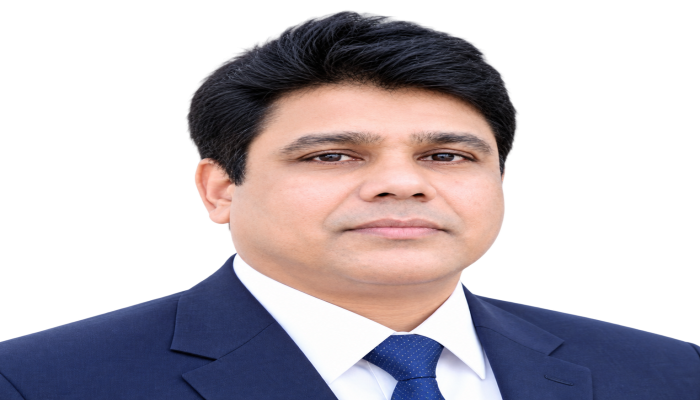
By Nicholas Biswas
On 24 October 2026, the world observes `United Nations Day` amid a profound test of international cooperation. Wars threaten civilians, geopolitical rivalries obstruct collective action, human rights remain unevenly protected, and climate change disproportionately affects the most vulnerable.
Established in the aftermath of the Second World War, the United Nations (UN) embodied a historic ambition: to prevent future conflicts through dialogue, diplomacy and collective action. Eighty-one years after its Charter entered into force, that ambition remains indispensable. Yet, the widening gap between its founding ideals and present realities raises a critical question: can the UN still deliver on its promise?
A Universal Institution, Yet an Unequal Voice
The UN has 193 member states and two non-member observer states: the Vatican and the State of Palestine. Founded by 51 countries, the organisation came into existence on 24 October 1945. Bangladesh joined on 17 September 1974, while South Sudan became its 193rd member in 2011.
Although every member state has an equal vote in the General Assembly, influence remains unequal, particularly in the Security Council. The challenge is not whether the world needs the UN, but whether it can become more effective, representative and accountable.
Peace Cannot Remain a Distant Promise
The Security Council’s ability to act decisively is frequently constrained by geopolitical rivalries and the veto power of its five permanent members. When strategic interests prevail over collective responsibility, the credibility of the international system suffers - and civilians pay the price. Families lose their homes, children are deprived of education, and millions are forced to flee.
Peace must mean more than the absence of fighting. It must allow people to return home safely, live without fear and rebuild their lives with dignity.
The UN must strengthen preventive diplomacy, early-warning mechanisms and mediation before tensions escalate into violence. Security Council reform is equally urgent. Greater representation for underrepresented regions and meaningful restraint in the use of the veto when mass atrocities occur would strengthen the organisation’s legitimacy. Such reforms, however, require genuine political will from influential member states.
Rebuilding Trust in Multilateralism
Rising nationalism, political polarisation and declining public confidence are straining international cooperation. Some governments view international agreements as constraints on sovereignty, while others question whether multilateral institutions apply their principles consistently. Restoring trust requires fairness, transparency and measurable results. Powerful nations must accept the same accountability they demand of others.
These divisions were evident during the 81st session of the General Assembly. On 23 September 2026, Argentine President Javier Milei described the UN as an “ineffective organisation” and its officials as “arrogant parasites,” according to The Times of Israel. Spanish Prime Minister Pedro Sánchez, by contrast, called for Security Council reform and the abolition of the veto, according to Anadolu Agency.
Restrictions driven by political considerations can undermine humanitarian assistance and essential services. The answer is not weaker multilateralism, but more credible and dependable cooperation, supported by transparency and honoured commitments. Pandemics, climate change and cyber threats demonstrate that no country can adequately address major global challenges alone. Responsible multilateralism serves national interests as well as humanity’s shared interests.
Human Rights Must Be Universal
The Universal Declaration of Human Rights established a common standard of dignity, freedom and equality. Yet its principles remain unevenly upheld. Governments sometimes invoke sovereignty to deflect criticism, while surveillance, online censorship and digital repression create new threats to fundamental freedoms.
The UN’s credibility depends on defending human rights consistently, without political selectivity. Civilian protection, freedom of expression and equality before the law must never become bargaining chips in geopolitical alliances. Credible investigations and accountability for serious violations are essential to ensuring that justice does not depend on political influence.
Sustainable Development Requires Global Solidarity
The 2030 Agenda and its 17 Sustainable Development Goals (SDGs) provide a shared framework for tackling poverty, inequality, inadequate healthcare, educational disparities and environmental degradation. Yet economic shocks, debt distress and climate change continue to obstruct progress. Communities that have contributed least to environmental pressures often possess the fewest resources to withstand their consequences.
For Bangladesh, international cooperation is vital to securing affordable and predictable climate finance, accessible technology, capacity-building and fairer economic arrangements. Reforming the global financial architecture and addressing unsustainable debt must remain priorities. Wealthier nations must also translate their climate commitments into tangible action.
Nevertheless, international assistance alone cannot guarantee development. Effective national leadership, sound governance and accountability are equally important. The UN should support national priorities while ensuring that development reaches communities most at risk of being left behind.
From Declarations to Delivery
The 81st session’s priority theme, “Restoring trust, managing transformation: A United Nations that delivers for all,” captures the challenge. Trust must be earned through tangible improvements in people’s lives. The UN needs stronger coordination among its agencies and greater accountability for results. Artificial Intelligence (AI) can enhance early-warning systems and public services, but its use must be guided by human rights safeguards.
Responsibility is shared. An organisation established by governments cannot overcome international divisions without their cooperation. Civil society, young people and journalists also play vital roles in holding institutions accountable and translating global commitments into local action. Bangladesh and other developing countries should build coalitions, advocate fairer international rules and ensure that vulnerable communities have a meaningful voice in global decision-making.
A Renewed Commitment to Humanity
`United Nations Day` should be more than an anniversary. It should prompt reflection on the distance between the world we aspire to build and the realities people experience. The UN is far from perfect, but the need for a forum where nations can negotiate and cooperate remains undeniable. Abandoning multilateralism would not resolve global problems; it would make collective responses even more difficult.
As UN High Commissioner for Refugees Barham Salih stated, “Peace must be measured not only by agreements signed, but by lives changed.”
At 81, the UN needs renewed commitment to its founding principles, meaningful institutional reform and a willingness among member states to place humanity above narrow political interests. Its success must be measured not by the resolutions it adopts, but by its ability to alleviate the suffering caused by war, protect human rights, expand opportunities for developing countries and safeguard the planet for future generations.
The world needs a United Nations that does more than speak on behalf of all; it needs one that delivers for all. To achieve this, global leaders must work collectively to restore international trust, strengthen multilateral cooperation, and translate commitments into concrete, meaningful action.
The author, Nicholas Biswas, is a media freelancer and recipient of the United Nations Population Fund (UNFPA) Media Award. He can be reached at gonomaddzam@gmail.com