
Another 20 million remain vulnerable to falling below poverty line; Devapriya calls for inclusive development
Despite significant economic progress, poverty and social inequality remain major challenges in Bangladesh, with around 35 million people still living below the poverty line, including nearly 10 million in extreme poverty.
At least another 20 million people who have moved above the poverty line remain economically vulnerable and could slip back into poverty following even a brief loss of income.
The figures were highlighted by Debapriya Bhattacharya, convener of the Citizen's Platform and distinguished fellow at the Centre for Policy Dialogue (CPD), who said that although the poverty rate had declined, the number of people living in poverty remained substantial.
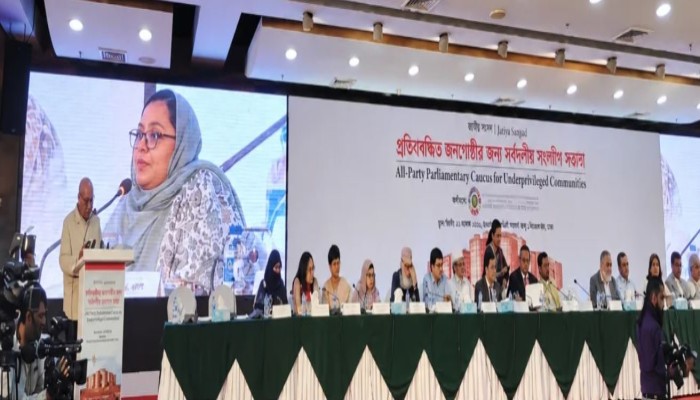
He made the remarks on Thursday (November 12) at an event organised by the All-Party Parliamentary Caucus for the Rights of Disadvantaged Communities at the Bangabandhu International Conference Centre in the capital.
Debapriya said around 35 million of Bangladesh's 180 million people remained below the poverty line, with nearly 10 million experiencing extreme poverty.
He said another 20 million people who had moved above the poverty line were still at considerable risk of falling back into poverty. Even two consecutive days without work could push many of them below the poverty threshold, he added.
He said the White Paper published during the interim government's tenure had also highlighted the vulnerability of these groups.
Reflecting on the country's development over the past 55 years, Debapriya said Bangladesh had achieved significant economic progress, but social transformation and changes in political culture had not kept pace.
One of the major reasons, he observed, was the failure to adequately integrate the most marginalised and disadvantaged sections of society into the mainstream economy and social development process.
Highlighting youth unemployment, he said one in every four young people in the country was unemployed. The situation was even more concerning among educated youth, with one in every three remaining without employment.
He also described the rise in life expectancy to around 74 years as a major national achievement. However, he said disadvantaged communities continued to face higher child mortality rates, school dropout rates and child labour.
Debapriya identified sanitation workers, persons with disabilities, residents of drought- and desertification-prone areas in northern Bangladesh and coastal communities among those facing persistent disadvantages in accessing education, healthcare and social protection.
Although the country had made overall economic progress, he said the benefits had not reached all sections of society equally.
He further observed that disadvantaged people were disproportionately exposed to misgovernance, corruption and nepotism. They often failed to receive fair treatment and adequate dignity from administrative institutions, political structures and even civil society.
Warning that continued neglect of marginalised communities could eventually undermine the achievements of more advantaged sections of society, he said such exclusion could threaten democracy, development and social stability.
Debapriya stressed that protecting the rights of disadvantaged communities was not solely the responsibility of civil society organisations or private entrepreneurs. Elected representatives also had an important role to play.
He said public representatives should take concrete steps to protect the rights, dignity and interests of the people whose votes had brought them to office.
He called for greater attention to disadvantaged communities in policymaking, particularly in education, healthcare, employment and social protection, to ensure that economic progress translates into more equitable and inclusive development.