
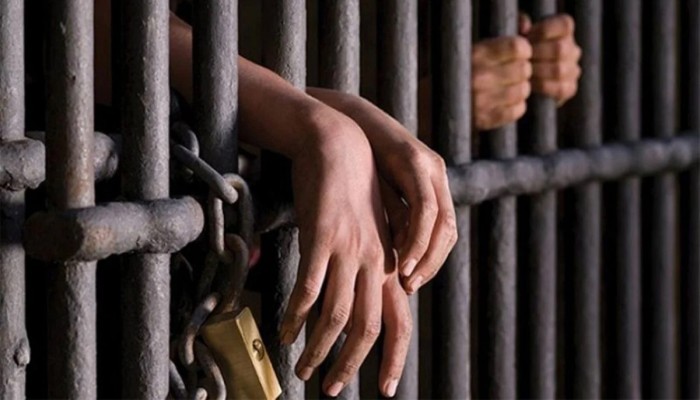
690 prisoners who escaped during 2024 unrest remain at large; overcrowding poses additional security challenges
A series of violent incidents, cocktail bomb explosions, arson attacks on vehicles and assaults on police stations and government establishments across the country has heightened concerns over law and order. Against this backdrop, prison authorities have stepped up security and placed eight high-risk prisons under special intelligence surveillance to prevent possible sabotage, inmate unrest or other untoward incidents.
However, the latest security measures have also brought longstanding vulnerabilities in the country's prison system into focus. As many as 690 prisoners who escaped during attacks and unrest at several prisons in July-August 2024 remain at large. Meanwhile, the country's 75 prisons have a combined capacity of 45,186 inmates but currently house around 115,000 prisoners—more than two and a half times their designed capacity.
The combination of overcrowding, unresolved security lapses and the challenge of managing a large prison population has raised questions about the overall preparedness of the prison administration.
According to the latest statistics from Police Headquarters, 87 cocktail explosions were reported at different locations in at least 21 districts, including Dhaka, between November 7 and 19.
During the same period, 83 vehicles were set on fire. Four police establishments, including the Tungipara and Muksudpur police stations in Gopalganj, came under arson attacks and vandalism. In addition, 28 police vehicles were damaged by arson and vandalism, three establishments were targeted with cocktail explosions, and another vehicle was damaged in a similar blast.
A total of 39 cases have been filed over these incidents, with 66 people arrested.
In response to the deteriorating security situation, prison authorities have intensified monitoring both inside and outside correctional facilities. Particular attention is being given to preventing inmate unrest, rebellion and disorder.
Security reinforced at Kashimpur prison complex
As part of the latest security measures, the prison authorities have sought assistance from the Army, police and other law enforcement agencies to strengthen security at the Kashimpur prison complex in Gazipur.
A letter signed by Halima Khatun, senior jail superintendent of Kashimpur Central Jail-2, was sent to the relevant agencies on November 18. The initiative followed instructions from the Gazipur Deputy Commissioner's office to reinforce security at the facility.
The letter stated that around 12,000 prisoners, including political detainees, are being held at the Kashimpur prison complex. As the facility is located in a sensitive area designated as a Key Point Installation (KPI), round-the-clock security and intensified patrols across the entire prison campus are necessary to prevent any untoward incident.
The prison authorities sought assistance from the General Officer Commanding of the 9 Infantry Division at Savar Cantonment, the Gazipur Metropolitan Police Commissioner, the commander of the Special Response Battalion, the officer-in-charge of Konabari Police Station and the operations branch of Rajendrapur Cantonment.
Eight prisons placed under special surveillance
According to prison department sources, eight facilities have been brought under special surveillance based on security assessments.
These are Dhaka Central Jail in Keraniganj, the Kashimpur prison complex, Gazipur District Jail, Narsingdi District Jail, and the central prisons in Cox's Bazar, Cumilla, Khulna and Rajshahi.
Intelligence surveillance and round-the-clock monitoring have been strengthened at these facilities. Prison officials have also been instructed to remain alert to inmates' movements and behaviour and to take preventive measures against possible unrest.
A prison department official, speaking on condition of anonymity, said larger prisons housed significantly more inmates, requiring additional caution in security management.
"Senior officials are issuing special instructions to the respective prison authorities to ensure preparedness for any emergency," the official said.
Masud Hasan Jewel, jailer of the media wing of the Department of Prisons, said all prisons in the country remained under special security arrangements.
"Although there is no scope for unauthorised weapons to enter prisons, the necessary weapons and adequate ammunition are available," he said.
He added that the headquarters had been regularly monitoring all prisons in view of the recent developments. Over the past two weeks, several instructions had been issued to jail superintendents, jailers and other officials.
"They have been instructed to remain alert and prepared to deal with any emergency. Directives are also being communicated regularly through SMS and WhatsApp," he said.
Unresolved escape of 690 prisoners raises questions
The current security concerns have also revived memories of the major prison security breakdown during the July-August 2024 mass uprising.
At least 17 prisons across the country witnessed attacks, vandalism, inmate rebellions and disorder during that period. A total of 2,247 prisoners escaped from Narsingdi, Kashimpur High Security, Sherpur, Satkhira and Kushtia prisons.
Subsequent operations by law enforcement agencies and the surrender of some escapees led to the recovery of 1,557 prisoners. However, 690 remain at large.
Among them, the identities of 166 prisoners who escaped from Narsingdi District Jail could not be established because their identity records were destroyed in the fire during the attack.
The continued failure to locate hundreds of escaped prisoners remains a significant challenge for prison security and inmate management.
Questions also remain about how many of these escapees have since been identified, what measures have been taken to trace them and whether the security lapses that enabled the mass escapes have been adequately addressed.
Prisons holding more than twice their capacity
Bangladesh currently has 15 central prisons and 60 district prisons, with a combined capacity of 45,186 inmates. However, approximately 115,000 prisoners are currently being held in these facilities.
This means the prison population is more than two and a half times the total capacity.
According to prison department data, around 68 per cent of the inmates are pre-trial detainees awaiting the disposal of their cases, while the remaining 32 per cent are convicted prisoners.
Such overcrowding puts additional pressure on prison accommodation, food supply, healthcare, staffing and overall security management. It can also make it more difficult for prison authorities to monitor inmates and prevent tensions or disorder.
Against this backdrop, questions remain over whether increasing intelligence surveillance and patrols alone will be sufficient to address the security challenges.
The adequacy of manpower, surveillance equipment, emergency communication systems, CCTV monitoring and other security infrastructure also warrants scrutiny.
Authorities claim heightened preparedness
Colonel Mesbahul Alam Selim, Additional Inspector General of Prisons, said enhanced security measures had been introduced across all prisons.
"The headquarters is regularly monitoring the situation. Security measures are being strengthened wherever necessary. We are also coordinating with deputy commissioners and other law enforcement agencies when required," he said.
Kamarum Munira, Assistant Inspector General (Media) of Police Headquarters, said law enforcement agencies remained on high alert to maintain normal law and order and prevent sabotage or any untoward incidents.
"Intelligence surveillance and security arrangements have been strengthened. All necessary measures are being taken to ensure public safety," she said.
Beyond temporary security measures
While strengthening security is essential in the current situation, the challenges facing the prison system require more comprehensive and long-term solutions.
Reducing overcrowding, increasing manpower and technological capacity, improving emergency response mechanisms and tracking escaped prisoners are among the priorities that warrant attention.
More importantly, the causes of the 2024 prison security breakdown need to be thoroughly examined. Whether there were failures in security planning, administrative coordination or duty performance, and what corrective measures have since been implemented, remain important questions.
Prisons are not merely detention facilities; they are an integral part of the country's criminal justice and law enforcement systems. Ensuring their security therefore requires more than temporary surveillance measures. A comprehensive assessment of existing vulnerabilities, accountability for past failures and sustainable reforms are essential to prevent a recurrence of such incidents.