
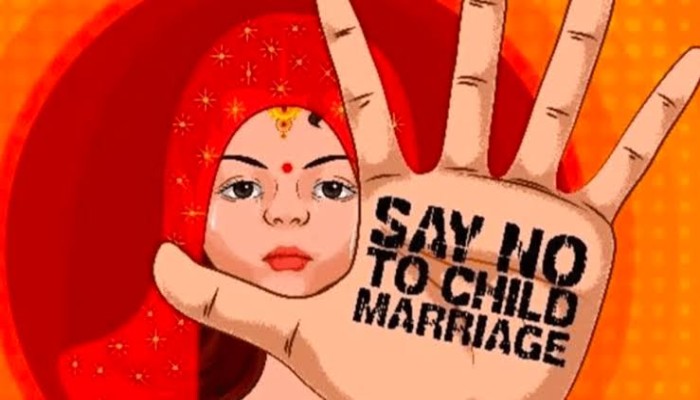
The International Day for the Elimination of Child, Early and Forced Marriage will be observed tomorrow, November 27. The United Nations General Assembly adopted the observance at its session in September this year.
Experts have stressed the need to ensure universal birth registration as a key measure to prevent child marriage in Bangladesh, where the prevalence of the practice remains alarming.
According to reports by the United Nations Population Fund (UNFPA) and UNICEF, nearly 47 per cent of girls in Bangladesh were married before the age of 18 in 2025, the highest rate in South Asia.
Child marriage adversely affects girls’ physical and mental health, education and employment prospects, as well as the country's overall socioeconomic development. It often disrupts girls' education and limits their future opportunities for employment. Early pregnancy also poses serious risks to their health and future well-being.
Birth registration can serve as an important safeguard against child marriage. It provides children with legal identity and helps protect their rights to education, healthcare, dignity and equal opportunities. As a reliable proof of age, it makes it easier to verify the age of prospective brides, prevent attempts to arrange underage marriages through falsified age records and identify children at risk at the local level.
However, nearly half of the population in Bangladesh remains outside the registration system. Limitations in the existing legal framework have also emerged as a major obstacle to achieving universal registration.
Experts believe that amending the Births and Deaths Registration Act, 2004, to make healthcare institutions legally responsible for registration instead of placing the responsibility on individuals could bring nearly 67 per cent of children born in hospitals under automatic registration from birth.
Under Sustainable Development Goal (SDG) target 5.3, Bangladesh is committed to eliminating child marriage by 2030. SDG target 16.9 also calls for providing legal identity for all by 2030, with birth registration serving as a key foundation. Bangladesh is also committed to implementing the United Nations Convention on the Rights of the Child (UNCRC).
Universal birth registration could further support the implementation of the National Plan of Action to End Child Marriage (2018–2030) and the Child Marriage Restraint Act, 2017.
At an inter-ministerial dialogue on preventing child marriage in October 2025, emphasis was placed on strengthening age verification through universal birth and marriage registration, with particular attention to the role of the Local Government Division. Making the registration process easier and more effective is therefore essential.
In a statement marking the day, ABM Zubair, executive director of research and advocacy organisation PROGGA (Knowledge for Progress), said, “Ensuring the legal identity of every girl through birth registration would lay the foundation for protecting her age, rights and childhood. Strengthening and modernising the Births and Deaths Registration Act, 2004, is therefore crucial to building a child-marriage-free country.”