
Thakurgaon :
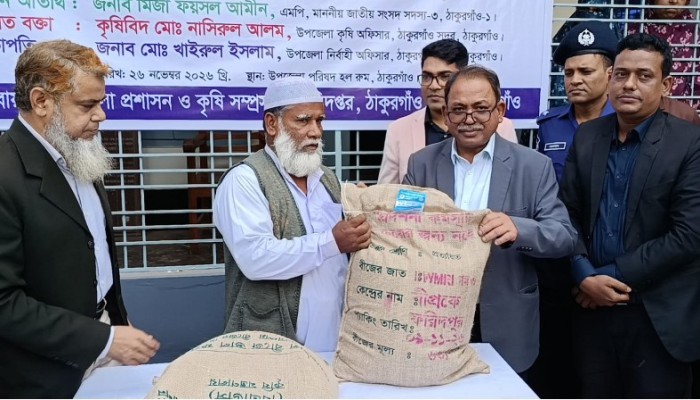
A total of 130 small and marginal farmers in Thakurgaon have received free wheat seeds and fertilisers under a government agricultural incentive programme aimed at increasing wheat cultivation and production during the Rabi season.
The distribution programme, part of the 2026-27 fiscal year's agricultural incentives, was inaugurated by Mirza Faisal Amin, member of parliament for Thakurgaon-1, at the Sadar Upazila Parishad premises on Thursday afternoon.
Thakurgaon Sadar Upazila Administration and the Department of Agricultural Extension jointly organised the programme.
The event was chaired by Sadar Upazila Nirbahi Officer Khairul Islam. Among those present were Deputy Director of the District Department of Agricultural Extension Majedur Rahman, Sadar Upazila Agriculture Officer Nasirul Islam, Sadar Police Station Officer-in-Charge Saroware Alam Khan, agricultural officials, local representatives and farmers.
According to the agriculture department, each beneficiary received 20kg of wheat seeds, 35kg of urea, 18kg of muriate of potash (MOP) and 20kg of triple superphosphate (TSP) fertiliser free of cost.
The agricultural inputs are expected to help farmers reduce cultivation costs and increase wheat yields during the Rabi season.
Addressing the programme, speakers said the government was implementing various incentive schemes to boost agricultural production and strengthen the country's agricultural sector. Supporting farmers and providing them with essential inputs for cultivation remain key objectives of these initiatives, they said.
They urged farmers to bring fallow land under cultivation to increase national food production. They also stressed the need to encourage the adoption of modern agricultural technologies and high-yielding crop varieties.
Agriculture department officials said the distributed wheat seeds could also help farmers engage in seed production. This is expected to improve their skills in producing quality seeds and create opportunities for them to become local seed entrepreneurs.
Officials concerned believe such incentive programmes will help reduce production costs, improve farmers' financial capacity, expand wheat cultivation and ensure a steady supply of quality seeds at the local level.