

Cold waves, dense fog forecast warn potential impact on Boro seedbeds
- Update Time : Monday, December 22, 2025
TDS Desk:
More than half of Bangladesh’s paddy production comes from Boro. Transplanting of Boro seedlings has begun in the haor areas, while seedbed preparation is underway across most parts of the country. In some areas, seeds have already been sown in seedbeds. Meanwhile, the chill of Poush has begun to set in, with several areas blanketed by fog from late night to morning. According to the Bangladesh Meteorological Department (BMD), the country may experience four to seven cold waves this season, accompanied by moderate to dense fog.
Agronomists warn that prolonged dense fog could adversely affect Boro seedbeds, potentially damaging rice seedlings. Farmers are asked to remain vigilant; otherwise, Boro production could suffer significantly.
In its winter outlook, the BMD said moderate to dense fog may occur from late night to morning over the northern, northwestern, and central regions, as well as river basins, while light to moderate fog may prevail elsewhere. Dense fog can reduce the day–night temperature difference and intensify the feeling of cold.
Typically, a minimum temperature of 8–10 degrees Celsius is considered a mild cold wave, 6–8 degrees Celsius a moderate cold wave, and 4–6 degrees Celsius a severe cold wave.
The Met Office forecast indicates that four to seven mild to moderate cold waves may pass over the country this winter. It also said that two to three severe cold waves could affect the northwestern, northeastern, and central regions.
Although no cold wave was recorded anywhere in the country as of December 21, the chill was still pronounced. In many areas, including the capital, the sun remained obscured by clouds, accompanied by fog. Meteorologists say the lack of sunshine for much of the day due to dense fog heightens the sensation of cold, a condition that may persist for several more days.
In its five-day forecast for the current week, the Met Office said that from midnight to morning on December 22, moderate to dense fog may occur in parts of the country. Besides, night and day temperatures are likely to remain nearly unchanged nationwide. From midnight to morning tomorrow, moderate to dense fog may occur in parts of the northern and western regions, with light to moderate fog elsewhere in the country. On Wednesday, light to moderate fog is forecast over the northern region from late night to early morning, and light fog in parts of the rest of the country. The forecast for Thursday also indicates light to moderate fog in the north and light fog elsewhere.
Speaking to journalists, BMD meteorologist Dr. Muhammad Abul Kalam Mallik said, “Due to fog and cloud cover, there has been little sunshine, which is why the cold feels more intense. Yesterday, temperatures in the capital ranged between 12 and 14 degrees Celsius.”
Explaining the winter outlook, he added, “Forecasts issued five to seven days in advance are generally accurate. Beyond that, we issue seasonal forecasts, which are based on climate patterns. These longer-term forecasts are prepared by an expert committee, taking into account prevailing climate conditions and weather patterns from previous years. Seasonal forecasts may not always be precise. Typically, cold conditions intensify from mid-December onwards, with several cold waves each year. Temperatures drop for two to three days, then rise slightly, before falling again after another few days.”
The Department of Agricultural Extension (DAE) has set a target to cultivate Boro rice on 5.05 million hectares of land this season, with a production target of 22.76 million tonnes. In FY 2024–25, Boro rice was cultivated on 5.04 million hectares across the country, yielding 22.68 million tonnes of paddy. This year, the target for preparing Boro seedbeds has been set at 252,691 hectares. The department generally fixes the seedbed target at one-twentieth of the total cultivated land. However, agricultural officials said farmers usually prepare seedbeds on a larger area than this formula suggests.
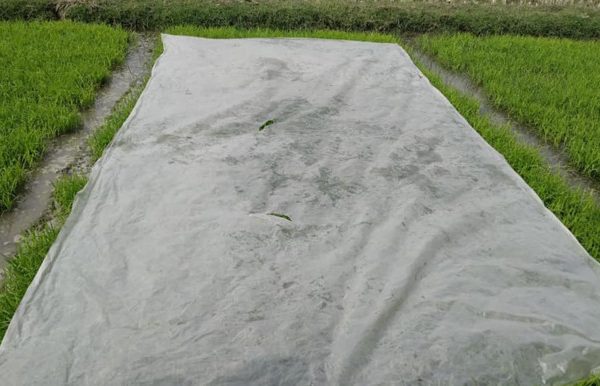
Director of the Field Services (on-ground) Wing of the DAE, Md Obaidur Rahman Mondal, told journalists, “We are advising farmers to prepare standard seedbeds, and farmers across the country are following that guidance. In case of heavy fog, an age-old practice is to irrigate the seedbeds at night and drain the water in the morning. We are recommending this method, and farmers are applying it. In addition, we are advising farmers to cover seedbeds with polythene sheets at night during foggy conditions, which they are also doing. We are regularly providing farmers with information on how to protect seedbeds even if there is severe fog. Therefore, we expect that fog will not have a major impact on Boro seedbeds.”
Agriculture sector stakeholders and agricultural economists, however, warned that fog poses a serious threat to Boro seedbeds. Fog can cause Boro seedlings to turn yellow, which may reduce yields if transplanted. In cases of intense fog, seedlings may even die. Therefore, they stressed the need to alert farmers in advance with timely information.
On the issue, Professor Dr. AHM Saiful Islam, head of the Department of Agricultural Economics & Rural Sociology at Bangladesh Agricultural University (BAU), told journalists, “Excessive fog has a negative impact on Boro seedbeds. Cold spells and fog vary from region to region, so area-specific advance warnings are necessary. If this is done, farmers can remain alert in advance and take necessary measures. That is why seasonal forecasts are very important. Even if they aren’t 100 percent accurate, farmers can get an early indication and make additional preparations.”
He added, “Information must be delivered to farmers in a clear and simple language. Publishing forecasts on websites in complex and technical terms is not enough. The messages must be disseminated through channels that farmers actually use. Farmers need to be informed about the necessary measures to protect seedbeds. That is how losses can be avoided. If, for any reason, seedbeds are damaged by fog, government agencies should also take alternative measures, including ensuring an additional supply of seeds.”













Editor & Publisher: Golam Mostafa Jibon
News & Commercial Office:
2 R. K Mission Road, Dhaka & Railgate, Sirajganj.
Hotline: 01715-319996, 01558-314179
E-mail : editor.thedailysky@gmail.com
news.thedailysky@gmail.com