

Jamuna Railway Bridge Mega Project: Tk 3,000 cr plundered on the note of PD Fattah
- Update Time : Monday, December 22, 2025

Special Correspondent:
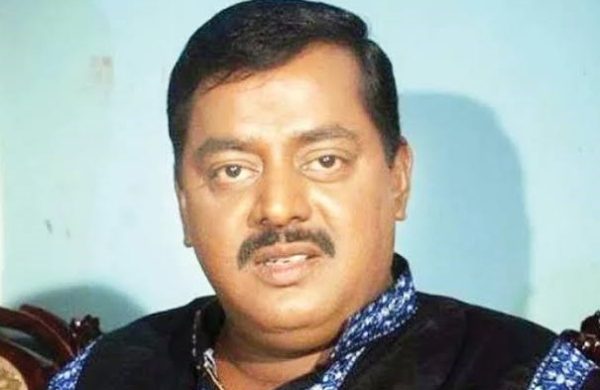
Widespread allegations of corruption and irregularities have been raised against the Project Director (PD) and Additional Director General of Railways (Infrastructure) Al Fattah Md. Masudur Rahman over the government’s expenditure on Jamuna Railway Bridge construction project implemented with the foreign loans.
Multiple reports and documents from the Railways’ Audit Branch, Foreign Aided Projects Audit Directorate (FAPAD) and the Anti-Corruption Commission (ACC) have revealed allegations of financial irregularities of more than Tk 3,000 crore through opacity in the project’s expenditure and procurement process.
The relevant agencies are now investigating various allegations including setting high prices on ‘magic notes’ and embezzling huge amounts of money through fake bills ignoring the objections of the concerned engineers.
A separate double-line railway bridge has been constructed on the Jamuna River under this project funded by the Japan International Cooperation Agency (JICA) involving Tk 16,780 crore. Train services started on the new bridge on March 18 this year.
An analysis of multiple reports and documents of the Railway Audit Branch-2, FAPAD and ACC shows that, a large part of this expenditure involving Tk 3,000 crore is directly related to the approved decision of Al Fattah Md. Masudur Rahman.
According to the audit report summery of FAPAD for the fiscal year 2020-21, audit objection has come over more than Tk 705 crore of expenditure in various sectors in just one fiscal year. The objection mentioned that, bills of more than Tk 127 crore were paid without detailed measurement sheets, drawings and BOQ (Bill of Quantities). The amount of CD-VAT payment without proper supporting vouchers stood at more than Tk 34 crore.
More than Tk 5.5 crore of government money was stuck due to questionable transactions while paying duty-VAT against unused steel pipe piles. Even though, the work was completed much later than the stipulated time, the potential loss due to not imposing ‘delay damage’ on the contractor has been estimated at around Tk 99 crore.
In a separate objection, the amount of additional payment in the name of CD-VAT has been shown to be around Tk 11 crore and the revenue loss to the government has come to around Tk 17 crore without deducting VAT and income tax from the contractor’s bill.
The audit report has raised questions about a large amount of transactions not only in local currency, but also in Japanese yen. FAPAD has identified a figure of more than 4,152 crore yen in the mobilization and demobilization sector as a ‘special observation’.
According to the organization, there are serious deficiencies in the implementation of government rules and contract conditions in the project. Besides, the internal control system was very weak. This level of irregularities has become more serious in subsequent years. The Special Financial Inspection (SFI) report for the FY 2022-23 showed that, Tk 405 crore was paid irregularly without bringing the goods from the country specified in the contract for the purchasing of foreign equipment.
In addition, questions have been raised about another amount of payment involved Tk 430 crore in the name of collecting CD-VAT in an unusual manner instead of the Customs House.
Sensational information has also emerged in the area of pricing and contract approval. A paragraph of the audit report stated that, the government had to pay an additional Tk 1,221 crore due to the award of work at unusually high prices in various packages.
There was a financial loss of Tk 113 crore in addition to the government schedule for the construction of site facilities and cafeterias, and another amount of Tk 250 crore due to price adjustments at a higher rate than the international market rate, it is alleged.
Besides, tax-VAT-related objections include under-deduction of income tax from the consultant’s bill, which amounted to about Tk 27 million. About Tk 34 crore was lost by not deducting VAT and income tax from the contractor’s retention bill, and about Tk 3.5 crore was paid as ‘reimbursable bills’ without proper proof under the guise of office rent and consumable expenses.
The audit department has estimated the potential loss of several crores of Taka due to minor irregularities such as throwing away soil without recycling it.
That is, in addition to the grand total of Tk 705.76 crore for the FY 2020-21, there are questions about at least Tk 2,400 crore more expenses in the next two-three fiscal years due to special audits and SFI objections. In total, the amount of irregularities, suspicious transactions and potential financial losses stands at least Tk 3,000 crore. If the figures calculated in yen are converted to taka, the actual figure will be even higher.
The role of Project Director Al Fattah Md. Masudur Rahman behind this huge amount of irregularities has been questioned several times in the audit documents.
In the files of large packages including WD-1 and WD-2 of the project, field engineers have proposed comparatively low prices in many cases, in some cases they have recommended re-verifying the work measurements, in some cases they have written opinions that it is possible to reduce the cost by organizing some works. But in the notes written by Al Fattah on one side of the same file, a different tone is repeatedly seen.
In one place he wrote, ‘Considering the importance of the project, it is important to complete the work quickly; the proposed price is acceptable’ – that is, he was in favor of maintaining the high price despite the objections at the field level.
In another file, he commented, ‘There is a risk that the quality of the work will be damaged if the price is reduced, therefore the contract can be made at the existing rate.’
The audit documents mention that such observations are not only in one or two files, but are almost regular in the documents of WD-1, WD-2 and some other big packages held by the joint consortium of Max Infrastructure and Tama Construction Limited.
Auditors’ sources said, the project director gave a favorable decision to a particular consortium, ignoring the objections of the field engineers. Some of the objections directly stated that, the ‘possibility of collusion’ in giving work to non-responsive bidders cannot be ruled out.
Similar allegations have also surfaced in the ACC investigation.
On August 4, a letter sent from the ACC head office to the Director General of Bangladesh Railways saying that, allegations of widespread irregularities and corruption in the Jamuna Rail Bridge project have been found, causing hundreds of crores of Taka loss to the government. In this context, the ACC has summoned almost all important documents. The letter warned that if irregularities are proven in such a large project implemented with foreign assistance, current and future financing with development partner JICA may be at risk.
ACC Head Office Deputy Assistant Director Md. Imran Akon said, “The matter is very important. The preliminary investigation is ongoing. It is being thoroughly investigated. Some documents have been collected in the meantime. In the interest of a fair investigation, details cannot be revealed right now.”
Several attempts to contact with the PD Al Fattah Md. Masudur Rahman over cell phone, he could not be reached.






Editor & Publisher: Golam Mostafa Jibon
News & Commercial Office:
2 R. K Mission Road, Dhaka & Railgate, Sirajganj.
Hotline: 01715-319996, 01558-314179
E-mail : editor.thedailysky@gmail.com
news.thedailysky@gmail.com