

When a Region Doubts Its Vote
- Update Time : Saturday, January 10, 2026
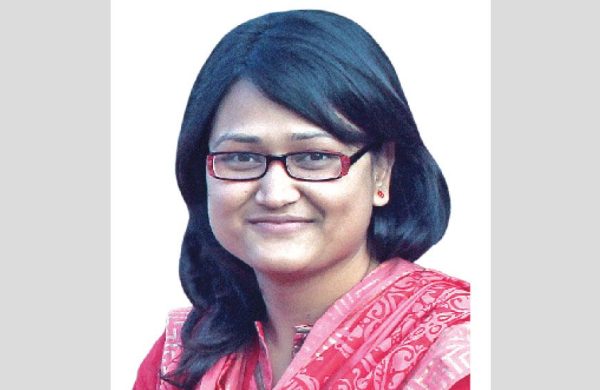
—Kaniz Kakon—
In South Asia today, elections are unfolding in very different political settings, yet they are converging on an unsettling question: what happens when voting survives while democracy thins out? Myanmar and Bangladesh sit at opposite ends of visibility, one locked in civil war under military rule, the other functioning through constitutional continuity and routine elections. Yet both expose how electoral processes can drift from their ethical core. In Myanmar, the planned election appears overtly unreal, announced amid territorial fragmentation, mass displacement, and rule sustained through force rather than consent. Since the February 2021 coup, armed resistance has spread across much of the country, leaving the junta without effective control in many regions. More than three million people have been internally displaced, and civilians continue to face airstrikes, shelling, arbitrary arrests, and widespread violence, according to UN agencies and international monitors. Against this backdrop, holding elections in phases has drawn strong criticism from human rights groups and observers, especially as major opposition forces remain excluded and political activity, media freedom, and public dissent face severe restrictions. The process unfolds without the political, territorial, or moral conditions that give voting its meaning.
In Bangladesh, the situation is less visibly violent but no less fraught. The upcoming parliamentary election involves more than 127 million registered voters, making it one of the largest electoral exercises in the world. It is administratively prepared, nationally consequential, and closely watched abroad. Yet it unfolds amid lingering doubts shaped by recent electoral histories, where participation, competition, and institutional neutrality have repeatedly come under scrutiny. The anxiety here is quieter but persistent: whether voting still persuades citizens that outcomes reflect choice rather than prearrangement. These situations differ sharply, yet they remain connected by a shared regional tension, where elections increasingly function as instruments of order rather than expressions of collective will.
The Rohingya crisis sharpens this comparison by showing how exclusion hardens into permanence when elections refuse to confront it. In Myanmar, the Rohingya remain outside the political community, denied citizenship and basic rights through law, policy, and sustained violence. The military’s 2017 crackdown forced more than 700,000 Rohingya to flee into Bangladesh within months, an episode later described by United Nations investigators as bearing genocidal intent. Today, nearly one million Rohingya refugees live in camps around Cox’s Bazar, making Bangladesh host to one of the world’s largest and longest-running refugee situations. Any election in Myanmar that ignores their right to safe return, citizenship, and political participation turns displacement into permanence and injustice into bureaucratic normalcy. For Bangladesh, the consequences extend beyond humanitarian care. The prolonged refugee presence strains local infrastructure, forests, water systems, and host communities, while repatriation remains stalled due to continued instability and the absence of credible guarantees from Myanmar. The Rohingya question also mirrors Bangladesh’s democratic unease, revealing how exclusion can operate through silence as well as repression. The risk for Bangladesh lies in the possibility rather than inevitability that any election failing to ensure meaningful participation could normalise another absence, the gradual withdrawal of citizens who lose faith in the weight of their voices. Yet this outcome is not predetermined. With openness, institutional neutrality, and public trust, Bangladesh’s coming election still has the space to break this pattern and move elections away from managed legitimacy toward democratic renewal.
A shared temporal tension binds these cases. Elections are meant to be future-orientated acts, moments when societies imagine how tomorrow might differ from today. In Myanmar, that future has collapsed under the weight of violence. Elections create the appearance of movement while political time remains frozen, with armed conflict continuing across multiple fronts and international sanctions failing to loosen the junta’s grip on power. In Bangladesh, the future remains open yet contested. A large generation has grown up with limited experience of widely trusted electoral competition, learning politics through repetition rather than renewal. The result is a regional condition marked by participation without expectation and institutions that function without emotional attachment. This urgency deepens as electoral credibility intersects with regional security and geopolitical bargaining. Myanmar’s prolonged instability has reshaped border dynamics, illicit economies, and armed movements across South and Southeast Asia. China continues pragmatic engagement with the junta to protect infrastructure projects and economic corridors, while India faces growing insecurity along its northeastern frontier. ASEAN, constrained by non-interference, remains diplomatically present yet politically limited. These dynamics affect Bangladesh directly. A fractured Myanmar undermines prospects for safe repatriation, complicates border management, and destabilises the wider Bay of Bengal region. At the same time, Bangladesh’s electoral credibility shapes how it negotiates within this crowded geopolitical field. A government emerging from a broadly trusted election carries moral authority and diplomatic leverage, while one born of contested legitimacy operates under constraint, relying more on accommodation than confidence.
Taken together, the Myanmar and Bangladesh cases illustrate how democracy erodes not only through rupture but through recalibration. Elections continue, institutions persist, and legal frameworks remain intact, yet their moral force weakens when participation narrows and accountability thins. This erosion rarely provokes immediate collapse. Instead, it produces a politics of lowered expectations, where citizens are asked to settle for stability without voice and order without ownership. The danger lies precisely in this gradual acceptance. When societies adjust to diminished democratic horizons, recovery becomes far more difficult than resistance. Myanmar stands as a warning of where unchecked exclusion can lead. Bangladesh now faces a quieter, more consequential test: whether it can interrupt democratic fatigue before it hardens into democratic resignation. Elections mean little without freedom, fairness, inclusion, and the ability to lose power without fear. Ballots can be produced anywhere. Belonging requires cultivation. Votes can be counted quickly. Trust grows slowly. If elections are to anchor peace rather than postpone conflict, they must recover their moral ambition. Otherwise, South Asia risks becoming a region where elections occur regularly, solemnly, and efficiently, yet increasingly fail to answer the most basic democratic question: who truly counts?
——————————————————————————–
The writer is an Assistant Professor in the Department of Philosophy at IUBAT and is currently on study leave, residing in Oslo, Norway






Editor & Publisher: Golam Mostafa Jibon
News & Commercial Office:
2 R. K Mission Road, Dhaka & Railgate, Sirajganj.
Hotline: 01715-319996, 01558-314179
E-mail : editor.thedailysky@gmail.com
news.thedailysky@gmail.com