

Depositors of five Islami banks face 2-year profit wipeout after merger
- Update Time : Thursday, January 15, 2026
TDS Desk:
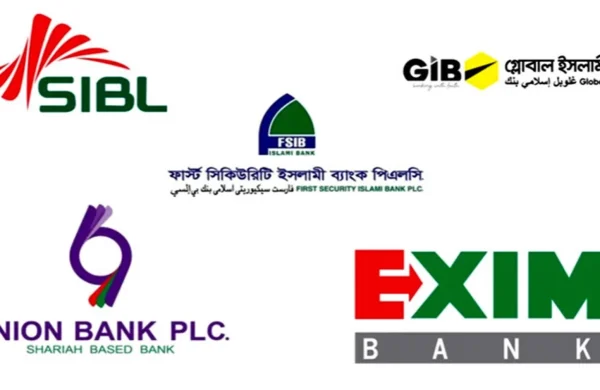
The depositors of five crisis-hit Shariah-based banks in Bangladesh will have to forgo profits on their savings for two years as the central bank moves to stabilise the lenders ahead of a planned merger.
Bangladesh Bank has ordered a ‘haircut’ on profits accrued during 2024 and 2025, meaning depositors will not receive any returns for that period and will see their account balances reduced.
The directive follows what the regulator described as international resolution practices for distressed banks.
The decision was conveyed on Wednesday through letters sent to administrators of First Security Islami Bank, Global Islami Bank, Union Bank, Exim Bank and Social Islami Bank.
The five banks have been merged into a single entity, ‘Sammilito Islamic Bank PLC’.
Under the instruction, all deposit accounts must be recalculated based on their status as of December 28, 2025.
Any profit credited between January 1, 2024 and December 28, 2025 must be removed, with the final balance determined after applying the prescribed haircut.
“To ensure the balanced implementation of the Resolution Scheme, all deposit accounts must be recalculated,” the central bank said in its letter, adding that the process should be completed swiftly.
Bangladesh Bank officials said the lenders incurred heavy losses over the two-year period, leaving them unable to distribute profits to depositors. Prior to the directive, the banks had offered profit rates ranging from 7 percent to 9 percent on deposits.
According to central bank data, the five banks collectively serve about 7.5 million depositors and hold roughly Tk142,000 crore in deposits.
Their total outstanding loans stand at around Tk193,000 crore, a large portion of which is classified as defaulted.
The move means depositors will lose not only two years of expected earnings but will also experience a direct reduction in their account balances — an unusually severe step in Bangladesh’s banking sector. It follows an earlier decision in which the share value of the five banks was declared zero, wiping out investments held by sponsors and shareholders.
Exim Bank was previously controlled by Nazrul Islam Mazumder, former chairman of the Bangladesh Association of Banks.
The remaining four lenders were controlled by Saiful Alam, head of the S. Alam Group.
Both were widely known as close associates of ousted Prime Minister Sheikh Hasina and allegedly held significant shareholdings while securing large loan facilities through various entities.
The merger marks one of the most sweeping banking restructurings undertaken by Bangladesh Bank as it seeks to contain systemic risk and restore confidence in the Islamic banking segment.









Editor & Publisher: Golam Mostafa Jibon
News & Commercial Office:
2 R. K Mission Road, Dhaka & Railgate, Sirajganj.
Hotline: 01715-319996, 01558-314179
E-mail : editor.thedailysky@gmail.com
news.thedailysky@gmail.com