

What have people ever gained by voting?
- Update Time : Sunday, January 18, 2026
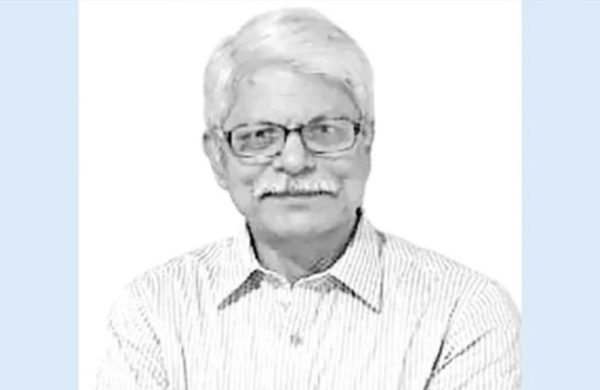
—Anwar Hossain Manju—
What do people gain by voting? In 55 years of independence, the people have voted countless times. What have they received? Nothing. They never do. Nor do they know when or what they might ever get. Yet they continue to vote. They have been made to believe that voting means democracy, and they love the word “democracy.” Just as Muslims, as followers of religion, know the Kalima—“La ilaha illallahu Muhammadur Rasulullah,” and Hindus know the Gayatri Mantra—“Om Bhur Bhuvah Swaha, Tat Savitur Varenyam”—so too the citizens of the independent sovereign “People’s Republic of Bangladesh” know democracy. Therefore, they vote.
To attain heaven or salvation by pleasing the Creator, the Kalima or Gayatri Mantra is essential. Likewise, the practice needed to fulfill the collective aspirations of the people by pleasing the rulers of the country is democracy—meaning voting. Therefore, another national election will be held on 12 February: the 13th parliamentary election. It is right at the doorstep. After two years, one month and five days, people will vote again. “Casting votes” is not truly a democratic expression; rather, it should be said that people will exercise their voting rights freely.
If everything had gone normally, this election should have taken place in 2029. But nothing ever goes normally. Under the leadership of former Prime Minister Sheikh Hasina—now ousted, fugitive, and sentenced to death—nothing in the country was in order after the last election.
Nor was it likely to be. If someone seizes power repeatedly through manipulation and remains Prime Minister for four consecutive terms with a body of flesh and blood, a heart filled with hatred, and the burning desire to avenge the killers of their parents and siblings, the extent of their vindictiveness and arrogance becomes terrifying—as the nation has witnessed. Like her father Sheikh Mujibur Rahman, Sheikh Hasina became a servant of the boastful words “I” and “my.” From the country’s independence to every development, she saw only her father’s struggle and dream. She chanted like prayer beads: “I gave mobile phones, I gave television channels, I gave the internet”; “This country belongs to my father”; “Without my father the country would not be independent”; “My father spent half his life in prison for the nation.” She even told army officers that without her father they would have had to endure humiliation under the Punjabis.
Her claims were half-truths. Many countries gained independence without Sheikh Mujib, with little or no bloodshed. It is true he spent nearly 13 years in prison. But Frontier Gandhi Khan Abdul Ghaffar Khan spent 37 years in jail; Mahatma Gandhi spent over five years imprisoned; Sheikh Abdullah and Nehru spent 20 and 9 years respectively. Some sought power, others avoided it. Thus, the motive behind sacrifice—service to people or thirst for power—must be judged.
Sheikh Mujib endured hardship to gain leadership. Sheikh Hasina did not. The fruits of her father’s struggle fell easily into her lap. She never truly suffered imprisonment—only lived in voluntary exile in Delhi from 1975–81 and was detained comfortably for about a year in 2007–08. Meanwhile, during her 16 years in power, Begum Khaleda Zia spent long years in prison through politically motivated cases. Had Hasina remained in power, Khaleda’s death in jail would have been inevitable. Hasina is again in exile in Delhi.
Returning to voting: after the 12th parliamentary election of 7 January 2024, Hasina claimed her government was formed through people’s free votes—“government of the people, by the people, for the people.” If Abraham Lincoln saw this fascist misuse of his definition, he would turn in his grave. Under Hasina’s rule, votes were unnecessary; candidates were elected unopposed. As in 2014 and 2018, the 2024 election also lacked real voter participation.
Initially, the Chief Election Commissioner announced voter turnout at 28 percent—about 33.5 million votes out of nearly 120 million voters. Later, this was inflated to 40 percent, and 75 percent of those votes supposedly went to the Awami League. Everyone knows how numbers are manipulated; few are more skilled at this than the Awami League. Their only defeat while in power was in 2001. Without the July–August 2024 uprising, they had planned to remain in power even until Bangladesh’s centenary.
After the 2024 election, the U.S. State Department said it was not free or fair; the UK Foreign Office cited major democratic deficiencies; The Economist described Bangladesh as effectively a one-party state. That was not exaggeration.
In a vote-loving country like Bangladesh, 28 or 40 percent turnout is unacceptable. In the West, low turnout is normal; in Bangladesh elections are festivals—more joyous than Eid. During election season, even the poorest gain temporary respect from vote-seeking politicians who visit them, shake their dirty hands, distribute cash, clothes and food. People go to polling centers in festive spirits. But the last three elections denied them this right. This February election, without the Awami League, has restored voter importance and created a festive mood nationwide.
From Delhi, Sheikh Hasina has urged supporters to boycott the election, claiming that without Awami League participation it will be one-sided and unacceptable internationally. Her son Joy echoed the same in an AP interview. Ironically, Awami League itself always rigged elections while in power and ignored international criticism. Now invoking the international community is merely another act of deception.
Since 1970 the Awami League has repeatedly misled the nation, looted the country and worsened people’s suffering. They learned nothing from 1975 and will learn nothing from 2024. As the Qur’an says: “They are deaf, dumb and blind; they will not return to the right path” (Surah Al-Baqarah 2:18). This applies to the Awami League.
With only three weeks left before the 12 February election, it is the duty not only of law enforcement but also of contesting political parties to protect the people from the misinformation spread by evil forces.
——————————————————-
Writer: Senior journalist based in the United States






Editor & Publisher: Golam Mostafa Jibon
News & Commercial Office:
2 R. K Mission Road, Dhaka & Railgate, Sirajganj.
Hotline: 01715-319996, 01558-314179
E-mail : editor.thedailysky@gmail.com
news.thedailysky@gmail.com