

Political parties’ pledges fail to address fundamental challenges in agriculture
- Update Time : Wednesday, January 28, 2026
TDS Desk:
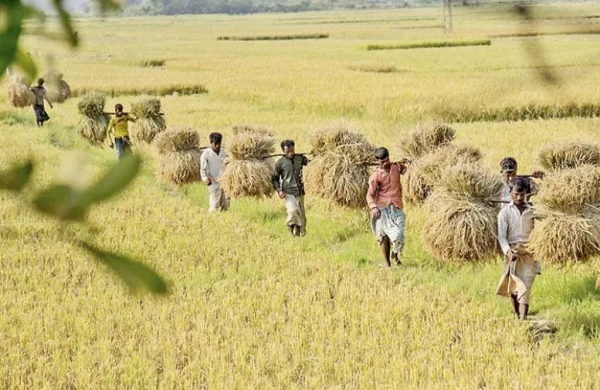
Agricultural land in Bangladesh is shrinking at an average annual rate of 0.2 percent. Nearly 56 percent of existing land remains underutilised, while 40 percent of farming households are landless or tenants. Those holding larger plots often do not cultivate them. Farmers struggle to secure fair prices amid rising production costs. The sector remains dependent on imported inputs and food. These structural issues, along with chronic land mismanagement and stagnant crop yields, have defined Bangladesh’s agriculture for decades.
With a national election approaching, political parties are making pledges on agriculture and farmers. Most have yet to publish manifestos. But sector experts say speeches so far overlook many of the farmers’ core problems.
Agricultural economist Dr Jahangir Alam told journalists, “The fundamental problems of agriculture are receiving very little attention in the political parties’ pledges. Little means very little.” He urged manifestos to commit at least 10 percent of the national budget to agriculture. “We rely on imports for inputs. Irrigation equipment, seeds, fertiliser, pesticides and tractors are all imported,” he added. “We need to explore domestic production. Industrial plants should be set up here through public–private partnerships. These points must feature in election manifestos.”
Dr Alam continued: “Fundamental issues such as increasing supply and lowering input costs, and ensuring farmers a fair price, must be addressed. Government intervention in agricultural marketing is essential. Fair prices for farmers must be guaranteed, and middlemen’s dominance should be curtailed without harming consumers. Political parties need to have a clear mandate to resolve these problems. They should make these pledges publicly.”
The BNP has centred its campaign on the “Family” and “Farmers Card” schemes, promising a “Farmers Card” if it returns to power. A promotional video on the party’s official Facebook page presents it as a service to protect farmers’ rights. The card would give farmers access to fertiliser, pesticides and seeds at fair prices, provide machinery and support at lower cost, simplify and reduce irrigation expenses, and deliver government subsidies and incentives directly. The party also pledges easier loans and tailored agricultural insurance.
The BNP recently released a YouTube video featuring Tarique Rahman explaining the plan. “The Farmers Card will function like a bank card. It will have a chip,” he said. “We will consolidate all agricultural land on a single server. Records will detail each farmer’s location, name, land ownership or lease status, crops and yields. We will aim to fully support one crop. Seed, fertiliser, and pesticides — we will provide these supports for five to seven years. If we can do this, it will strengthen farmers’ economic backbone and capacity.” He also outlined plans to map all agricultural land and provide farmers with weather and climate information via smartphones.
On this, Dr Mahdi Amin, spokesperson for the BNP’s election steering committee and adviser to the chairman, told journalists: “We want to raise productivity. Under the card scheme, subsidies for irrigation, fertiliser, seeds and pesticides will reach farmers directly. We will work to improve and simplify weather–based services, cold storage, and the supply chain and market system to boost production.” He added that securing farmers a fair price and diversifying production were key objectives.
“We aim to industrialise agriculture and link it to exports,” Dr Amin said. “We plan to provide farmers with maximum facilities and loans at minimal interest. At the same time, we want to cut the number of middlemen through market reforms. Fishermen, livestock farmers and landowners would also qualify.”
While the topic of agriculture has been raised at Jamaat–e–Islami rallies, sector experts say the party has offered no clear pledges on core issues. It has promised to secure fair prices. The party also talked about providing agricultural loans and boosting productivity through cooperating with farmers.
Addressing an election rally in northern Bangladesh on Saturday, the party’s Ameer, Dr Shafiqur Rahman, said, “Agriculture can no longer be run in the old way. We will increase production by modernising the sector and providing modern logistics to ensure farmers get fair prices for their produce.” He added, “Farmers often fail to receive proper market prices. Crops are sometimes lost due to inadequate storage. By tackling these problems, fair prices for crops will be ensured. Jamaat–e–Islami will guarantee fair crop prices.”
During the tour, the Jamaat Ameer also pledged to develop northern Bangladesh as an agriculture–based hub. At the party’s policy summit on January 20, he spoke of prioritising agricultural development and food security while empowering farmers and raising productivity.
When Bangladesh Jamaat–e–Islami was contacted and asked about its future plans for agriculture and its election manifesto, the party did not want to disclose anything just yet. The party’s assistant secretary general, AHM Hamidur Rahman Azad, told journalists, “Nothing can be said on this matter now. You will know what is in the manifesto when we announce it.”
The National Citizen Party (NCP) is also making pledges on agriculture and farmers. On August 4 last year, the party unveiled a 24–point manifesto for establishing a “Second Republic,” which emphasised sustainable agriculture and food sovereignty. It said it would provide subsidies for modern farm machinery, climate–resilient seeds, environmentally friendly fertilisers and technology–based support. The party aims to transform agriculture into an export–oriented, sustainable sector by incentivising investment in toxin–free, nutritious food production and agro–processing. However, these pledges are rarely highlighted in the party’s election rallies.
Monira Sharmin, secretary of the NCP’s central election steering committee, told journalists: “We are bringing the ‘Save the Farmers’ movement to the forefront. We have an organisation called the ‘Jatiya Krishak Shakti’. Through this, we will work on farmers’ rights. We will ensure fair prices for their produce and curb middlemen dominance. We plan to outline how a system can be developed to bypass these intermediaries.”
The Islami Andolan Bangladesh has pledged to create an integrated agricultural system prioritising production, storage and marketing if it comes to power. Sheikh Fazlul Karim Maruf, convener of the party’s media cell, told journalists: “There are numerous middlemen in Bangladesh’s agricultural supply chain. If entrusted with state power, the Islami Andolan Bangladesh will take direct responsibility for managing farmers’ seeds, irrigation and fertiliser. Modern storage facilities will be built in every union, along with developing a dedicated transport system for agricultural produce.”
Experts warn that while agricultural land is shrinking, climate impacts are reducing yields. Low investment has increased import dependency. Output remains stagnant due to a lack of modern technology. Soil salinity is rising while excessive chemical use is adding to health risks. In this context, they say, political parties should make clear commitments on these fundamental agricultural issues.
Researcher and professor Dr Md Anwarul Abedin of Bangladesh Agricultural University told journalists, “The parties have not yet released their manifestos. The BNP has spoken of ensuring farmers’ production, marketing and fair prices in its 31–point plan. But I don’t know how they plan to implement it. I have seen no comparable vision or plan from the other parties. While all parties mention agriculture in speeches, there are no definitive statements on its core problems, future or execution.”
He added that the national economy could face a severe crisis in the next 15–20 years if young people are not engaged. “There are talks of modern agriculture, smart agriculture and commercialisation. The role of the country’s youth can also be utilised in this. It’s not evident how much planning exists to turn educated young people into agricultural entrepreneurs.” He stressed the need for safe food, organic farming, higher productivity while protecting soil, and the adoption of modern technology and improved seeds.





Editor & Publisher: Golam Mostafa Jibon
News & Commercial Office:
2 R. K Mission Road, Dhaka & Railgate, Sirajganj.
Hotline: 01715-319996, 01558-314179
E-mail : editor.thedailysky@gmail.com
news.thedailysky@gmail.com