

What Is after 12 February?
- Update Time : Thursday, January 29, 2026

—Mahfuzur Rahman—
The 12 February election will provide an opportunity to form an elected government in Bangladesh. On the one hand, this will eliminate the problem of not having a government formed through direct elections for the past 18 months and put an end to the criticism that there have been no acceptable elections in the country for the past decade, on the other. The election may also be questionable, as a major political party or alliance has been kept away from the elections, but that may not be a stumble for the moment. Rather, the people are waiting with great interest for at least an elected government to come.
The interim government first survived on the basis of general popularity. Secondly, the people wanted to breathe a sigh of relief. Before a political government came, an apolitical system was needed for some time. But since the government was apolitical, it had several limitations. First, there was no accountability in its management system. In many cases, there was no transparency either. The government was seen to be too flexible to different classes and groups. As a result, a mob culture has developed instead of good governance. And the rule of law has completely disappeared. In some cases, students have grown from teachers. In some cases, emotions have become more important than reason. In some cases, convenience for the government has become more important than justice. Although the government was unaccountable in terms of expenditure, unfortunately, there were no checks and balances to rectify the misappropriation.
Therefore, the elected government will have to face multiple challenges together. Amidst all these challenges, the elected government must prioritise its work and move forward. I think bringing peace and stability to the country should be the prime concern of the government to be elected. Therefore, maintaining law and order will be the first task. Various government, semi-government and autonomous institutions will have to be gradually restructured. The interim government has made appointments to various institutions without paying attention to any rules and regulations. Such appointments should be brought under fair policies where there will be transparency and accountability. All institutions in which arbitrary appointments have been made in place of elected representatives should be brought back to constitutional norms. Local governments should be made self-reliant and strengthened through local government elections. Adequate laws should be enacted in accordance with the provisions in the constitution to strengthen the local government.
The pre-July government practically pushed the banking sector to severe crisis by providing benefits and privileges to a small group of people of its choice. As a result, money laundering increased. The interim government has tightened the banking sector to eliminate financial irregularities, but at the same time, it allows little space for dynamism, and there is a high risk of misuse of the incentives it has given. With the change of the government, new boards of directors have come to most banks. With the new board of directors, groups that have not received unfair opportunities until now have become active in seeking unfair opportunities for themselves in the manner of the previous regime. As a result, there has been growing fear, uncertainty and stagnation in the banking sector.
Most of the sectors in which the interim government has spent money are unproductive sectors. This may not create any pressure for the 18-month government. But the elected government will have to handle this additional pressure and move forward with sufficient skill and some conservatism. Therefore, even if the agricultural sector is subsidised for the time being, it should be kept strong to prevent pressure on imports and foreign exchange. In addition, the extensive social security programmes of the previous regime should be brought back, albeit under a different name. If financial support is provided to the marginalised population, it can give momentum to the economy. If the economy cannot be brought to life, the new government’s other political projects will be threatened. Consequently, the government will lose confidence and then bring about its own destruction through the wisdom of others.
If the elected government wants to move forward with a groundbreaking decision from the very beginning, its first task will be to ensure good governance, transparency and accountability, but along with that, it may be very important to invest more in the education sector, especially in primary, technical and practical education. This will create entrepreneurs, who, if given policy support, will develop small and medium industries. And in the near future, the investment situation will automatically improve, which in turn will be able to attract foreign investment as well as domestic investment. Some individuals from the middle have taken advantage of these and deceived the government and the people. Foreign investment does not come that way. Simply, creating an investment environment is an effective step to attract foreign investment.
If investment is increased and necessary reforms are made in the education sector, Bangladesh’s 80 million youth will be empowered, and many innovative ideas, including in the IT sector, will automatically emerge, which will not only revitalise the country’s economy but also bring home the benefits of globalisation.
The people are the greatest asset for any government. Therefore, it should be the immediate duty of the ensuing government to consolidate public support. The more public support is consolidated, the less foreign pressure on the government there will be. If the government wants to sideline or push the people away for some reason, it will be difficult for them to confront foreign powers. Then all the compromises that have to be made to survive in power will boomerang. And unfortunately, in such a scenario, along with the government, the people will also have to pay the price.
With the kind of changes that are currently happening in the world, a country like Bangladesh has to face many challenges to survive. The smarter and more skilful the country is, the easier it can face the challenges. At the same time, it can extract benefits. That is why I see no alternative to well-educated people, development-orientated and people-friendly policies, education, good governance, transparency and accountability. Under such circumstances, the government then becomes a partner of the people.
————————————————–
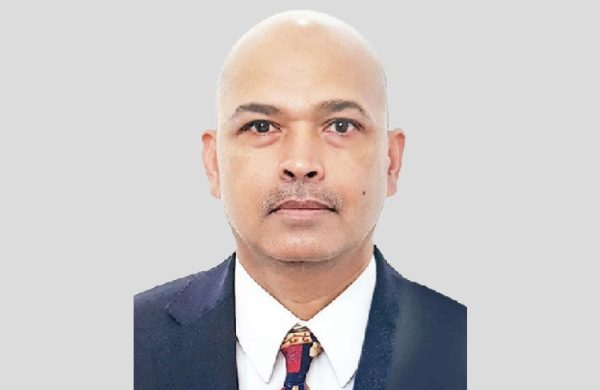
The writer is a former Bangladeshi Ambassador







Editor & Publisher: Golam Mostafa Jibon
News & Commercial Office:
2 R. K Mission Road, Dhaka & Railgate, Sirajganj.
Hotline: 01715-319996, 01558-314179
E-mail : editor.thedailysky@gmail.com
news.thedailysky@gmail.com