

BNP government confronts a tough test in power and energy
- Update Time : Thursday, February 19, 2026

TDS Desk:
The power sector faces BDT 400 billion in outstanding bills and a major shortfall in gas for generation. Sector losses have continued to mount. Against this backdrop, a Bangladesh Nationalist Party-led administration has taken office. The irrigation season and the month of Ramadan are already underway, and electricity demand is expected to surge in the coming summer. This combination of challenges, including managing payment arrears, restoring financial health and tackling gas supply shortages, analysts say, will severely test the new government.
The previous administration, an interim government, was in office for 18 months after the fall of the Awami League government. During that period, adviser Muhammad Fouzul Kabir Khan oversaw the power, energy and mineral resources ministry. He set out various pledges to reform the power and energy sector. In practice, however, his initiatives failed to curb financial losses. Tariff revisions, liquefied natural gas imports and cuts in capacity charges were not achieved. Instead, the financial losses of the Bangladesh Power Development Board (BPDB), the sector’s single buyer, widened during the interim government’s tenure.
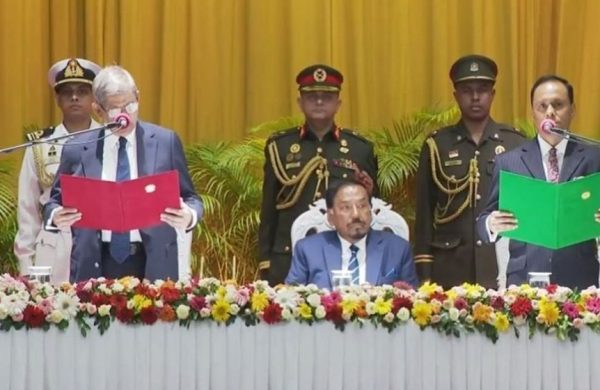
On its first day in office on Wednesday, the newly elected BNP government of the 13th parliament set out a 180-day plan with three priorities, including maintaining regular power and energy supplies.
Speaking after the first cabinet meeting at the secretariat, Home Minister Salahuddin Ahmed, also a member of the BNP’s standing committee, told reporters that while governments conventionally set 100-day priorities, this administration has opted for a 180-day framework. “The details would be announced later,” he said. “Initially, however, the government’s priorities would be keeping commodity prices under control, further improving the law-and-order situation, keeping supply chains functioning and ensuring that no crisis emerges in the power and energy sector.”
Iqbal Hasan Mahmud Tuku, the new power, energy and mineral resources minister, spent his first day in office at the secretariat and delivered a clear message on the sector’s financial and supply problems. After meeting ministry officials, he said his main priority was to ensure electricity supply during Ramadan and the irrigation season.
Asked about a warning from the Bangladesh Independent Power Producers’ Association (BIPPA) that its members would struggle to run their plants unless at least 60 percent of outstanding dues were paid before Ramadan, the minister said that if BIPPA had made such a statement, it would amount to “blackmailing” the new government.
The interim government cleared some liabilities in the power and energy sector, but arrears now stand at BDT 400 billion. Although it launched various reform initiatives, it failed to meaningfully ease financial pressure and losses.
A major driver of the sector’s financial woes is the rollout of unnecessary and unfinished projects. These placed the interim government under severe strain. Analysts say that pressure on the sector will persist unless the BNP government also scrutinises these projects on efficiency grounds.
The biggest challenge in making the sector sustainable is to cut subsidies and restore financial health. Subsidies amounting to BDT 2,064.82 billion have been provided in the power sector over the past five financial years, from FY 2021-22 to FY 2025-26. For the current fiscal year alone, BDT 370 billion has been allocated.
Although the interim government reduced subsidies this year, the BPDB’s net loss still exceeded BDT 170 billion. Despite overall cost-cutting steps, the power sector’s single buyer has nearly reached the brink of financial collapse. Experts argue that the BNP government will need to undertake structural reform to lift the sector from this situation.
After taking office, the interim government formed a national committee to review power purchase agreements, including the deal with Adani Group for its large-capacity plant. The committee found evidence of significant corruption in the Adani contract and, based on the information gathered, suggested the government could pursue a case against the company in an international court. Expectations had been that the interim administration would cancel the contract, easing the path for the next elected government. The report, however, was submitted about a month before the interim government’s term ended, leaving the matter to the incoming political government.
Experts allege that weak planning and enabling widespread financial plunder under the Awami League government created excess generation capacity. As a result, nearly BDT 1.5 trillion has so far been paid in capacity charges. How to utilise surplus capacity from both private and public sources remains a major challenge. Officials warn that unless this is addressed, the sector’s financial losses will persist.
In addition to power subsidies, the government provides substantial support for LNG imports, amounting to BDT 60 billion a year. Over the past five financial years, a total of BDT 332.68 billion has been allocated for gas subsidies. Bangladesh Oil, Gas & Mineral Corporation (Petrobangla) has also spoken of another BDT 60 billion for the current fiscal year. Of that sum, BDT 40 billion had been released by February, according to Petrobangla sources.
Local gas production has been in steady decline. To bridge the gap, costly LNG imports began under the previous Awami League government, a policy the interim administration continued. Although it took various steps to boost domestic extraction, these yielded little. Instead, the interim government sought to manage the strain by raising LNG imports to record levels.
The now-ousted Awami League government failed to ensure uninterrupted gas supplies for power generation, industry, fertiliser production and households. The situation did not improve much under the subsequent interim government. Experts had hoped reform and more efficient management would lift supply. However, the interim government has sought to raise gas output by importing LNG and repairing several wells, measures officials describe as an easy but straightforward response to the supply shortage. It made no major decisions on tenders for offshore oil and gas exploration. It also left office having done little beyond publicising earlier plans, first to drill 50 wells and later to drill 100 wells by 2028.
Current gas demand stands at 3,800 million cubic feet per day. Total supply, including LNG imports, averages just over 2,600 million cubic feet per day. As a result, rationing is routine in gas supply, with industry, power generation and households all affected. The strain intensifies during Ramadan, the irrigation season and the summer months. Energy experts say managing this during the current Ramadan and irrigation season will be a major test for the new government.
“The new government’s biggest challenge is to ensure primary fuel supplies — gas, oil, LPG and coal in particular,” Professor M Tamim, an energy expert and vice-chancellor of Independent University, told journalists. “If it can do that, it’ll be able to cope with the electricity generation problems during Ramadan and the summer.”
Power demand spikes during Ramadan. Evening peak demand is now reaching 12,500 MW. Within days, that could rise by a further 4,000 MW, lifting total requirements to 16,500 MW.
The government is proceeding with LNG imports under the previous interim administration’s plans to stabilise supply and manage load-shedding, ministry officials say. The power division has already held meetings to ensure that coal-fired plants run round the clock to meet demand.
The gas shortage is long-standing. With no increase in domestic production, reliance on imported LNG has deepened. Neither the Awami League government nor the interim administration that followed was able to break this cycle. Instead, both increased subsidies and LNG imports.
More than half of Bangladesh’s electricity is generated by private producers, many of them fuelled by furnace oil. BPDB owes BDT 140 billion in arrears to these independent power producers (IPPs). The operators warn that unless 60 percent of that amount is paid, there is a serious risk of load-shedding during Ramadan and the summer months.
BIPPA President David Hasanat told journalists: “Electricity demand will rise during Ramadan, and the heat will set in. Private producers supply a large share of that power. But a huge amount in unpaid bills has accumulated. If we don’t get that money, how will we import fuel? Even if BPDB places orders for power, we won’t be able to supply it. The new government could therefore face significant pressure in managing the power and energy sector.”






Editor & Publisher: Golam Mostafa Jibon
News & Commercial Office:
2 R. K Mission Road, Dhaka & Railgate, Sirajganj.
Hotline: 01715-319996, 01558-314179
E-mail : editor.thedailysky@gmail.com
news.thedailysky@gmail.com