

Administrative overhaul tests new BNP-led government
- Update Time : Saturday, February 28, 2026
TDS Desk:
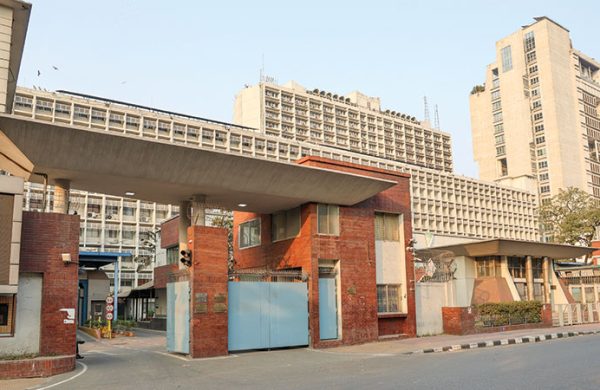
The government has scrapped the contracts of nine senior secretaries and secretaries, triggering fresh vacancies at the top of the civil service. Three other secretaries were earlier removed and attached to the public administration ministry. No replacements have been named yet and several key ministries now operate without a permanent head.
The public administration ministry’s Appointments, Promotions and Deputation (APD) Wing has also lacked a department head for months, further complicating an ongoing administrative overhaul and reshuffle. The government, led by the recently elected Bangladesh Nationalist Party (BNP), faces added pressure to complete the reorganisation, which has already slowed decisions and implementation in critical areas.
The administration comprises 58 ministries and divisions. Under the recently dissolved interim government, 79 officers with secretary and senior secretary ranks held the portfolios. That number has fallen to 66 following recent contract cancellations.
Since forming the government, the BNP has appointed ABM Abdus Sattar as principal secretary to the prime minister and Monjur Morshed Chowdhury as home secretary. At least a dozen ministries and divisions are now operating with the secretary post vacant.
Several senior government sources said the contract terminations and transfers form part of a broader administrative restructuring. However, selecting suitable officers for the vacant posts is proving to be complex. A shortlist for secretary-level positions has been prepared, but the top tier has yet to approve it. Annual confidential reports for some candidates were unsatisfactory; others with strong records lacked sufficient experience, delaying clearance. The appointment process has stalled as a result.
The APD wing oversees all civil service postings and transfers. Its organogram stipulates the subdivision is headed by an official holding the rank of additional secretary. But the wing has lacked a permanent chief since October last year under the interim government. Ministry officials however said the public administration secretary is now directly supervising the wing.
The BNP government took office on February 17 when party chair Tarique Rahman was sworn in as prime minister with his cabinet. A day earlier, Nasimul Ghani was appointed cabinet secretary. The day after the government’s formation, ABM Abdus Sattar received a contractual appointment as principal secretary to the prime minister.
Within a week of the new administration taking charge, senior posts were reshuffled. On February 23, three secretaries were removed and attached to the public administration ministry. They were Md Saifullah Panna, then secretary at the Prime Minister’s Office who had served in the former Chief Adviser’s Office; Rehana Parveen, secretary of the Secondary and Higher Education Division; and Md Kamal Uddin, secretary of the religious affairs ministry.
The same day, the government cancelled the remaining tenure of nine contract-appointed secretaries. They were Mokhles Ur Rahman, SM Akmal Hossain and Qaiyum Ara Begum, all members of the Planning Commission; Sharifa Khan, alternate executive director at the World Bank; Md Saidur Rahman of the health services division; Shish Haider Chowdhury of the information and communication technology division; Siddique Zobair, director general of the National Academy for Planning and Development; Mohammed Yousuf, chairman of the Land Appeal Board; and Mumtaz Ahmed, secretary of the women and children affairs ministry. All except Md Saidur Rahman held senior secretary ranks.
A secretary, speaking to journalists on condition of anonymity, said the previous Awami League government ran the civil service in a way that compelled officials to show loyalty. “The vast majority of current officers served that government. The interim government couldn’t break from that mindset. It too ran the state with officers of its choice. The new government’s main challenge now is to identify and appoint the right person for each ministry or department. The BNP has set out its position in its election manifesto. If it selects officers accordingly, the outcome will be positive. If not, little will change.”
The BNP’s manifesto pledged to overhaul the civil service. In building a “meritocratic Bangladesh”, it said merit, honesty, creativity, competence, experience and training will be the sole criteria for recruitment, transfer and promotion in the civil and military administration. It also pledged that no one would be unfairly excluded.
Mohammad Firoz Mia, a former additional secretary and public administration expert, told journalists: “The government will face a stiff test in restructuring the bureaucracy. The main reason is the deep politicisation of the service under the previous Awami League government. The interim administration also tended to appoint favoured officials rather than restructure the service along competent and neutral lines. That further eroded discipline and professionalism. If the current situation is not handled with skill and judgment, it could deteriorate further. If the administration is again shaped by political considerations, the old problems will simply recur.”
A competent and professional civil service must be rebuilt by appointing officers on merit and experience, Firoz Mia said. However, he added, it remains unclear whether that can be achieved in practice.
He warned, “Failing to restructure the administration effectively would have repercussions beyond the bureaucracy; it’ll also affect politics. A weak and inefficient administration could ultimately turn public opinion against the government.”
Shamim Al Mamun, another former secretary, said selecting the right officers is the BNP government’s biggest challenge. “The Awami League’s one-and-a-half decades in power almost destroyed the neutrality of the civil service by using it for party and personal ends,” he told journalists. “Honest and capable officers who served impartially during that period retired without promotion. Even the committee formed by the interim government to address such grievances failed to provide redress to those affected.”
Al Mamun described the recent cancellation of contractual appointments as timely, adding, “Many of those appointments drew criticism from the outset of the interim government. With one or two exceptions, none were seen as particularly effective. The administration’s overall performance during that period suffered; it appeared directionless.” He said identifying honest, competent and independent officers is now essential to run the state. Bureaucrats accustomed to serving a long-ruling “fascist regime” will struggle to deliver the benefits of a democratic system. “The political leadership has no choice but to rely on honest, capable and neutral officers to uphold the rule of law,” he said.
Analysts said appointing long-retired bureaucrats on a contractual basis created institutional distance from serving officers, affecting the administration’s overall functioning under the interim government. Yet contractual hiring cannot be abandoned entirely as according to experts, political governments tend to place loyalists in key posts. The BNP administration is no exception. It has revoked some contracts and granted others, though it has not carried out a broader overhaul of the service yet.
A former senior government official, speaking on condition of anonymity, said that contractual appointments should be short-term. Longer contracts, he said, can disrupt promotion and career progression for permanent staff, with knock-on effects across the administration. “There’s a risk the system could grind to a halt. In this country, we often see competent but low-profile officers working quietly while incompetent but influential figures rise. If that trend persists, meaningful change will be hard to achieve.”
The public administration secretary, Md Ehsanul Hoque, did not respond to phone calls seeking comment on the overall situation.
The state minister for public administration, Md Abdul Bari, said: “The issue is too complex to address briefly.” He declined further comment.








Editor & Publisher: Golam Mostafa Jibon
News & Commercial Office:
2 R. K Mission Road, Dhaka & Railgate, Sirajganj.
Hotline: 01715-319996, 01558-314179
E-mail : editor.thedailysky@gmail.com
news.thedailysky@gmail.com