

Energy crisis: Are the govt measures enough to stabilize country’s economy
- Update Time : Sunday, April 5, 2026
TDS Desk:
The government has rolled out a series of austerity measures to manage the emerging energy crisis triggered by global tensions, but questions remain over whether these steps will be sufficient to stabilize supply and protect the broader economy.
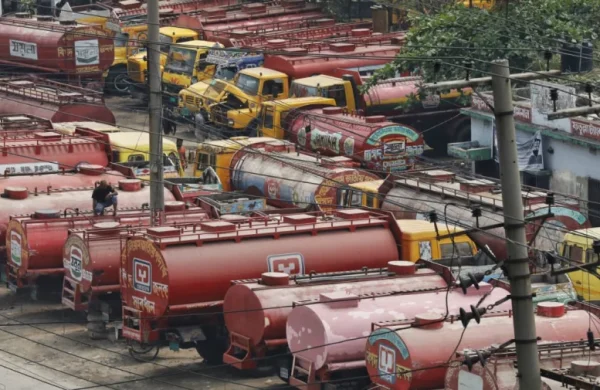
The impact of the ongoing US–Iran conflict is already visible in Bangladesh’s fuel market.
Long queues have formed at filling stations across the country, with many consumers reporting difficulty in obtaining fuel.
While the government insists there is no shortage, rising demand and panic buying have put pressure on the distribution system.
To ease the situation, authorities have reduced office hours to 9am–4pm, limited banking operations, and ordered markets to close by 6pm.
Restrictions on lighting and government spending have also been imposed, while some educational institutions have partially shifted to online classes.
Officials say these measures are aimed at reducing overall energy consumption. However, experts argue that their impact may be limited.
Energy economists note that the bulk of fuel consumption comes from power generation, industrial production and transport — sectors largely unaffected by shorter office hours or early market closures.
“Without addressing demand in major consuming sectors, these measures alone cannot resolve the crisis,” said an energy analyst.
Concerns are also growing over Bangladesh’s dependence on imported fuel.
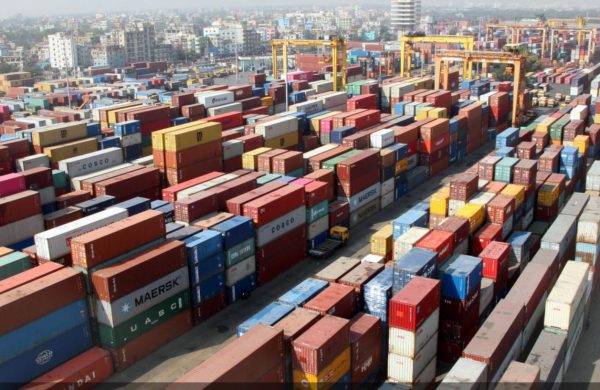
According to Bangladesh Petroleum Corporation, the country imports around 6.5 to 6.8 million tons of fuel annually, leaving it highly exposed to global market volatility.
The situation is further complicated by uncertainty over domestic reserves.
Official data show that Bangladesh currently holds about 192,919 metric tons of refined fuel.
With daily diesel consumption estimated at around 12,000 metric tons, experts suggest reserves may last roughly 11 days under current demand conditions.
Economists warn that prolonged global instability could push fuel prices higher, with cascading effects across the economy.
Higher fuel costs would raise transport expenses, disrupt supply chains and drive up the prices of essential goods, adding to inflationary pressure.
Industrial production could also be affected, particularly in energy-intensive sectors such as garments, textiles and manufacturing.
Professor Dr Muhammad Shahadat Hossain Siddiquee of Dhaka University said the impact could be particularly severe given Bangladesh’s already high inflation.
“The poor will be affected the most,” he said, noting that rising fuel costs would quickly translate into higher food prices and living costs.
Business leaders have also raised concerns about the unintended consequences of the government’s measures.
Early market closures, they say, could hurt small and medium enterprises, as a significant portion of daily sales occurs in the evening.
Similarly, the shift to online classes has drawn criticism due to limited digital infrastructure and concerns over learning effectiveness.
In response, the government is exploring additional options, including sourcing fuel from alternative markets and securing financial support.
The Asian Infrastructure Investment Bank has agreed to provide budget assistance, while authorities are also considering expanding solar power and electric transport to reduce dependence on fossil fuels.
Officials maintain that the situation is under control and that coordinated efforts are underway to stabilize supply and minimize economic disruption.
However, with global uncertainty persisting and domestic pressures mounting, experts say the effectiveness of current measures will ultimately depend on whether deeper structural challenges — particularly import dependence and sector-wide energy demand — are addressed.








Editor & Publisher: Golam Mostafa Jibon
News & Commercial Office:
2 R. K Mission Road, Dhaka & Railgate, Sirajganj.
Hotline: 01715-319996, 01558-314179
E-mail : editor.thedailysky@gmail.com
news.thedailysky@gmail.com