

Climate change effect posing threat to coastal people
- Update Time : Wednesday, April 8, 2026
Staff Correspondent,
Khulna
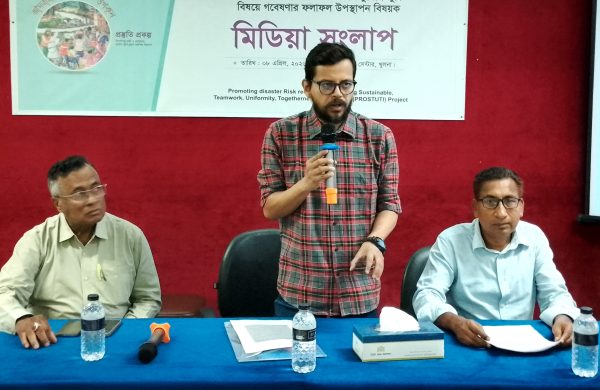
Speakers at a regional-level press briefing on Wednesday (April 8) said south-western part of Bangladesh is one of the disaster prone zones of the globe owing to its geographical location as well as natural reasons. Due to climate change, the frequency and intensity of disasters are increasing, threaten lives and livelihood. A large number of people are becoming ultra poor due to disaster and climate change effect every year. Disaster Risk Reduction (DRR) and Climate Change Adaptation (CCA) could reduce vulnerability in coastal people.
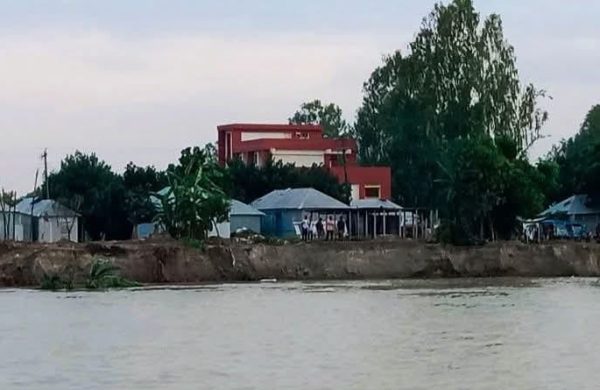
Discussants said climate change had left an adverse impact on the coastal belt of the country where storms, cyclones, tidal surges, droughts, river erosion and water-logging are now common. Further threats arise from global climate change, especially sea level rise along with its salinity, which has already caused death to many big trees of the largest mangrove forest Sundarbans, they added.
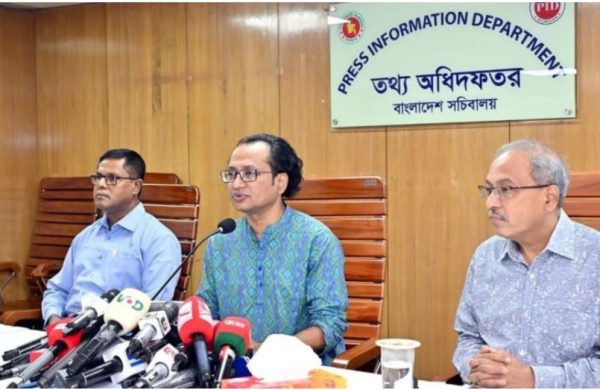
The speakers made the remarks while addressing regional-level press conference for sharing study report findings on community risk assessment (CRA) focusing on the situation of vulnerable women and girls in Koyra held at CSS Ava Center under Sadar thana in the city.
Jagrata Juba Shangha (JJS), a Khulna based non-government organisation arranged the event on ‘Promoting disaster risk reduction organizing sustainable teamwork, uniformity, togetherness and initiatives’ (PROSTUTI) project implemented in collaboration with Shapla Neer, Japan and funded by the Ministry of Foreign Affairs, Japan.
Prof Dr Md Zakir Hossain of Urban and Rural Planning (URP) Discipline of Khulna University (KU) moderated the event. Assistant Project Coordinator PROSTUTI Shaikh Nazmul Huda delivered the address of welcome.
The speakers also said that if we implement sustainable activity for the coastal people, especially for the women and grass root people then the socio-economic condition will be strong and such adaptation capacity will be enhance. Alternative livelihood option can improve food security in the coastal belt. To enhance adaptation capacity and awareness campaign could build disaster resilience community.
Apart from this, the regulation of river flows by a series of dams, barrages and embankments for diverting upstream water for various human needs and for flood control has caused large reduction in freshwater inflow which has seriously affected the biodiversity of south-western part of Bangladesh due to an increase in salinity and changes in sedimentation, they also said.
A good number journalist particularly district correspondents of different national print and electronic media from Khulna district and local journalists were present at the press briefing.








Editor & Publisher: Golam Mostafa Jibon
News & Commercial Office:
2 R. K Mission Road, Dhaka & Railgate, Sirajganj.
Hotline: 01715-319996, 01558-314179
E-mail : editor.thedailysky@gmail.com
news.thedailysky@gmail.com