

Power outages paralyze Sirajganj weaving industry; Tk 500 cr loss feared ahead of Durga festival
- Update Time : Sunday, August 30, 2026
Rehennuma Tarannum:
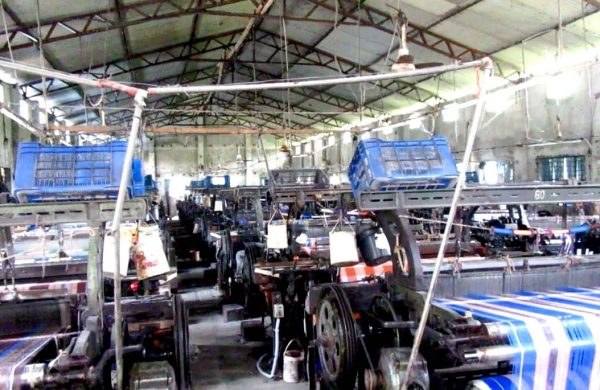
Frequent and prolonged power outages have severely disrupted production across thousands of weaving units in Sirajganj, raising fears of an estimated Tk 500 crore loss ahead of the peak festive season.
The crippling energy crunch comes at a critical time for the district’s textile hub. Weavers had been gearing up for brisk trade at home and across the border in India ahead of Durga Puja, the largest Hindu religious festival, scheduled for October. However, chronic load-shedding now threatens to derail production targets and push factory owners into deep financial distress.
“The demand for our locally produced garments is particularly high in India during Durga Puja,” said Alhaj Badiuzzaman, President of the Sirajganj Handloom and Powerloom Owners Association (Tant Malik Samiti). “Weavers were preparing to maximize output, but both our efforts and investments are going to waste due to persistent power cuts. If electricity supply does not improve immediately, weavers in this region stand to incur losses of nearly Tk 500 crore.”
Power-Dependent Hub Hit Hardest:
According to official figures, Sirajganj hosts approximately 500,000 handlooms and power looms operating across 15,000 registered factories. Unofficial estimates place the number of fully electric power looms alone at over 700,000.
While urban centers experience relatively milder outages, rural manufacturing belts are bearing the brunt of the crisis.
“Rural areas face five to seven hours of power cuts every day, which completely halts production,” said Yusuf Ahmed, President of the Ullapara Upazila Tanti Samity. “Because output has plummeted, we cannot deliver traditional saris, lungis, and gamchchas [cotton towels] to buyers on schedule, leading to massive financial losses.”
The weaving economy spans key hubs across Ullapara, Shahzadpur, Chowhali, Kazipur, and Belkuchi upazilas, with Belkuchi and Enayetpur serving as major commercial centers. Nearly one million people in the district rely directly or indirectly on the textile trade.
“Wholesale markets in Enayetpur and Shahzadpur draw hundreds of buyers from Dhaka, Chattogram, and across the country,” Ahmed added. “Right now, factory owners are struggling even to pay daily wages to their workers due to stagnant sales.”
Rising Costs and Mounting Debt:
For small-scale operators, the power crisis compounding existing raw material inflation is proving catastrophic.
“We have already been struggling with steep price hikes for dyes and yarn,” explained Surman Ali, a power-loom owner from Tamai village in Belkuchi. “Unbridled load-shedding is the final blow. Facing continuous losses, many owners are shutting down their units entirely and searching for alternative livelihoods.”
Ali warned that failure to meet advance orders risks breaching trade trust and driving owners into loan default. “If the situation doesn’t improve, many will be ruined—unable to repay debts or fulfill contracts for which they have already taken advance payments.”
Supply Deficit Driving Outages:
Utility officials attribute the power rationing to a widening gap between local demand and national generation capacity.
Nurul Huda, General Manager of Sirajganj Palli Bidyut Samity-1, stated that rural supply is currently running at a 25 percent deficit under directives from the Ministry of Power, Energy and Mineral Resources.
“We are supplying 25 percent less electricity than total regional demand,” Huda explained. “While local demand has surged, overall power supply has dropped due to recent global fuel supply constraints. The government is working to manage the shortfall and stabilize electricity supply to rural commercial zones.”









Editor & Publisher: Golam Mostafa Jibon
News & Commercial Office:
2 R. K Mission Road, Dhaka & Railgate, Sirajganj.
Hotline: 01715-319996, 01558-314179
E-mail : editor.thedailysky@gmail.com
news.thedailysky@gmail.com