

After mob violence, there is talk, but no justice
- Update Time : Sunday, December 28, 2025
TDS Desk:
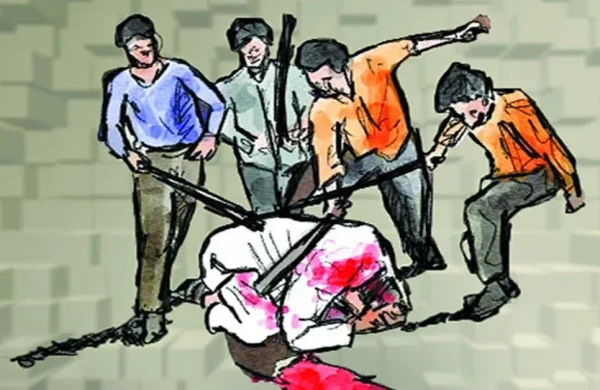
Mob violence has become a new source of fear in everyday life in Bangladesh. Incidents of mob violence and lynching have increased alarmingly across the country. In 2025 alone, 184 people lost their lives nationwide due to mob violence. Following the fall of the Awami League government on 5 August amid an uprising, incidents of collective disorder and people taking the law into their own hands have increased.
In connection with these events, the terms “mob” and “mob justice” have been widely discussed on social media and in newspapers. The English word “mob” means an unruly crowd. In simple terms, when such an unruly crowd resorts to violence by taking the law into its own hands, it is called “mob justice.”
Incidents of publicly killing people without trial, burning bodies, or brutally humiliating victims raise serious questions: who is responsible for this bloodshed and violence? Despite assurances from law enforcement agencies, in most cases the perpetrators remain beyond reach.
According to the United Nations’ Universal Declaration of Human Rights, mob violence constitutes a serious violation of human rights. Article 10 of the declaration states that everyone is entitled, in full equality, to a fair and public hearing by an independent and impartial tribunal. Article 11 states that anyone charged with a penal offence has the right to be presumed innocent until proven guilty in a court of law and must be given all necessary guarantees for their defense. Similarly, Article 27 of the Constitution of Bangladesh states that “all citizens are equal before the law and are entitled to equal protection of the law.”
Between 5 August and 20 August last year, attacks in 49 districts damaged at least 1,068 homes and business establishments belonging to minority communities. Citing police investigations, the Chief Adviser’s Press Wing said in mid-January that of the 1,415 complaints of attacks and vandalism against minorities between 4 August and 20 August, 98.4% was politically motivated, while 1.59% was communal in nature.
In the early stages, many people directly or indirectly supported mob violence. Some viewed it as a form of protest or an expression of anger by students and the masses. As a result, a degree of indifference was observed within the government in suppressing mobs. An investigation found at least 168 incidents in which mob violence continued for two hours or more, yet the police or law enforcement agencies took no action against the mobs.
A senior police officer, speaking on condition of anonymity, said that most of those involved in the mobs were associated with the anti-discrimination movement. For that reason, action could not be taken against them without instructions from higher authorities. There were at least 26 such incidents where mob violence continued for a long time, and in some cases, the police even provided security to the mob participants.
Another major reason for the lack of action against mobs is fear and low morale within the police force. Investigations show that after 5 August, police stations themselves became the first targets of mob attacks in Bangladesh. On the day the Awami League government fell on 5 August and the following day, 1,898 firearms were looted or went missing from various police stations in the capital. During that time, 142 facilities under the jurisdiction of the Dhaka Metropolitan Police (DMP), including police stations and outposts, were vandalised or set on fire. In addition, 181 vehicles were damaged or burned. The DMP oversees 50 police stations.
A senior DMP official said that Mirpur, Jatrabari, and Mohammadpur police stations suffered the most damage, with three police station buildings completely burned down and weapons looted from them.
This was not limited to Dhaka. According to police headquarters sources, there are 664 police stations across the country. After the fall of the Sheikh Hasina government, from the afternoon of 5 August onward, attacks, vandalism, and arson took place at police stations, outposts, police boxes, and various police units and installations across the country, including Dhaka. Vehicles used for police operations were burned, and firearms, equipment, and documents were looted. In effect, police activities across the country came to a halt after noon on 5 August. Police personnel were afraid to report to their stations. At one point, Ansar members were deployed to guard various police facilities. Police station operations resumed across the country, including Dhaka, on 13 August. However, despite the resumption of activities, the police force has not yet returned to normal, leaving them hesitant to take action against mobs.
A third reason for the spread of mob violence is the absence of justice. In most mob-related incidents, cases were not even filed. The highest number of accused were arrested following the attacks on Prothom Alo and The Daily Star. Before that, only 17 cases had been filed over allegations of mob violence. In those cases, 78 people were arrested, but all were released on bail within a short time. None of the 17 cases has shown any progress in investigation. Only a handful of intellectuals and political leaders have spoken out against mob violence, but their voices have carried little weight with government policymakers. Because of this culture of impunity, mob violence has taken on epidemic proportions.
After Prothom Alo and The Daily Star were attacked by mobs, the government, most representatives of civil society, and political parties became vocal against mob violence. According to official figures, 31 people have so far been arrested in connection with these incidents. However, analysts believe that if the government had taken a firm stance against such extrajudicial actions from the very beginning, this terrifying situation would not have emerged.




Editor & Publisher: Golam Mostafa Jibon
News & Commercial Office:
Railgate, Sirajganj & 2 R. K Mission Road, Dhaka.
Hotline: 01715-319996, 01558-314179
E-mail : [email protected]