

Another inflation fear looms over Bangladesh
- Update Time : Friday, March 13, 2026

TDS Desk:
After the conflict in the Middle East intensified, oil prices in the international market have started to rise rapidly. In this situation, the question arises—how ready is Bangladesh to face another possible inflation storm?
The Bangladeshi economy has not yet fully overcome the impact of the Russia-Ukraine war that began in February 2022.
The instability that arose in the global energy, food and fertilizer markets as a result of that war has also had its impact on the Bangladeshi market for a long time. The country’s macroeconomics has been under pressure for several years due to high inflation, the dollar crisis and increased import costs.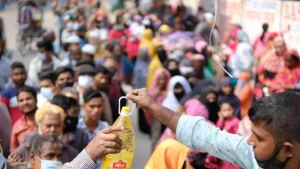
Now, once again, tensions in the Middle East are destabilizing the global energy market. As the military conflict between the United States and Israel against Iran intensifies, oil prices in the international market have started to rise rapidly.
The nearest futures contract for US crude oil West Texas Intermediate (WTI) rose nearly 30 percent to above $118 a barrel in early trading on Monday. At the same time, the price of international benchmark Brent crude also rose above $116.
Bangladesh imports a large portion of both fuel and fertilizer. As a result, when oil prices rise in the international market, its impact quickly spreads to the country’s domestic market. Transportation costs increase, electricity generation costs increase, irrigation and agricultural production costs increase. At the same time, import costs also increase due to increased ship fares.
According to economists, these costs are ultimately reflected in the prices of food and daily necessities. That is, the shock from the global oil market gradually reaches the daily living costs of people.
This reality is not new. After the start of the Russia-Ukraine war in 2022, inflation in Bangladesh rose above 9% due to the increase in fuel and food prices in the global market. It has remained at a high level for several years.
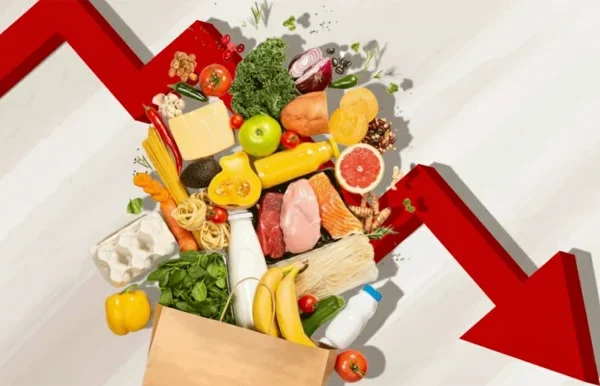
According to the latest data from the Bangladesh Bureau of Statistics (BBS), the country’s overall inflation rose to 9.13% in February 2026, which is the highest in the last ten months. At the same time, food inflation increased to 9.30%—the highest in 13 months.
According to experts, the impact of rising food inflation is the most on low and middle-income people. Because a large part of their income goes to food expenses.
The picture of wage growth is also worrying. According to the latest figures, wage growth stands at 8.06%. That is, for almost four consecutive years, income growth has lagged behind inflation. As a result, the real purchasing power of the common man is decreasing.
The impact of the tension in the Middle East has also started to be felt in the foreign exchange market. Banks are buying dollars from expatriates at a rate of about Tk122.90. As a result, the price of the dollar for imports has reached about Tk123.
A week ago, the price of the dollar for imports was about Tk122.50. That is, a significant increase in the price of the dollar is being seen in a short period of time.
According to bank and business sources, banks are also charging Tk0.15 to Tk0.20 more per dollar for LC settlement. Currently, the rate per dollar for the settlement of import bills has been set at Tk122.80 to Tk122.90.
Recently, several indicators of the country’s economy have also been raising concerns.
Exports declined for the seventh consecutive month in February 2026. On the other hand, credit growth in the private sector fell to only 6% in January, which is close to the lowest level in history.
A difficult equation
Since inflation is already high, the scope for increasing economic growth by reducing interest rates is limited. On the other hand, there is a risk of reducing investment and employment if interest rates are increased further.
Prof Mostafizur Rahman, distinguished fellow of the Centre for Policy Dialogue (CPD), said that Bangladesh’s major weakness is the lack of strategic fuel reserves. Many countries have strategic reserves of oil to deal with emergencies, which help maintain stability in the market during crises.
“Currently, there is a tendency to buy more fuel in panic. In this situation, it is important to bring confidence to the market and ensure fuel supply.”
According to him, in addition to ensuring fuel supply in the short term, it is necessary to build strategic fuel reserves in the medium term.
CPD executive director Fahmida Khatun said that currently there are various economic challenges within and outside the country. Therefore, emphasis should be placed on controlling inflation, reforming the revenue system, increasing investment and creating employment to maintain macroeconomic stability.










Editor & Publisher: Golam Mostafa Jibon
News & Commercial Office:
Railgate, Sirajganj & 2 R. K Mission Road, Dhaka.
Hotline: 01715-319996, 01558-314179
E-mail : [email protected]