

Bangladesh to pay new service charge on Indian electricity imports
- Update Time : Sunday, August 23, 2026
Staff Reporter:
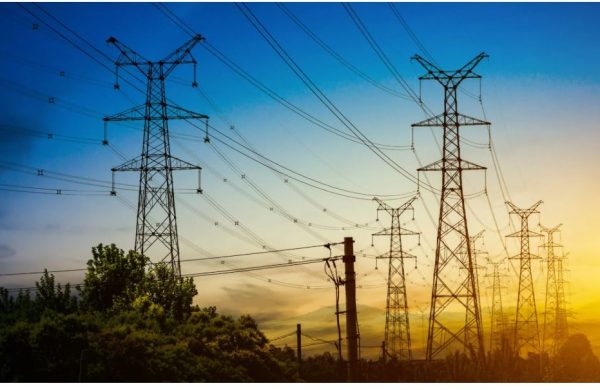
Bangladesh is set to incur an additional expense on power imports from India, following a proposed Settlement Nodal Agency (SNA) Charge fixed at 0.005 Indian rupees (half a paisa) per unit.
The new levy operates independently of the core electricity tariff and covers operational overheads, including grid management, power scheduling, metering, energy accounting, and the financial settlement of cross-border power transactions.
India’s state-run power trading company, NTPC Vidyut Vyapar Nigam Limited (NVVN), and the Bangladesh Power Development Board (BPDB) have initiated the formal process to sign the SNA agreement. On August 18, the Power Division formally requested the Finance Division’s evaluation and approval of the draft accord.
A senior finance official, speaking on condition of anonymity, revealed that Indian authorities originally sought a higher rate.
“India initially proposed a charge of one Indian paisa per unit,” the official noted. “Through negotiations, the BPDB successfully halved the rate to 0.005 Indian rupees per unit.”
The official emphasized that the agreement is mandatory under Indian grid regulations, warning that delays in execution could risk disrupting Bangladesh’s existing import pipeline of 1,160 megawatts (MW) of electricity.
While the per-unit fee appears nominal, a Power Division official noted that given the vast volume of cross-border power transfers over multi-year terms, the cumulative financial commitment will be substantial.
Aligning Frameworks with Regional Peers:
Power sector officials confirmed that the proposed rate aligns directly with India’s existing cross-border power trade deals with Nepal and Bhutan.
Following a written submission by the BPDB, the pricing proposal was placed before India’s Central Electricity Regulatory Commission (CERC). Official correspondence indicates that both Himalayan nations already operate under active SNA agreements with India at the identical 0.005 rupee per unit rate.
Under the framework, if Bangladesh continuously draws the full 1,160 MW allocation covered by the agreement, the flow equals 1.16 million units (kilowatt-hours) per hour. At the agreed rate, the SNA charge will add 5,800 Indian rupees per hour to import costs.
Understanding the SNA Mechanism:
Unlike base tariffs that cover actual energy generation, the SNA charge funds the administrative and technical infrastructure required to synchronize interconnected national grids.
The Power Division noted that CERC established the SNA structure to streamline settlement procedures across neighboring grids. Because Bangladesh functions as a distinct control area within the broader Indian power grid network, separate accounting for grid management and transaction settlement is legally required under Indian regulatory frameworks.
Scope of Import Contracts:
Bangladesh currently maintains multi-year agreements to import up to 2,656 MW of electricity from India across various public and private suppliers:
- 250 MW from NTPC plants via NVVN
- 300 MW from the Damodar Valley Corporation
- 160 MW from the Tripura State Electricity Corporation
- 450 MW total from Sembcorp Energy India (200 MW via PTC India, 250 MW direct)
- 1,496 MW from Adani Power’s Godda plant in Jharkhand
The new SNA agreement covers the 1,160 MW total supplied across the first five contracts.
A power official clarified that the cross-border grid settlement terms were already embedded into the separate, standalone agreement for power from Adani Power’s Jharkhand plant, requiring no secondary contract for that supply line.
Cross-border electricity imports have become an increasingly crucial anchor for Bangladesh’s energy security, helping buffer domestic power shortages stemming from natural gas deficits, high primary fuel import costs, and generation constraints at domestic power stations.









Editor & Publisher: Golam Mostafa Jibon
News & Commercial Office:
2 R. K Mission Road, Dhaka & Railgate, Sirajganj.
Hotline: 01715-319996, 01558-314179
E-mail : editor.thedailysky@gmail.com
news.thedailysky@gmail.com