

Bangladesh’s energy crisis to persist without renewable energy shift: CPD
- Update Time : Monday, April 27, 2026
UNB:
Bangladesh’s ongoing energy crisis may ease temporarily but cannot be fully resolved without a decisive shift to renewable energy, said the Centre for Policy Dialogue (CPD) today (27 April).
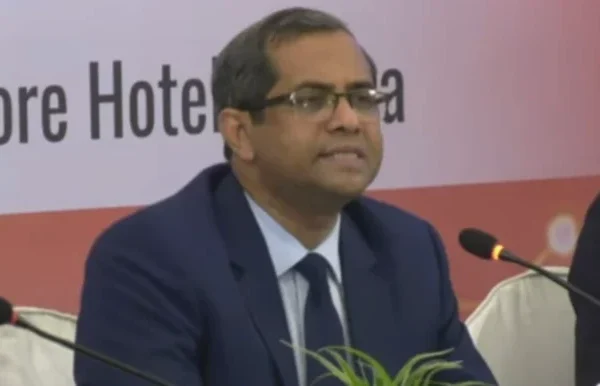
“We must think beyond fossil fuels,” Dr Khondaker Golam Moazzem, research director at CPD said at the 4th Bangladesh–China Renewable Energy Forum, organised under the theme “Transforming Crisis into Opportunities: Renewable Energy Development under the New Government” at a hotel in Dhaka.
“The crisis that fossil-fuel dependency has created across the world is not something that will be resolved overnight. Bangladesh needs to seriously consider alternatives in its energy sector,” he said.
The veteran economist underscored China’s pioneering role in the global renewable energy revolution and called for maximising bilateral cooperation in the sector.
“China is at the forefront of renewable energy through its innovations. Chinese investment in Bangladesh’s renewable energy sector is already substantial. This forum will deliberate on how to further enhance that investment going forward,” he said.
CPD’s presentation introduced a conceptual framework, “3F-3R — Fallen Fossil Fuel, Rising Resilient Renewables” — to describe the structural shift Bangladesh must make.
The think tank warned that even if the ongoing Middle East conflict subsided and the Strait of Hormuz reopened immediately, Bangladesh would continue bearing the economic burden of energy supply disruptions for years to come.
Using econometric modelling, CPD projected that geopolitical oil shocks would inflict limited but persistent macroeconomic damage through multiple channels. GDP losses in the range of 0.21 to 0.53%, inflationary pressure between 0.6 and 13.6%, and taka depreciation of 0.56 to 4.5% in the medium to long term.
The BNP government has announced a target of generating 10,000 megawatts of electricity from renewable sources by 2030, and CPD estimated the associated investment requirement at approximately $9.36 billion, spanning utility-scale solar, rooftop and distributed solar, wind, and biomass and biogas installations.
The 4th forum, unlike its three predecessors, focused specifically on Power Purchase Agreements (PPAs) as the central contractual instrument through which investment either flows into or is discouraged in Bangladesh’s energy sector.
CPD’s research found that Bangladesh’s PPAs have progressively deteriorated in terms of investor protection.
The country’s first renewable energy PPA, drafted with external legal expertise, contained strong sovereign guarantees, well-structured international arbitration clauses, and balanced risk coverage.
Subsequent revisions have steadily tilted the framework in the government’s favour, the think tank said.
Compounding the problem, the interim government’s decision to discontinue Implementation Agreements—which had previously provided sovereign backing for investor commitments—removed a critical layer of payment security precisely when renewable investment was beginning to scale.
No credible substitute mechanism has since been introduced, it observed.
CPD flagged that Chinese investors account for over 50% of total foreign direct investment in Bangladesh’s renewable energy sector, making the health of PPA arrangements disproportionately important for Sino-Bangladeshi energy cooperation.
The forum presentation catalogued a series of persistent contractual and institutional failures that have deterred investment across four successive forums since 2023.
On the contractual side, normal payment cycles of two to three months routinely stretch to five to eight months in practice.
Payments are nominally denominated in local currency with US dollar equivalence, yet the PPA structure provides no compensation for exchange rate depreciation during the payment gap—a growing liability as the taka weakens.
In at least one documented case, investors who had signed both a PPA and an Implementation Agreement and completed construction subsequently faced government attempts to revise the agreed tariff, with no contractual remedy available to them.
On the institutional side, approvals required from multiple agencies, including BPDB, PGCB, REB, SREDA, and local authorities, proceed sequentially rather than in parallel, with no coordinated timeline or accountability mechanism for delays, CPD said.
Land deemed officially cleared at the central level has, in several cases, faced challenges from local actors, with different ministries operating in silos and unaware of approvals issued by others, it added.
The cancellation of 31 solar project Letters of Intent by the interim government—representing approximately 5.68 gigawatts and $6 billion in prospective investment, with $300 million already committed through banking channels and 15 companies having purchased land—was cited as a particularly damaging signal to the investment community.
CPD benchmarked Bangladesh’s PPA template against those of India, Pakistan, Kenya, Tanzania, Vietnam, the Philippines, and Saudi Arabia.
The analysis revealed that Bangladesh’s BPDB tender document, unlike frameworks in Pakistan, the Philippines, and Saudi Arabia, lacks payment security instruments, Implementation Agreement equivalents, and lender step-in rights—provisions considered standard in bankable renewable energy contracts internationally.
The think tank’s diagnostic assessment found that enforcement was the weakest dimension of Bangladesh’s PPA architecture, followed by an imbalanced risk allocation that structurally disadvantages investors. “In a fair ecosystem, these two dimensions cannot be weak simultaneously.”
Reform roadmap: immediate and medium-term
In the immediate term, the think tank called for the introduction of a revolving letter of credit covering three to six months of payments, backed by a sovereign guarantee or central bank support, describing it as the single most important bankability improvement available within the existing PPA structure.
CPD also recommended that when BPDB extends a Commercial Operation Date deadline, the corresponding Ready for Commercial Operation Date should be extended in parallel, a structural inconsistency that currently exposes developers to liquidated damages for delays caused by the government.
Over the medium term, CPD urged the establishment of an inter-agency task force with binding standard operating procedures and time-stamped approval responsibilities; the development of a dedicated renewable energy procurement guideline covering the post-award phase; the incorporation of lender step-in rights and a dispute adjudication board into the standard BPDB template; and the restoration of a credible sovereign commitment mechanism functionally equivalent to the discontinued Implementation Agreement.
CPD also called on the government to declare the power and energy sector a national priority sector, expand company courts with specialised commercial law expertise, and introduce mandatory tax and duty exemptions on renewable energy equipment, particularly inverters and batteries, on which import levies currently stand at around 61.8%.
On the financing side, the think tank urged Bangladesh Bank to establish a dedicated low-cost fund for rooftop solar and advocated the use of land from cancelled fossil-fuel power plants and upcoming stranded assets to host renewable energy installations.
It also highlighted the potential of Chinese technology, including solar panels, inverters, and lithium iron phosphate batteries, and the possibility of establishing local battery assembly facilities in partnership with Chinese companies to reduce both costs and import dependence.
The EU’s Carbon Border Adjustment Mechanism, taking effect in 2027, was cited as an additional structural incentive for urgency: Bangladesh’s export-oriented garment and textile sector will be required to demonstrate green energy sourcing to avoid carbon levies and maintain market access in Europe.
CPD noted that the Bangladesh Investment Development Authority is set to open its first overseas office in China within approximately six months, a step expected to directly facilitate Chinese investment inquiries in Bangladesh’s renewable energy sector.
Power, Energy and Mineral Resources Minister Iqbal Hassan Mahmood attended the event as chief guest.
The forum was also attended by Chinese investors, development finance institutions, government officials, and energy sector stakeholders.





Editor & Publisher: Golam Mostafa Jibon
News & Commercial Office:
2 R. K Mission Road, Dhaka & Railgate, Sirajganj.
Hotline: 01715-319996, 01558-314179
E-mail : editor.thedailysky@gmail.com
news.thedailysky@gmail.com