

BNP government begins tenure with over BDT 23 trillion in debt
- Update Time : Tuesday, February 17, 2026

TDS Desk:
The interim government’s tenure ends on Tuesday (February 17) with the transfer of power to an elected political government. As it assumes office, the new Bangladesh Nationalist Party (BNP) government is set to inherit a debt burden exceeding BDT 23 trillion. Meanwhile, government borrowing from banking sources recorded growth of more than 32 percent in 2025. Stakeholders say that, against this backdrop, the new government will have to confront this major macroeconomic challenge from day one.
According to data from Bangladesh Bank, total public debt from domestic and foreign sources stood at around BDT 22.50 trillion at the end of FY 2024–25. During the July–December period of the current fiscal year, the government borrowed BDT 611.48 billion from banking sources. In addition, it received net foreign loans amounting to around $1.07 billion during the same period. At an exchange rate of BDT 122 per dollar, this translates to BDT 131.03 billion. As a result, in the first six months of the current fiscal year, the government borrowed a total of BDT 742.51 billion from domestic and external sources. Combined, total government debt stood at around BDT 23.25 by the end of December 2025.
An increase in government expenditure and borrowing typically exerts upward pressure on interest rates. Consequently, this can shrink private sector investment and consumption, considering this situation as the “crowding-out effect” in economic terms. Such a situation is now evident in Bangladesh’s economy.
Central bank data show that total loans disbursed by the banking sector reached nearly BDT 23.84 trillion at the end of December 2025, up from around BDT 21.51 trillion a year earlier. This reflects an increase of around BDT 2.33 trillion over one year, corresponding to loan growth of nearly 11 percent. Of this incremental lending, 57 percent — around BDT 1.33 trillion — was absorbed by the government.
By the end of last year, the government’s borrowing from banking sources stood at around BDT 5.49 trillion, compared with around BDT 4.15 trillion a year earlier. In contrast, bank lending to state-owned enterprises declined by 5.39 percent to BDT 476.18 billion as of December last year.
Government borrowing from the banking system also exceeded targets set in the monetary policy. For the first half (July–December) of FY 2025–26, the monetary policy had set a 20.5 percent growth target for government borrowing from banks. However, actual growth reached 28.9 percent. Given the higher-than-expected borrowing requirement, the target for the second half of the fiscal year has been set upward to 21.6 percent.
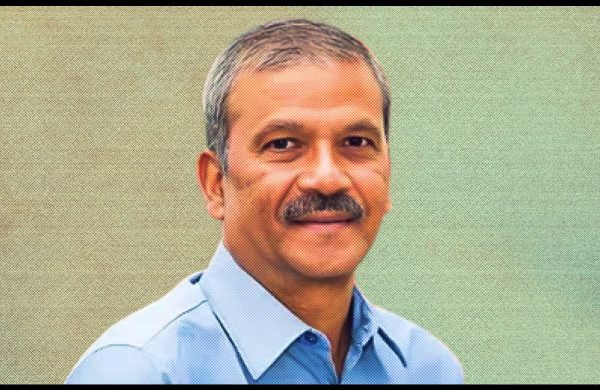
Explaining the surge in government borrowing, former Senior Secretary of the Finance Division Mahbub Ahmed told journalists, “The government failed to meet its revenue collection target under the budget, and in reality, such targets can never be achieved. At the same time, large payments had to be made to settle outstanding liabilities in the loan, power and energy sectors. Expenditure on savings certificate obligations and operational costs has also increased. These factors have driven up the government’s borrowing from banks.”
Referring to the government’s failure to implement previously announced expenditure rationalisation measures, Mahbub Ahmed said, “Private sector investment has also not picked up in a meaningful way, lowering credit growth naturally. Moreover, the government has been pursuing a contractionary monetary policy to control high inflation. As a result, the private sector credit growth target was set low of 7.2 percent. Even that target was not achieved. After the new government assumes office, private sector credit growth is expected to increase. However, caution will still be necessary to ensure that loans aren’t extended unnecessarily.”
Investment stagnation in the private sector has persisted for several years, but it has intensified in the current fiscal year. In the monetary policy announced last July, the private sector credit growth target was set at just 7.2 percent. However, growth reached only 6.1 percent by December. As of December 2025, outstanding bank loans to the private sector stood at around BDT 17.88 trillion, up from around BDT 16.85 trillion in December 2024. This indicates an annual increase of around BDT 1.02 trillion.
In an effort to curb high inflation, Bangladesh Bank has kept the policy rate unchanged at 10 percent for nearly two years. As a consequence, lending rates in the banking sector have risen to 14–15 percent. Despite the prolonged period of high interest rates, inflation has not eased to the desired level, while investment activity in the economy has weakened significantly. Business leaders and industrialists have repeatedly called for a reduction in interest rates to revive investment. However, the central bank recently announced its latest monetary policy without altering the policy rate, ignoring the demand of business leaders and industrialists. Although the policy rate remains unchanged, the new monetary policy has set a higher target for private sector credit growth at 8.5 percent till June, in an attempt to ease investment stagnation. At the beginning of the fiscal year, the target had been set at 8 percent for the same period.
Riad Mahmud, president of the Bangladesh Association of Publicly Listed Companies (BAPLC) and managing director of National Polymer Industries, told journalists, “The private sector is already stagnant. At the same time, banks have taken a conservative stance. About two years ago, the banking sector was nearly on the brink. As a result, the central bank increased oversight of both banks and borrowers. Those who had already taken loans didn’t borrow further, and virtually no new loans were taken during this period. However, this is a temporary measure; such a situation can’t persist in the long term.”
He added, “Following the election, we’ve observed a gradual return of confidence among investors in the capital market. After the new government assumes office, there’s no reason why that confidence won’t also return among private sector entrepreneurs. We’re aware of what happened in the past, but we don’t expect its continuation.”
Currently, private sector investment and credit growth in the country are at historically low levels — even below those seen during the Covid-19 pandemic. The capital market is a key source of funding for private sector investment, yet entrepreneurs have shown little interest in raising capital from it amid the investment slowdown. With few new industrial units being established, imports of essential industrial inputs have also declined. Trends in the opening and settlement of letters of credit for three key industrial inputs — capital machinery, intermediate goods, and raw materials, which are closely linked to GDP growth, employment, and export earnings — have remained subdued.
In the first half of FY 2025–26, the opening of letters of credit (LCs) for the import of industrial capital machinery increased by 23.64 percent, but LC settlements declined by 16 percent. For intermediate goods, LC openings fell by 1.79 percent, and settlements dropped by 13 percent. In the case of industrial raw materials, LC openings declined by 2.13 percent, and settlements decreased by 0.22 percent. Sector insiders attribute the decline in imports to the investment slowdown, economic stagnation, and reduced consumer spending.
Analysts believe that implementing the political commitments outlined in the election manifesto will further raise government expenditure. In addition, if the government moves forward with a new pay scale, it will require a substantial outlay. Taken together, the incoming government is likely to face significant challenges in financing additional spending.
Dr Fahmida Khatun, executive director of the Centre for Policy Dialogue (CPD), told journalists, “At present, two distinct trends are visible in our economy. First, the government is becoming increasingly bank-dependent. Due to the persistent decline in the tax-to-GDP ratio, revenue shortfalls continue to constrain the government’s fiscal capacity, prompting it to rely more heavily on borrowing. In contrast, credit flow to the private sector is weakening. Private investment had remained stuck at around 23–24 percent of GDP for nearly a decade. In FY 2024–25, it declined further to around 22.5 percent of GDP. This indicates that private sector investment is falling. Another sign is that the private sector isn’t borrowing. There’s no new investment, no expansion of factories, and no increase in production, which is reflected in subdued credit growth. Overall, it can be said that an investment drought is underway. Both of these trends are negative for the economy and are quite concerning for the future.”
Highlighting the immediate economic pressures facing the new government, Fahmida Khatun added, “To fulfil the promises made during the election, the government will require substantial funds. Implementing a new pay scale will require money. There’s also a commitment to create 10 million new jobs. But without investment, how will employment be generated? During the interim government’s tenure, we’ve in fact seen a decline in employment. Moreover, structural constraints to ease of doing business — such as bureaucratic complexities, corruption, and port inefficiencies — remain unresolved. Overall, the new government will have to confront these challenges as soon as it assumes office.”








Editor & Publisher: Golam Mostafa Jibon
News & Commercial Office:
Railgate, Sirajganj & 2 R. K Mission Road, Dhaka.
Hotline: 01715-319996, 01558-314179
E-mail : [email protected]