

Chattogram receives 42% of interim govt’s allocation for new development projects
- Update Time : Wednesday, January 28, 2026

TDS Desk:
Since assuming office, the interim government has held 20 meetings of the Executive Committee of the National Economic Council (ECNEC) over the past 18 months, approving 153 new projects. These development projects involve allocations totalling nearly BDT 2.12 trillion, of which 42 percent has been earmarked for the Chattogram division. In contrast, only 2.44 percent of the allocation has gone to the poverty-prone Rangpur division. Rajshahi and Barishal divisions have received even smaller shares — just 1.38 percent and 0.86 percent, respectively. Economically lagging Mymensingh division has been allocated only BDT 3.76 billion, accounting for a mere 0.17 percent of the total. This region- or division-wise disparity in development allocations has emerged from documents of the Bangladesh Planning Commission.
Several stakeholders have raised concerns that a number of advisers in the interim government hail from Chattogram district. At different times, as many as 13 advisers were from the Chattogram division, prompting questions over whether regional bias influenced development allocations.
Former Planning Commission Secretary Md Mamun Al Rashid believes that concentrating development spending in a single region contributes to inequality. Speaking to journalists, he said, “Articles 19(1) and 19(2) of the Constitution of Bangladesh call for equality of opportunity and balanced distribution of resources. Any deviation from this is harmful. It creates inequality and discrimination, which in turn breeds resentment. In allocating resources, any government should focus on actual needs rather than regional considerations.”
A review of Planning Commission data shows that since the interim government took office, a total of 251 projects, including revised ones, have been approved at 20 ECNEC meetings, with an overall allocation of around BDT 3.78 trillion. Of these, 98 projects had been taken up during the tenure of the ousted Awami League government. Following extensions of project timelines and re-evaluations, costs for these projects increased by around BDT 1.7 trillion. The remaining 153 projects were newly approved on the proposal of the interim government, with allocations amounting to around BDT 2.12 trillion.
Documents further reveal that nearly 40 projects centred on Chattogram division have been approved over the past 18 months, including 29 new projects, while the rest are revised ones. Among the newly approved projects, 11 will be implemented exclusively in Chattogram city. Alongside domestic financing, foreign loans will also be utilised for project implementation. One of the major newly approved projects is the modernisation and expansion of Eastern Refinery Limited (ERL-2), aimed at increasing oil refining capacity. The project will be implemented in Patenga, Chattogram, at an estimated cost of around BDT 360 billion. Due to the unavailability of foreign loans, it will be financed entirely from domestic resources.
Another project worth BDT 51.52 billion has been taken up to improve the sewerage system of Chattogram city. Under the Chattogram Sewerage System Development Project, the Japan International Cooperation Agency (JICA) will provide loans amounting to BDT 41.44 billion. Land acquisition for the construction of a sewage treatment plant in the Kalurghat area has been estimated at BDT 21.54 billion. Meanwhile, the first revised phase of the Chattogram Sewerage System Installation Project has been approved at a cost of BDT 52.19 billion, while the Chattogram Water Supply Improvement Project (CWSIP) has been approved with an allocation of BDT 39.21 billion. For this Chattogram WASA project, the World Bank will provide loans worth BDT 32.68 billion.
The government has also approved projects to provide housing facilities for government officials working in the Chattogram division. Among these, a first revised project has been approved to construct residential flats for government officers and employees in 36 abandoned houses in Chattogram. Two related projects have been allocated BDT 11.32 billion and BDT 3.94 billion, respectively.
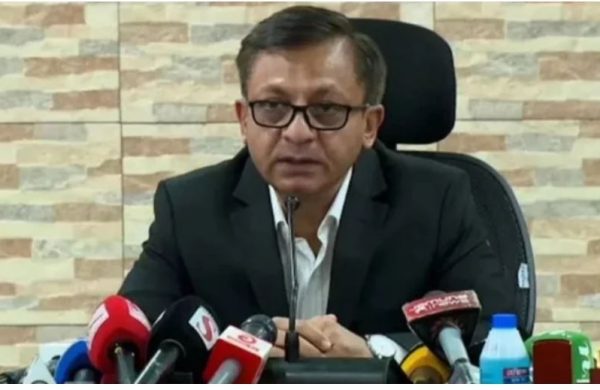
Asked about the wide regional disparity in project allocations, Bangladesh Planning Commission Secretary SM Shakil Akhtar said, “Projects taken up by the interim government weren’t selected based on regional or personal considerations. All projects have been undertaken in the national interest.” Speaking to journalists, he explained, “Chattogram is a major hub of trade and commerce, and due to Chattogram Port, the city is critically important to the national economy. For economic reasons, several projects have been taken up centring on Chattogram, Cox’s Bazar, and the hill tracts. The largest among them is the modernisation and expansion of the Eastern Refinery in Chattogram. The previous government had built a tunnel in Chattogram at a cost of BDT 140 billion, but the volume of traffic using it hasn’t been sufficient even to recover operating costs. Under these circumstances, we’ve taken the initiative to construct a connecting road with the Cox’s Bazar route to ensure proper utilisation of the tunnel. Other projects centred on Chattogram have also been taken up in the national interest. Unlike before, no project has been selected based on individual preferences.”
SM Shakil Akhtar further noted that several projects undertaken by the previous government have been revised, while some projects lacking necessity or economic viability have been dropped altogether. He cited the Rooppur Nuclear Power Plant project, contracted with Russia at $11.38 billion when the exchange rate stood at BDT 85 per dollar. “Now the dollar rate is BDT 122. As a result, after re-evaluation, the project cost has increased by around BDT 260 billion,” he said, adding that such factors have contributed to higher costs in revised projects.
According to Planning Commission data, of the around BDT 2.12 trillion allocated to new projects taken up over the interim government’s 18-month tenure, BDT 892.97 billion — or 42 percent — has gone to the Chattogram division. Dhaka division ranks second, with BDT 197.17 billion allocated for development projects, accounting for 9.27 percent of the total. Khulna division has received BDT 131.28 billion, or 6.17 percent of the total allocation. Sylhet division ranks fourth, with BDT 53.54 billion, representing 2.51 percent. Rangpur division stands fifth, with development allocations amounting to BDT 51.90 billion, or 2.44 percent of the total.
However, Rajshahi, Barishal, and Mymensingh divisions lagged far behind in development allocations. Of these, projects worth BDT 29.37 billion were allocated for the Rajshahi division, accounting for 1.38 percent of the total allocation. Barishal division received development allocations of only BDT 18.38 billion, or 0.86 percent of the total. Mymensingh division was the most deprived, receiving development projects worth just BDT 3.76 billion. Meanwhile, projects taken up for nationwide implementation account for 35.16 percent of the total development allocation, amounting to BDT 747.49 billion.
Dr Fahmida Khatun, executive director of the private research organisation Centre for Policy Dialogue (CPD), told journalists, “Ensuring equal opportunities for all regions in project allocation is important for the government. Chattogram is the country’s main hub for trade and commerce. For this reason, Chattogram may receive priority in development allocations. Perhaps considering this, the interim government has allocated more funds to the region.”
Among the new projects undertaken by the interim government over the past 18 months, the highest allocation has gone to the modernisation and expansion of Eastern Refinery Limited (ERL-2) in Chattogram. The project cost has been set at BDT 354.65 billion. After attempts to secure foreign loans failed, the project was taken up with full government financing. It will be implemented in Patenga, adjacent to the existing Eastern Refinery Limited facility. However, some stakeholders have questioned why the cost of this project is significantly higher than oil refineries of similar capacity undertaken by the governments of African countries such as Zambia and Angola.
To implement its development projects, the interim government is taking loans from development partners and donor agencies, including the World Bank, ADB, IDB, JICA, and UNICEF. One major project approved in the Chattogram division is the Bay Terminal Marine Infrastructure Development Project (BTMIDP), which will be implemented with World Bank financing. The project cost has been estimated at BDT 135.25 billion, with the entire amount coming from World Bank loans. Although the interim government has discouraged future political governments from relying on foreign loans for development projects, it has itself undertaken this large project with foreign borrowing. At the latest ECNEC meeting, Planning Adviser Dr Wahiduddin Mahmud said that instead of taking foreign loans, the government should examine whether projects can be implemented through domestic financing. “If it’s not possible with our own funds and technical capacity, then loans may be taken. There is no need to be trapped in a vicious cycle of debt. We should undertake projects that attract investment and create employment. We want to move away from loan dependence. We would advise future governments to undertake projects with their own financing,” he said.
In addition, a BDT 115.60 billion project has been approved to construct a rail-cum-road bridge over the Karnaphuli River at Kalurghat in Chattogram. Of this, BDT 71.25 billion will be financed through loans from South Korea. Notably, the project was originally approved by ECNEC in 2018 at a cost of BDT 11.63 billion. This means the project has now been approved at nearly ten times the original cost, with foreign borrowing.
At the interim government’s latest ECNEC meeting, a new project worth BDT 15 billion for rural infrastructure development in Cumilla District under the Chattogram division was also approved. The project was taken up during the tenure of a former adviser whose home district is the project area.



Editor & Publisher: Golam Mostafa Jibon
News & Commercial Office:
2 R. K Mission Road, Dhaka & Railgate, Sirajganj.
Hotline: 01715-319996, 01558-314179
E-mail : editor.thedailysky@gmail.com
news.thedailysky@gmail.com