

Election Investigation Commission report finds voter ‘intimidation’ in 2014, 2018, 2024 polls
- Update Time : Thursday, January 15, 2026
TDS Desk:
The investigation commission on the national elections of 2014, 2018 and 2024 has found that voter “intimidation, obstruction, and fear-based suppression” was a defining feature of Bangladesh’s national elections, according to the full report of the National Election Investigation Commission.
The commission stated that voters were threatened, obstructed from entering polling centres, and discouraged from exercising their franchise, identifying these practices as part of a broader pattern of actions that collectively polluted the country’s electoral system across the three parliamentary elections.
In a detailed list of activities that undermined electoral integrity, the report included voter intimidation alongside the filing of false and harassment cases against opposition candidates and activists, arrests under non-bailable charges, enforced disappearances, and the use of the executive branch to manipulate election outcomes.
The commission said that in many cases, voters were prevented from freely accessing polling centres, while fear was created through administrative and law-enforcement actions, making meaningful participation impossible.
According to the report, these practices were not isolated or incidental. Rather, they were implemented as part of a coordinated strategy, involving sections of the administration, police, Election Commission, and intelligence agencies, based on decisions taken at the highest level of the state.
Detailing the 2018 election, the commission said that in around 80% of polling centres, ballots were stamped overnight, before voting day, to ensure the victory of the Awami League. It said votes were cast in the names of dead voters, expatriates, and other absent voters.
An analysis of polling-centre-wise results published by the Election Commission found that 213 centres recorded 100% turnout, which the commission described as impossible, while 1,418 centres showed turnout exceeding 96%, calling the figures abnormal.
The report further noted that in all centres where 100% turnout was recorded, every single vote was cast for the boat symbol, with no other candidate receiving even one vote. In some centres, the number of votes cast exceeded 100% of registered voters.
The commission attributed these anomalies to what it termed a form of dishonest competition within the administration to prove loyalty by ensuring higher vote counts for the ruling party.
The report said that to provide undue advantage to the ruling party in 2018, government-loyal officials were posted to key positions in the field administration, secretariat, and police. It added that no effective measures were taken to ensure the posting of neutral, competent, and impartial officers, which it described as highly unusual.
It also said the police administration was structured in a way that placed individuals aligned with the ruling party’s ideology in senior positions.
Regarding the 2014 election, the report said 153 seats were won uncontested, while the remaining 147 seats were contested in elections that were entirely staged and pre-planned.
It said the arrangement was made to keep the Awami League in power in line with decisions taken at the highest level of the state, and that the election was globally criticised as an uncontested poll.
The report said that following international criticism of the 2014 election, the ruling party undertook a mission to make the 2018 election appear “competitive.”
For the 2024 election, the commission said that, as opposition parties did not participate, a strategy of fielding dummy candidates was adopted to portray the election as competitive.
Between 2014 and 2024, the commission finds, control over the electoral system was gradually shifted from the Election Commission to the administrative machinery. During this period, the administration, not the Election Commission, emerged as the primary force in managing elections.
According to the commission’s report, decisions regarding the design and execution of the three elections were made at the highest level of the state, and implementation involved the systematic use of the civil administration, law enforcement agencies, the Election Commission, and selected parts of the intelligence apparatus. A special coordination unit, widely known as the “election cell,” was formed with certain officials to carry out these plans.
The commission said that although thousands of officials and employees were involved in election irregularities across the three polls, it was not possible to identify individuals and their specific roles due to time constraints imposed on the investigation.
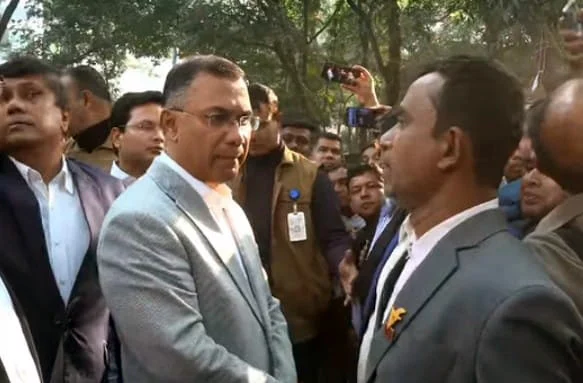
The investigation commission submitted its report to the chief adviser on 12 January. The commission was headed by former High Court judge Shamim Hasnain and included former additional secretary Shamim Al Mamun, University of Dhaka law department associate professor Kazi Mahfuzul Haque, lawyer Tajrian Akram Hossain, and election expert Md Abdul Alim.





Editor & Publisher: Golam Mostafa Jibon
News & Commercial Office:
Railgate, Sirajganj & 2 R. K Mission Road, Dhaka.
Hotline: 01715-319996, 01558-314179
E-mail : [email protected]