

Fuel imports worth BDT 1.5 trillion major source of graft, capital flight
- Update Time : Thursday, January 29, 2026

TDS Desk:
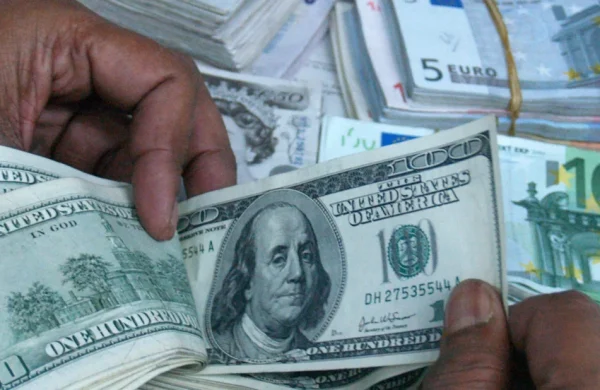
Fuel is Bangladesh’s largest import expense. In the last fiscal year (2024–25), the government spent about BDT 1.5 trillion on such imports, including refined and crude oil, LNG, LPG, and coal. A powerful syndicate took shape around this high–value import sector during the now–ousted Awami League’s fifteen–year rule. It centred on a small group of trading companies, political figures and middlemen. Allegations persist involving fuel imports, with claims that large sums were paid as kickbacks under the guise of commissions or fees, with much of the money settled overseas.
After the AL government’s removal in a student–led mass uprising, its political leaders fled. Sector stakeholders had expected the subsequent interim government to probe these past malpractices. Yet while fuel procurement has been opened up and made more transparent, industry insiders allege that syndicate activity by various vested interests has intensified and import costs have risen.
Senior ministry executives, however, argue that the focus should not be on the past. “Rather than what happened in the power and energy sector during the previous government’s time, the issue now is whether any lack of transparency persists,” one said. The priority, they added, is to ensure government rules are not being breached. They say repealing special laws has fostered a competitive market alongside cost–saving policies.
Bangladesh Bank data show fuel imports totalled BDT 1.43 trillion in FY 2024–25. Of this, BDT 529.64 billion was spent on refined oil and BDT 133.8 billion on crude oil. Another BDT 599.06 billion went on LNG and LPG, while coal imports cost BDT 170.14 billion.
Most of these volumes are bought through government–to–government deals and open tenders. While the G2G process itself has not been accused of opacity, numerous allegations of commission–seeking, tender manipulation and corruption were raised against spot–market suppliers during the previous administration. Two or three of these companies, according to the allegations, had business links to the brother, friends and relatives of Nasrul Hamid Bipu, the then– state minister for power, energy and mineral resources. The allegations around the fuel import trade were not confined to foreign firms; local leaders of the ruling party at the time and bureaucrats were also deeply involved in steering business to them.
The lobbying drive for higher imports effectively blocked large–scale investment in domestic gas exploration, a move that has drained foreign currency. Petrobangla sources say more than BDT 2 trillion was spent on LNG imports between the 2018–19 and 2024–25 fiscal years. By contrast, investment in local gas exploration has been negligible.
To tackle the energy crisis, a 2017 Gas Sector Master Plan under the now–ousted Sheikh Hasina administration recommended major investment in domestic gas. Instead of implementing it, the government turned to LNG imports. An integrated power and energy master plan drafted by the interim government now projects $25–30 billion in spending on LNG terminals and pipelines between 2026 and 2050. It also sets aside $10–12 billion for onshore and offshore gas exploration. Experts say proper use of the exploration budget could deliver significant gains in domestic gas output.
Under the Awami League government, LNG import contracts were repeatedly shared among just four companies: Singapore’s Vitol Asia PTE and Gunvor, Switzerland’s TotalEnergies, and the US–based Excelerate Energy. Petrobangla sources say Vitol Asia and Gunvor supplied more than 60 percent of LNG during that period.
Vitol Asia remains a key supplier of refined fuels to Bangladesh. Its parent, Vitol Incorporated, has faced multiple allegations of bribery and misconduct worldwide. The company has admitted bribing officials in Brazil, Ecuador and Mexico between 2005 and 2014 to gain advantages in the oil trade. In December 2020, it paid more than $160 million to settle a US Department of Justice case, including a $135 million criminal penalty and $16 million to the US Commodity Futures Trading Commission. It has also been accused of paying millions in bribes to obtain confidential information and favourable contracts from Brazil’s Petrobras. Separate allegations say it sought to manipulate benchmark energy prices. In 2021, Sri Lanka’s government blacklisted Vitol over irregularities in petroleum fuel supplies.
Vitol Asia was a leading fuel supplier to the Bangladesh Petroleum Corporation (BPC) and Petrobangla under the Awami League government. From 2020 to December 2025, it was the largest supplier of spot market LNG cargoes. Petrobangla sources say that of the 130 spot LNG cargoes imported during this period, Vitol supplied 40.
Since taking office, the interim government has continued to buy large volumes of fuel oil and LNG from Vitol Asia. Sector insiders allege that although the company now wins contracts as the lowest bidder in open tenders, there has been no scrutiny of whether irregularities or corruption tainted its earlier LNG and fuel oil supplies. Under the interim administration, Vitol has secured additional fuel oil supply contracts with the BPC. On November 24, the government’s purchase committee approved the import of 1.42 million tonnes of fuel oil from Singapore at a cost of BDT 109.79 billion, listing Vitol Asia as a main supplier.
Bangladesh imports fuel oil through two main channels. Crude oil is bought under G2G agreements from two suppliers: Saudi Arabia’s Saudi Arabian Oil Company (Aramco) and the UAE’s Abu Dhabi National Oil Company (ADNOC). The country buys about 1.5 million tonnes a year from these two firms.
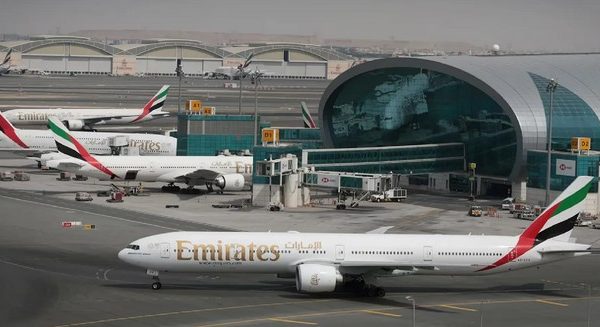
Refined fuel oil is procured from nine companies in eight countries: Kuwait Petroleum Corporation (KPC); Malaysia’s Petco Trading Labuan Company Ltd (PTLCL); the UAE’s Emirates National Oil Company (ENOC); China’s PetroChina (Singapore) PTE Ltd; Indonesia’s PT Bumi Siak Pusako (BSP); China’s Unipec Singapore PTE Ltd; Thailand’s PTT International Trading PTE Ltd; India’s Numaligarh Refinery Ltd (NRL); and Oman’s OQ Trading Ltd.
For LNG, Bangladesh has G2G contracts with Oman and Qatar. It also buys LNG from the spot market through open tenders. While the companies involved are globally registered, the LNG supplied through this route comes mainly from Singapore–based entities.
The largest supplier of LNG from the spot market is Vitol Asia PTE Ltd. Headquartered in Switzerland’s Geneva, it is the world’s largest independent oil trader and sources crude oil and gas mainly from Nigeria, Angola, Kazakhstan, Russia and the Middle East. It also trades large volumes of US shale oil. Vitol buys LNG in bulk from Qatar and then supplies Bangladesh with refined oil from refineries in the UAE, Kazakhstan and Singapore.
Bangladesh also buys spot LNG from Gunvor. Another Geneva–based independent commodity trader, Gunvor, has historically sourced most of its fuel from Russia. It now also procures energy from the United States, Latin America and Africa. International data show Gunvor currently supplies Bangladesh with fuel originating from Angola, Nigeria and Guyana.
TotalEnergies, one of the world’s seven major oil companies, is headquartered in France. It is both a trader and a producer, with key source countries including Qatar, the UAE, Nigeria, Angola, Norway and the United States. For LNG, it relies heavily on Australia and Qatar. In supplying Bangladesh, it mainly draws on its own projects in Qatar, Australia and Angola, with additional volumes from Nigeria and Oman.
Excelerate Energy is a US–based company headquartered in The Woodlands, Texas. It is best known for its floating LNG terminal technology and LNG supply. The company supplies Bangladesh through two main channels, including a long–term contract with the government and Petrobangla that primarily sources LNG from Qatar.
These firms trade LNG and fuel oil globally, sourcing from multiple countries and hubs. For spot LNG purchases, Bangladesh remains heavily reliant on Singapore–based trading companies.
Indonesia is the main source of coal for Bangladesh’s coal–fired power plants, with its supplies generally regarded as the most cost–effective when both price and shipping distance are considered. Yet investigations have found that coal purchase agreements for the power sector at times used higher–priced coal from Australia and Africa as benchmark prices, despite differences in coal quality. Analysts say there was a clear opportunity to probe allegations of corruption under the previous administration linked to the terms of these contracts.
For years, Bangladesh’s fuel procurement has been flagged by allegations of favouritism, bribery and malpractice, prompting international institutions to recommend investigations and forensic audits. The previous government took no action. Energy experts now argue that the interim administration could have moved more decisively to dismantle syndicates and address losses in the sector.
Professor M Tamim, an energy expert and vice–chancellor of Independent University, Bangladesh, told journalists: “There were major allegations of syndicates in the country’s fuel import and procurement in the past. These syndicates still exist. Steps were needed regarding these allegations, which could have clarified issues of corruption, malpractice or bribery in the energy sector.”
Despite years of fuel oil purchases through multiple suppliers, domestic consumers have seen little benefit when global oil prices fall. This is widely attributed to BPC’s heavy spending on refined oil imports and long–standing allegations of serious flaws and irregularities in the corporation’s income and expenditure projections.
Although the International Monetary Fund has previously urged the government to commission a foreign audit of BPC, no administration, including the now–ousted Awami League government, has shown interest. That stance has continued under the interim government.
Beyond G2G deals, the government imports LNG and refined fuel oil from the spot market. Under the previous administration, there were allegations of repeatedly awarding supply contracts to favoured companies. Since taking office, the interim government’s energy ministry has formed several committees to curb excessive costs and financial losses in the power and energy sector. However, a clear move to launch forensic audits into alleged malpractice under the former government has yet to materialise.
The power and energy sector was a major centre of malpractice and plunder during the Awami League’s fifteen–year rule. A report by the White Paper Committee on the economy identified at least $6 billion in irregularities and corruption in the sector, largely driven by commission–based trading. Allegations of kickback schemes in the LNG and fuel oil trade under the previous administration warranted an immediate and robust investigation by the interim government, said BNP standing committee member and former state minister for power Iqbal Hasan Mahmood Tuku. “Instead of doing that, they are working on policy decisions, which is not the job of an interim government,” he told journalists.
He said, “A particular syndicate existed in the energy sector during the Awami League’s time. That syndicate has now extended its grip over the power sector. The government talks about reforms and claims it is eliminating syndicates, but the big question is why the power and energy sector remains unaffected.”
Asked about the issue, Transparency International Bangladesh (TIB) Executive Director Dr Iftekharuzzaman told journalists: “The extent to which the interim government has met expectations for major reform in the energy sector is now a serious question. However, one thing is clear: the sector’s problems are not limited to capture, siphoning money through control of policy frameworks, and then absconding. It is intertwined with production capacity, continuity of power supply and the structural stability of the entire sector. These are not issues any government can fully resolve in one year or suddenly make syndicate–free by handing it over to someone else. Expecting is easy, but implementing is extremely hard. The worrying point is that the energy sector remains dependent on fossil fuels. The government has not been able to firmly build on the commitment or potential to gradually shift towards renewable energy.”
When approached by journalists on reforms and syndicate influence in fuel imports, the adviser to the Ministry of Power, Energy and Mineral Resources, Muhammad Fouzul Kabir Khan, said: “The syndicate that existed in the energy sector has been completely dismantled. Previously there were six or seven suppliers; now there are 25. Costs may have risen but LNG import volumes have also increased.”
Asked about allegations that relatives of former state minister Nasrul Hamid — who were part of the LNG supply syndicate during the Awami League era — are still receiving contracts, the adviser said: “We have no such documents. Besides, these are not matters of Nasrul Hamid’s association; these are all international companies. I have no knowledge of what Nasrul Hamid’s association with them is.”










Editor & Publisher: Golam Mostafa Jibon
News & Commercial Office:
Railgate, Sirajganj & 2 R. K Mission Road, Dhaka.
Hotline: 01715-319996, 01558-314179
E-mail : [email protected]