

Government Teachers’ Activities Counterproductive for Public Education
- Update Time : Saturday, December 20, 2025

— Masum Billah—
At the beginning of this Victory Month, government primary and secondary school teachers took to the streets to press their demands, using students as leverage. In contrast, private, MPO and non-MPO schools continued with examinations, result preparation and other academic activities. This contrast created a positive impression among guardians about private institutions and their teachers, encouraging them to enrol their children there, while further damaging the image of public schools.
The teachers of 712 government high schools went on strike, vowing not to conduct the annual examination and evaluate the examination scripts of the students, calling for a “complete shutdown” movement and “school locked” activity. The assistant teachers of government primary schools also observed a “sit-in demonstration” movement at Central Shaheed Minar since 8th November 2025. The Ministry of Primary and Mass Education gave reassurance regarding the implementation of Grade 11. However, when teachers found no such advancement in this regard for a prolonged period, they began a strike on 28th November, vowing not to participate in the terminal examination beginning on 1st December. The ministry warned them of departmental punitive measures but failed to make them immediately resume their work. After one week, they reluctantly began working, stating that while they will conduct the terminal examination, their movement will continue.
Ultimately, this whole ordeal proved that government officials can do anything anytime by disregarding state norms and rules. This is a result of weak bureaucracy, a matter which has been misrepresented by left politicians and so-called democrats. Strong bureaucracy does not allow quick and massive corruption; neither does it allow inefficient people to occupy valuable chairs.
The Directorate of Secondary and Higher Education (DSHE) also issued warnings to the striking government secondary teachers, but they did not conduct the annual examinations till 1st December. 31 government schools in Dhaka City also saw no exams, and students had to go back home, thus creating a serious negative impact on the education system of government schools. Teachers said, “No increment, no work. No gazette, no work. No promotion, no work.’’ They want the inclusion of their job in the BCS cadre, the issuance of a gazette immediately accepting their demands, teachers to be employed in different educational administrative positions without passing any time, and the issuance of an order to give a timescale and selection grade to the teachers in light of the Supreme Court verdict. They also demanded two to three increments, including increased salary, as was the norm before 2015. All these demands are about their own benefits without giving any hints to address the existing problems our education system faces, particularly the quality of teaching and increasing emphasis on private coaching. Sometimes, it even seems that many teachers view schools merely as a medium of getting students admitted to their coaching businesses.
What is puzzling is that the teachers of primary and secondary schools were quite aware of their entry-level grade and promotion system while entering the job. The existing grades and facilities definitely call for reform and change that should be settled in an organised and acceptable way, but their strike will have far-reaching consequences on public education. The non-government and private schools will further develop their delivery and management systems to attract more students and guardians, as they already work in a competitive environment that government schools never experience. On the other hand, government teachers often get students enrolled who, in turn, have to get enrolled in the teachers’ coaching business to get a more complete education. Even then, if they do not pass or fail to develop their basic skills, teachers are hardly made responsible. Just the opposite happens in non-government educational institutions. Private institutions prioritise ensuring accountability and students’ and guardians’ satisfaction, leading to authorities’ satisfaction. As a result, providing a good quality education becomes possible, whereas nationalisation means losing all sorts of accountability and producing low-quality education, even though it ensures teachers’ financial security.
It is true that teachers’ financial security must be ensured irrespective of any kind of educational institution, but that does not necessarily mean all the teachers should be government employees and all the teachers of the secondary level must be first-class gazetted officers. We had only 317 government secondary schools for many years, a number which has been increased to 712, though the converting criteria have not been effectively communicated to the people of the country. It would be wise to only convert the qualified teachers to the BCS cadre through examinations and consideration of their service record, who can then be transferred to colleges and other educational institutions without making all teachers first-class officers en masse. We must also devise a genuine plan that will ensure teachers’ financial security and education of a global standard.
—————————————————————
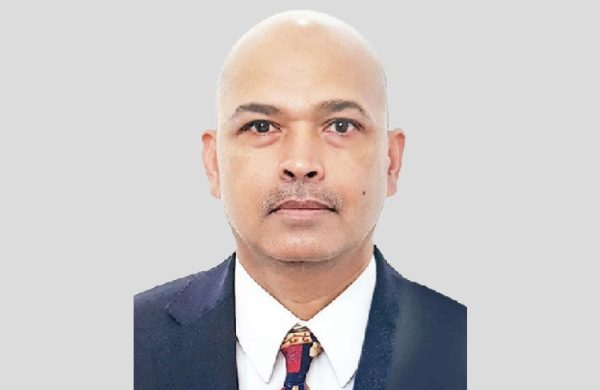
The writer is President, English Teachers’ Association of Bangladesh. He can be reached at masumbillah65@gmail.com




Editor & Publisher: Golam Mostafa Jibon
News & Commercial Office:
2 R. K Mission Road, Dhaka & Railgate, Sirajganj.
Hotline: 01715-319996, 01558-314179
E-mail : editor.thedailysky@gmail.com
news.thedailysky@gmail.com