

Govt plans Tk420cr project to rehabilitate street children nationwide
- Update Time : Monday, July 6, 2026
TDS Desk:
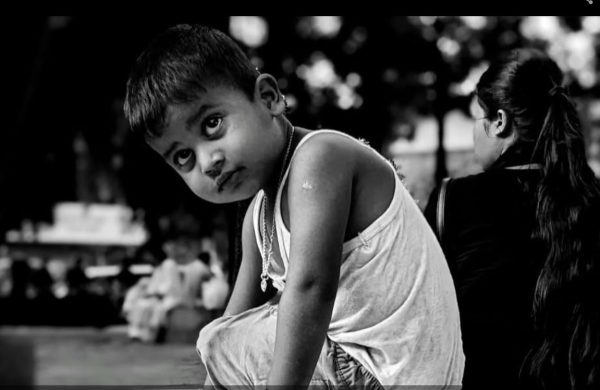
The government is set to launch a Tk420 crore project to provide shelter, education, rehabilitation and livelihood support for street children and children at risk, aiming to reintegrate thousands into families and mainstream society.
Titled “Rehabilitation Project with Residential Facilities for Street Children and Children at Risk”, the women and children affairs ministry will implement it in collaboration with the Bangladesh Shishu Academy. The government will solely fund it.
The project was sent to the Planning Commission for approval yesterday (6 July). If approved, implementation will begin this year and continue until June 2031.
According to the Development Project Proposal, it seeks to address the underlying causes of child homelessness while providing long-term rehabilitation through coordinated social protection, education, vocational training and family reintegration.
Shelter, education, family reunification:
Under the project, authorities plan to reunite or reintegrate 6,600 children who have become separated from their families. Another 1,900 street children will receive residential shelter, while 4,500 children will be brought under formal and non-formal education.
The project also includes conditional cash transfers or stipends for 5,500 vulnerable children or their families to help keep children in educational institutions.
The government also plans to provide financial assistance or livelihood support to 5,700 children who complete vocational training, enabling them to become self-reliant.
Children living in shelter homes will receive market-oriented technical training to prepare them for employment, while those showing entrepreneurial potential will receive one-time grants or equivalent training equipment.
It will create employment opportunities in domestic industries for trained youth and facilitate overseas employment for eligible beneficiaries aged above 18, with necessary migration support.
Nationwide expansion:
The project will be implemented in 34 upazilas, 12 city corporations and eight municipalities across 31 districts, with priority given to areas where street children are most concentrated.
These include the city corporations of Dhaka North, Dhaka South, Chattogram, Rajshahi, Khulna, Barishal, Sylhet, Rangpur, Gazipur, Cumilla, Narayanganj and Mymensingh.
Several district headquarters and upazilas, including Savar, Sandwip, Bhola Sadar, Baufal, Patuakhali Sadar, Khulna Sadar, Habiganj Sadar, Rajshahi Sadar, Rangpur Sadar, Bhairab and Netrokona Sadar, will also be covered.
Officials said awareness campaigns, family reunification and rehabilitation activities will be carried out nationwide, even beyond the designated project areas.
The selection of project locations is based on findings from the Bangladesh Bureau of Statistics’ Survey on Street Children 2022.
New shelters, schools:
The government plans to establish and operate 19 shelter homes, three transit homes and 150 open schools for street children across the country.
These facilities will provide safe accommodation, education, healthcare and other essential services.
The project also includes establishing 15 counselling booths, conducting a nationwide baseline survey on street children, creating a biometric database and ensuring birth registration for every child brought under the programme.
Authorities also intend to formulate a dedicated policy and operational guideline for family reunification.
Health, skills, awareness:
Children staying in shelters and attending open schools will receive regular healthcare, mental health services and specialised support where necessary.
Those struggling with drug addiction or considered at risk of substance abuse will be identified and provided counselling and treatment.
The project also includes market-oriented vocational and income-generating training to improve future employment prospects.
To raise public awareness, programmes will be organised in 125 unions, alongside campaigns using billboards, posters, leaflets and newsletters.
Why children end up on streets:
Officials at the ministry said poverty, river erosion, floods, droughts, cyclones and other natural disasters continue to force many children to leave their homes.
Family conflict, divorce and domestic violence also contribute significantly to child displacement.
Many children migrate to Dhaka and other urban centres in search of work, where they end up living on streets, footpaths, under bridges, in parks and at bus or railway stations.
To survive, many work as waste collectors, street vendors, hotel workers, porters or car cleaners, while others resort to begging.
The project has incorporated lessons from successful rehabilitation programmes implemented in countries such as Brazil, India and Sierra Leone.
Most children want to return home:
According to the BBS Survey on Street Children 2022, 58.5% of street children work on the streets during the day but return to their families at night.
Another 19% live permanently on the streets, 16.9% live on the streets with their parents and 5.6% return to other families after work.
The survey found that 71.8% of street children have both parents alive, while 91.2% want to live with their families. However, 71.6% said they were not interested in staying at rehabilitation centres.
The survey also identified poverty and hunger as the leading reasons children leave home.
According to the DPP, the project is expected to directly benefit 24,850 children and indirectly improve the lives of another 475,150, reaching a total of around 500,000 children over the implementation period.





Editor & Publisher: Golam Mostafa Jibon
News & Commercial Office:
2 R. K Mission Road, Dhaka & Railgate, Sirajganj.
Hotline: 01715-319996, 01558-314179
E-mail : editor.thedailysky@gmail.com
news.thedailysky@gmail.com