

Let new government rise above favour and prejudice
- Update Time : Sunday, February 22, 2026
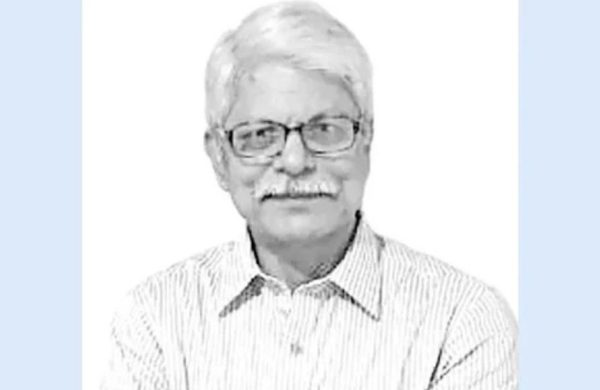
—Anwar Hossain Manju—
If politicians were to tell the truth, perhaps they would not succeed in politics. In a society where, even after touching the holy scriptures—the Quran, the Gita or the Bible—and declaring, “I shall speak the truth, the whole truth and nothing but the truth,” false testimony is routinely given; where the truly guilty are declared innocent and acquitted without consequence—expecting integrity from politicians is little more than wishful thinking.
Those appointed as Prime Minister, ministers, state ministers and deputy ministers in this country are not required to touch any holy book when taking their oath. Instead, they pledge allegiance to the Constitution. The essence of their oath is: “I shall discharge my duties in accordance with the law, without fear or favour, affection or ill-will.” Those appointed to high constitutional offices are also required to take a similar oath.
Regrettably, some who take the oath treat it as a mere formality. Once in office, their actions often bear little resemblance to the words they have sworn. The 13th National Parliament election was held on 12 February. Securing a two-thirds majority, the Bangladesh Nationalist Party (BNP) has formed a government for the first time in nearly two decades. The Prime Minister and other ministers have already taken their oaths and begun discharging their duties.
Had it not been for the success of the July movement— which brought down a fascistic regime that had burdened the nation for over fifteen years—the 13th parliamentary election would have been held in 2029. The triumph of the student-led mass uprising undeniably played a key role in advancing the election by three years. Following the movement, its leaders, in consultation with political parties large and small, adopted the “July Charter” by consensus and promulgated the “July Charter (Constitutional Reform) Implementation Order 2025”, incorporating safeguards to prevent any future government from becoming authoritarian.
Alongside the parliamentary election, a referendum was held on the same day to ascertain voters’ views on implementing the July Charter. The electorate overwhelmingly endorsed its implementation. Yet the public observed with surprise that although Members of Parliament took their oaths on 17 February, BNP members, in line with party policy, refrained from taking any pledge to implement the July Charter. When questioned by journalists, senior BNP leaders stated without hesitation that the existing Constitution contains no provision for such an oath and that doing so might invite future legal challenges. Some remarked that they had agreed to the referendum only because elections would not otherwise have been held.
There is a Bengali proverb: “Reverent before the task, dismissive once it is done”—meaning one flatters until one’s interests are secured, then reveals one’s true face. It is difficult to believe that questions about what the Constitution does or does not contain occurred to them only on the day of the oath.
With a two-thirds majority in Parliament, the BNP now has the numbers to amend the Constitution at will. The Awami League similarly used its dominance between 2008 and 2024 to abolish the caretaker government system, vest Parliament with the power to remove Supreme Court judges, and extend the tenure of 50 reserved seats for women by 25 years—changes widely seen as entrenching Sheikh Hasina’s authority. An overwhelming majority does not confer licence to disregard public opinion. Yet history shows that respect for public mandates has not always prevailed. In 1975, despite being elected under a parliamentary system, the Awami League established a one-party state. Sheikh Hasina followed that path, with consequences that proved harmful for both her and the nation.
The BNP once restored the parliamentary system and, under Ziaur Rahman and Begum Khaleda Zia, did not exhibit Awami-style authoritarianism. It is therefore hoped that under its current leadership it will honour the public trust. If the party lacked confidence in holding an immediate referendum on the July Charter, it could have presented its arguments openly beforehand. Doing so would have demonstrated political integrity and steadfast loyalty to the Constitution without, in my view, diminishing its popularity as the country’s largest party.
In its present stance, the prospects for implementing the July Charter appear uncertain. Successful politicians, it seems, often conceal their true intentions and change their tone once their objectives are secured. The Awami League’s controversial 2018 “midnight vote” was hardly a spontaneous act; it was the result of prior planning. Likewise, the BNP’s refusal to pledge implementation of the July Charter appears premeditated. By keeping the public uncertain while proceeding to form the government, it has achieved its objective.
Politics is a complex discipline, and politicians are its principal practitioners. The ordinary citizen’s role is to vote and then be governed by those elected. It may well be that the country will continue to witness familiar patterns of politics. Some development will occur, and its benefits may accrue largely to a select few. For the wider population, even a modest share in that progress would seem a blessing. From the days of Pakistan, the people of Bangladesh have demanded democracy and resisted oppression. Yet during 24 years under Pakistani rule they remained governed without attaining the democracy they sought. If, after nearly twice that span as an independent nation, citizens must still struggle and sacrifice young lives to establish democratic governance, it is a profound tragedy.
The Chairman of the BNP has assumed office as Prime Minister—the third member of his family to hold executive authority, following his parents. The public affection shown towards him is rare, not only in Bangladesh but in many countries’ histories. Having rejected an oppressive force, the people have placed their trust in him and hope he will honour it. They believe he will rise above partisan considerations and set a benchmark for good governance that future leaders may emulate.
He will undoubtedly draw upon the counsel of his cabinet and advisers. Yet, to be a truly good ruler, he must personally exercise prudent judgement in decisions affecting the state and its people. Moral integrity is essential for a head of government, inspiring public confidence and ensuring that, in times of crisis, the people stand firmly by his side.
————————————————————-
The writer is a senior journalist and translator based in the United States












Editor & Publisher: Golam Mostafa Jibon
News & Commercial Office:
Railgate, Sirajganj & 2 R. K Mission Road, Dhaka.
Hotline: 01715-319996, 01558-314179
E-mail : [email protected]