

Only 28.6% schools have improved toilets for every 50 students
- Update Time : Sunday, December 21, 2025
TDS Desk:
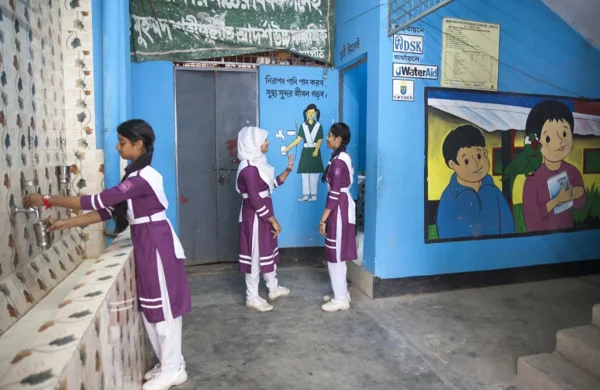
A recent survey by the Bangladesh Bureau of Statistics (BBS) reveals that only 28.6% of schools in the country have one improved toilet for every 50 students, meeting internationally recommended standards. The survey also found that just 33.9% of schools and 45.4% of healthcare facilities safely manage human waste, raising concerns about environmental pollution and disease risks.
The results of this survey were released on Sunday at a programme held in the auditorium of the Statistics Building in Agargaon.
The event was chaired by the Bureau’s Director General Mohammad Mizanur Rahman, and the chief guest was SID Secretary Aleya Akter. Speeches were delivered by SID Additional Secretary Mohammad Masud Rana Chowdhury and OIC UNICEF Bangladesh Representative Faruk Adrien Dumon. The results were presented by Md. Alamgir Hossain, Focal Point of the SDG Cell.
BBS noted that limited financial allocation for maintaining improved water sources threatens the sustainability of existing facilities. The survey, conducted between 26 June and 17 July, 2024, covered eight divisions and 64 districts, including government and non-government schools as well as healthcare facilities.
According to the results, 95.4% of schools and 87.5% of healthcare facilities have access to improved water sources. However, when considering only water sources located within institutional premises—the benchmark for basic water service—coverage drops to 86.1% in schools and 70.5% in healthcare facilities. Access for persons with disabilities is even lower, with only 55.4% of schools and 40.9% of healthcare facilities providing accessible water points.
Budget allocations are scarce: only 11.1% of schools and 34.9% of healthcare facilities have dedicated funds for WASH (water, sanitation, and hygiene) services. While most institutions have at least one toilet—90.6% of schools and 98.5% of healthcare facilities—the quality and usability vary significantly.
Handwashing facilities are widely available but often lack water and soap, leaving only 51.7% of schools and 5% of healthcare facilities meeting basic handwashing standards. Menstrual health management facilities are also inadequate, with just 20.7% of schools offering separate safe toilets for adolescent girls and only 6.9% providing basic MHM services.
The survey highlighted serious gaps in waste management. While 78.3% of schools reported proper solid waste disposal, only 25.4% of healthcare facilities meet basic medical waste management standards. Open-air waste burning in 41.6% of healthcare facilities poses severe environmental and public health risks.
The study also found that WASH systems are not resilient to natural disasters. Over the past year, 24% of schools and 19.4% of healthcare facilities experienced damage from natural hazards, yet only 33.7% of schools and 9.9% of healthcare facilities reported awareness of protective measures. Implementation rates are even lower, leaving institutions vulnerable to future climate shocks.
The survey underscores urgent needs for improved sanitation, water access, hygiene services, and climate-resilient infrastructure across schools and healthcare facilities in Bangladesh.







Editor & Publisher: Golam Mostafa Jibon
News & Commercial Office:
Railgate, Sirajganj & 2 R. K Mission Road, Dhaka.
Hotline: 01715-319996, 01558-314179
E-mail : [email protected]