

Priorities for the BNP Government
- Update Time : Monday, February 16, 2026

—Syed Badrul Ahsan—
The sadness is in knowing that the 12 February election was non-inclusive and so went against the principles of political pluralism. The happiness— and happiness is a relative term here— is in acknowledging the reality of an elected government expected to free Bangladesh of the detritus that has accumulated in the months since the departure of the Awami League administration.
For the Bangladesh Nationalist Party (BNP), therefore, there is a paramount need to move speedily in ensuring that rule of law becomes the norm in the country after all the mob activities that have undermined the foundational fabric of the republic. Being an elected dispensation, the BNP government will need to reassure citizens that it will right all the wrongs that have been committed by the Yunus regime since August 2024.
The priorities are there for the new government. The foremost among those is for the nation’s new leadership to take measures that will free all imprisoned individuals — politicians, intellectuals, journalists, theatre activists, pro-liberation elements and others — from the long incarceration they have been in with all the false and questionable cases filed against them. A swift review of the situation is called for. That includes investigations of those individuals who filed all the cases against these individuals as those who influenced them in committing the act.
A second priority for the government pertains to the need to free the media of the dark shadow of the mobs that has loomed over them in the last eighteen months. Media houses seized by mobs, which were instrumental in forcing journalists out of work and replacing them with people in thrall to them, must be freed if the new government means to have media freedom as an idea it truly believes in. Journalists have in this long period of darkness had their bank accounts made inoperative, forcing them into penury on charges that have lacked any credibility. It is a situation the elected government will be expected to reverse.
A third priority for the BNP government will of course be to undertake a detailed investigation of the conditions post-August 2024 that forced teachers at various public universities in the country out of their jobs and levelling false allegations against them of their being allies of the Awami League government. The leaders of the mobs instigating such dark acts must be identified and brought to book in the interest of a peaceful and proper academic atmosphere in the future. The academics who have gone into hiding or exile or have been dismissed will need to be brought back to the universities in order to have discipline return in the field of higher education.
The Yunus regime at certain stages of its rule called back home a number of senior and very professional diplomats, including ambassadors and high commissioners, and forced them to hand over their passports to the authorities. Months have gone by but the passports have not been returned, making it difficult for these diplomats, whose sin was to have spoken for the nation abroad, to travel out of the country. The new government, especially the new foreign minister, should be taking expeditious action here to restore the dignity of the diplomats. Additionally, false cases of corruption lodged against some of these diplomats will need to be withdrawn for decency and dignity to return to the foreign policy establishment.
Under the new dispensation, thorough investigations into the lynching of policemen in the aftermath of the August 2024 changeover are an absolute necessity if the confidence of the country’s police force has to be restored and reasserted. Many policemen have not returned to their jobs. Their families as well as the families of the policemen killed by mobs need justice. The wheels of justice therefore must move. At the same time, those responsible for arson attacks on police stations and the theft of weapons across the country must be identified quickly and proceeded against under the law.
Education at the school and college levels is a priority the BNP government ought not to ignore. Those responsible for tampering with syllabi and excising sections relating to Bangladesh’s cultural and literary heritage are elements who have damaged the basis of education and therefore must answer before the law for such anti-national moves.
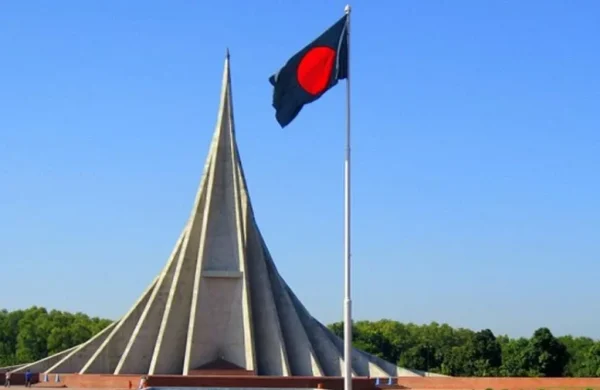
There are individuals in the new political dispensation who have played major roles in the War of Liberation. Besides, the BNP as a party has consistently portrayed itself as an organisation wedded to the principles of the 1971 armed struggle for freedom. As such it becomes the moral responsibility of the government to formally condemn the vandalism let loose on 32 Dhanmondi, the Mujibnagar monument and other symbols of the nation’s epic struggle for liberty and have the security agencies go on a search for the elements who destroyed these structures and for those who aided them in the process or refrained from taking action against such mobs.
The BNP was out of power for two decades, which is as much as to suggest that it will need to relearn the methods of running a government. Given that its return to power is unlike its triumphs at earlier elections, pragmatism combined with sagacity should power its decision-making in the public interest. With the Awami League vote bank remaining inoperative at the recent election, it will be for the BNP government to move judiciously towards lifting the arbitrary ban on the activities of the Awami League. That will be a crucial step in a re-inauguration of the democratic process in Bangladesh.
The new government will necessarily have to hit the ground running. The constitutional vacuum in which the country remained confined for the last eighteen months needs to go. Citizens must feel free to express their views on politics and governance again, a circumstance which can be guaranteed through a pledge, in intention and in deed, by the new dispensation that Bangladesh will no more be subjected to the anarchy and misrule it groaned under for eighteen months.
This battered country needs to be rebuilt. Which is why the new government should avoid slipping into the quicksand of partisan politics and reach out to the entire nation. And, of course, it is a responsibility it can carry out through upholding the sanctity of the constitution and beating back all attempts to undermine it in the guise of reforms. The 1972 constitution is a testament to Bangladesh’s emergence as a people’s republic. Let this truth not be tampered with.
————————————————————-
Syed Badrul Ahsan writes on politics, diplomacy and history









Editor & Publisher: Golam Mostafa Jibon
News & Commercial Office:
Railgate, Sirajganj & 2 R. K Mission Road, Dhaka.
Hotline: 01715-319996, 01558-314179
E-mail : [email protected]