

Railway Eastern Zone: Around 600 trains cancelled each month amid crew, locomotive shortage
- Update Time : Tuesday, January 13, 2026
TDS Desk:
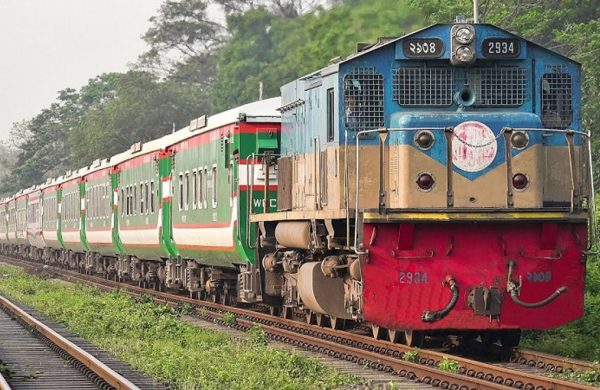
Bangladesh Railway’s Eastern Zone operates a daily schedule of more than 150 trains. However, years of mismanagement, manpower shortages, and mechanical constraints have created a severe operational crisis. Due to an inadequate number of locomotives and train crew — including train operators, assistant operators, and guards — an average of around 600 trains are being cancelled or partially suspended every month. The situation has not only disrupted passenger services but also dealt a major blow to the railway’s revenue earnings.
Railway data show that between September and November of the just-concluded year, Bangladesh Railway was forced to cancel between a minimum of 14 and a maximum of 24 trains almost every day. These services could not be operated as per schedule due to shortages of locomotives and required manpower. Of the total, 546 trains were cancelled in September, 589 in October, and 574 in November. Although these services were listed for operation on designated routes under the latest Working Time Table (WTT-54), the schedules could not be implemented in practice. As a result, the accounts department has failed to meet revenue targets set on the basis of scheduled train operations.
According to railway records, the Eastern Zone is supposed to run 58 intercity trains, 60 commuter and mail trains, and 38 local trains daily. Excluding weekly holidays, an average of about 4,500 passenger trains are scheduled to operate each month. These services play a vital role in connecting Dhaka, Chattogram, Sylhet, Mymensingh, Chandpur, and other routes in the eastern region. Beyond meeting passenger demand, they are considered crucial for boosting railway revenue as well as supporting agriculture and local economic activities.
The railway’s transport department said that compared to intercity services, second-class mail, commuter, and local trains are far more closely linked to the daily lives and economic activities of rural and suburban populations. However, due to persistent shortages of locomotives and manpower, Bangladesh Railway has kept 16 mail and commuter trains—both permanently and temporarily—out of operation since 2020. In addition, six local trains have been permanently withdrawn from service.
Second-class train services on various Eastern Zone routes have been gradually suspended since 2020. Some have been permanently closed, while several important local, mail, express, and commuter trains — despite being scheduled for regular operation — are frequently cancelled due to recurring shortages of locomotives and crew. Services that have failed to operate regularly include the Isha Khan Mail on the Dhaka–Mymensingh–Dhaka route, the Dhaleshwari Mail on the Mymensingh–Ibrahimabad–Mymensingh route, the Bhawal Mail on the Dhaka–Dewanganj Bazar–Dhaka route, the Tangail Commuter on the Ibrahimabad–Dhaka–Ibrahimabad route, local trains on the Mymensingh–Dewanganj Bazar–Mymensingh and Mohanganj–Mymensingh–Mohanganj routes, the Jalalabad Express on the Chattogram–Sylhet–Chattogram route, the Surma Mail on the Dhaka–Sylhet–Dhaka route, the Samatat Mail on the Noakhali–Laksam–Noakhali route, and the Dhaka Express and Noakhali Mail on the Noakhali–Dhaka–Noakhali route. These train services once enabled passengers to travel short and medium distances between major metropolitan and district towns and upazilas, easing pressure on road transport. Their suspension has now led to increased passenger suffering, higher travel costs, greater congestion, and heightened accident risks on highways.
Officials involved in train operations said the prolonged suspension of these services has reduced railway revenue while placing additional pressure on intercity trains, disrupting overall operations. They warned that unless locomotives are procured and manpower recruitment is expedited, the crisis in train operations in the Eastern Zone could worsen further.
A senior official of the railway accounts department, speaking on condition of anonymity, told journalists, “Bangladesh Railway used to operate multiple classes of train services. The number of second-class trains has been reduced due to shortages of manpower and locomotives. At one time, intercity trains were the railway’s most premium service. Now, because of excessive unscheduled stops, long waits at stations, and increased travel times, ordinary passengers have started referring to intercity trains as ‘local trains.’ The railway has introduced four partially non-stop trains in the Eastern Zone on a limited scale. Compared to other intercity services, these partially non-stop trains have the highest ticket demand.” As a result, he said, so-called ‘non-stop’ services are effectively pushing regular intercity trains towards operating like local trains.
Meanwhile, intercity trains—designed for faster, long-distance travel—have seen a significant rise in unwanted stoppages over the past few years. With second-class services suspended, local protests, train blockades, and pressure from public representatives have forced the railway to violate its own rules and introduce unscheduled stops for specialised services. This has added to the inconvenience of passengers who pay higher fares for intercity travel.
More than 90 percent of railway tracks in the Eastern Zone are metre gauge. Nationwide, 49 of the country’s 64 districts are connected to the railway network. Although the Eastern Zone has 162 metre-gauge locomotives, 69 percent have exceeded their economic lifespan. Of the 1,267 metre-gauge passenger coaches, 43 percent are also beyond their economic life. Despite a long-standing locomotive shortage, a lack of foresight at the policy-making level has prevented the railway from resolving the crisis. As a result, instead of expanding services, Bangladesh Railway has been forced to scale them back. With around 600 trains suspended each month on routes serving major cities such as Dhaka, Chattogram, Sylhet, and Mymensingh, the burden has shifted to road transport. Stakeholders believe this has contributed to severe congestion, accidents, and broader disorder across the country’s road communication system.
Asked about the situation, Mohammad Subaktagin, general manager of Bangladesh Railway’s Eastern Zone, told journalists, “The railway does not operate train services solely for maximising profit. Alongside earning revenue, this state-owned organisation serves people from all walks of life and quietly contributes to the country’s socio-economic landscape. Since the British era, railway services have connected communities along rail corridors through transport-linked economic activities. Especially a century ago, when road connectivity was poor, trains were the primary mode of transport. However, the railway has been facing an acute locomotive shortage for some time, which makes it impossible to operate certain services regularly or irregularly. As these trains remain on the schedule, the railway will operate them whenever possible to ensure connectivity for the general public.”





Editor & Publisher: Golam Mostafa Jibon
News & Commercial Office:
Railgate, Sirajganj & 2 R. K Mission Road, Dhaka.
Hotline: 01715-319996, 01558-314179
E-mail : [email protected]