

Referendum sees 62.36% abstain or vote ‘no’
- Update Time : Saturday, February 14, 2026

TDS Desk:
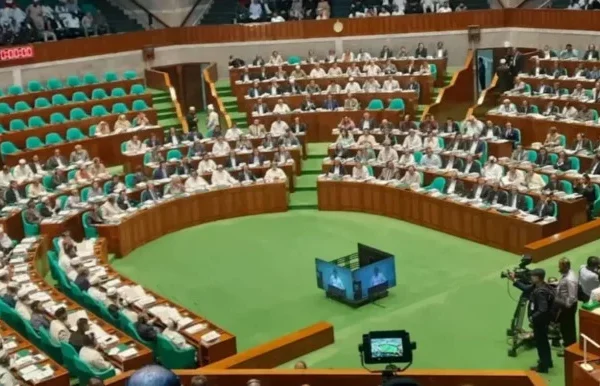
A referendum on constitutional reforms proposed in the July National Charter took place alongside the general election on February 12. The Bangladesh Election Commission said 127.69 million people were eligible to vote. The “yes” campaign won 48.07 million votes, or 37.64 percent of the electorate. The remaining 62.36 percent either voted “no” or did not participate.
The charter, signed by most of the political parties, proposes an upper house of parliament, a balance of powers between president and prime minister, a ban on the prime minister serving as party chief, and a 10-year term limit for any individual in the prime minister post. The Bangladesh Nationalist Party signed but appended “notes of dissent” on specific points; NCP was the only major party not to sign.
According to Election Commission figures, 22,565,627 voters cast ballots in favour of “no” in the referendum. The total number of voters who voted either for or against the reform proposal stood at 70,640,056. That implies 57,071,737 voters did not take part in the referendum altogether. Combined, those who voted “no” and those who abstained add up to 79,637,364 — about 62.36 percent of the electorate.
Bangladesh has held four referendums since independence, the first three in 1977, 1985 and 1991. The first, on May 30, 1977, was organised by President Ziaur Rahman to gauge public support for his policies and programmes. A second followed on March 21, 1985, called by Hussain Muhammad Ershad to secure a mandate for his rule and approval to remain in office until elections could be held under a suspended constitution.
A referendum on the Twelfth Amendment, which decided whether the country would retain a presidential system or revert to a parliamentary model, took place on September 15, 1991. With exception of the Freedom Party, all political parties campaigned for a “yes” vote. The vote was held under Referendum Act 1991 and Referendum Rules 1991, the same legal framework used for the 2026 referendum.
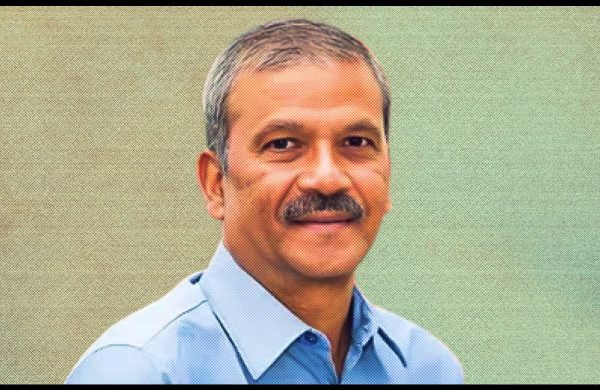
A total of 60.26 percent of the electorate participated in the fourth referendum, held alongside the general election, said Akhtar Ahmed, senior secretary of the Election Commission, while announcing the results yesterday at the commission’s office. Of those who voted, 68.06 percent backed reforms, while 31.94 percent rejected the proposals.
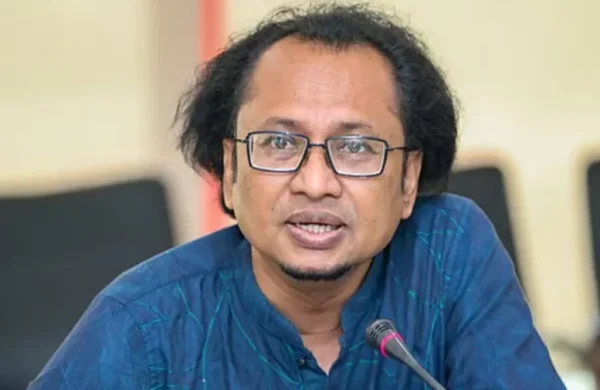
Asked about the result, Dil Rowshan Zinnat Ara Nazneen, professor of political science at the University of Dhaka, told journalists that although many people, particularly “supporters of one party”, did not vote, participation by around 70 million voters was significant. “The number isn’t bad at all,” she said. “I would say participation was substantial.”
Analysing the results shows that 80 to 85 percent of voters in Rangpur, Rajshahi and Khulna divisions, as well as the capital Dhaka, backed reforms with a “yes” vote. The “no” camp held a slight edge in other districts of Dhaka division and in Chattogram, Mymensingh and Sylhet divisions.
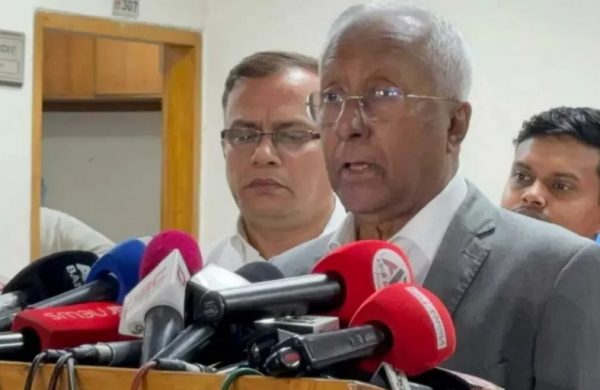
AKM Abdul Awal Mazumder, a former secretary and ex-rector of Bangladesh Public Administration Training Centre, said the large turnout is the key point. He told journalists: “Those who didn’t come to vote effectively chose not to participate. By analogy with an examination, authorities have no separate recourse for a candidate who doesn’t show up. People who went to polling stations gave their verdict. The decision of those who stayed away can’t be counted as an active opinion.”






Editor & Publisher: Golam Mostafa Jibon
News & Commercial Office:
Railgate, Sirajganj & 2 R. K Mission Road, Dhaka.
Hotline: 01715-319996, 01558-314179
E-mail : [email protected]