

Restaurants warn closures amid high LPG prices; 3 million jobs at risk
- Update Time : Wednesday, January 14, 2026

TDS Desk:
Bangladesh has an estimated 436,000 hotels and restaurants, of which more than 60,000 are restaurants. Around 80 percent of these establishments rely on liquefied petroleum gas (LPG) to operate. As a result, the restaurant sector has been among the hardest hit by the recent nationwide LPG shortage. Owners have warned that if gas prices are not brought down to affordable levels, they may be forced to shut down operations, putting some 3 million workers in the sector at risk.
Bangladesh Restaurant Owners Association raised these concerns at a press conference yesterday, highlighting the impact of the LPG crisis on the industry. The association also pointed to harassment of owners, rising inflation, and the unchecked spread of unregulated street food as additional challenges. To address the crisis, restaurant owners urged the government and relevant authorities, including gas distribution company Titas, to provide pipeline gas connections as an alternative to LPG.
According to data from the Bangladesh Bureau of Statistics (BBS), there are about 436,000 hotel and restaurant establishments nationwide, employing roughly 3 million people. The Restaurant Owners Association, however, claims that around 20 million people depend on the sector directly and indirectly. Operating the industry requires large volumes of natural gas and LPG every month. Due to inadequate pipeline gas supply, about 80 percent of restaurants rely on LPG. With current market prices and ongoing supply shortages, business owners are facing severe challenges.
Imran Hassan, secretary general of the Bangladesh Restaurant Owners Association, told journalists, “Uncontrolled price hikes of essential commodities have pushed daily necessities beyond consumers’ purchasing capacity, and this has had a direct impact on the restaurant sector. Since December, the country has been facing an acute LPG shortage, and the problem hasn’t been resolved in any meaningful way. Many establishments have already started incurring losses. Out of concern for their employees, owners have so far refrained from shutting down restaurants. At the same time, prices cannot be increased, because customers would not come, and they would also come under pressure. But if this situation continues, no one will be able to sustain this business.”
He added, “Reducing the crisis in the restaurant sector would first require resolving the fuel crisis. To keep food prices affordable for consumers, both the interim government and the next elected government will need to take initiatives. In addition, restaurants are monitored by 12 different agencies under various ministries, which often leads to harassment. That is why we are demanding the introduction of a one-stop service.”
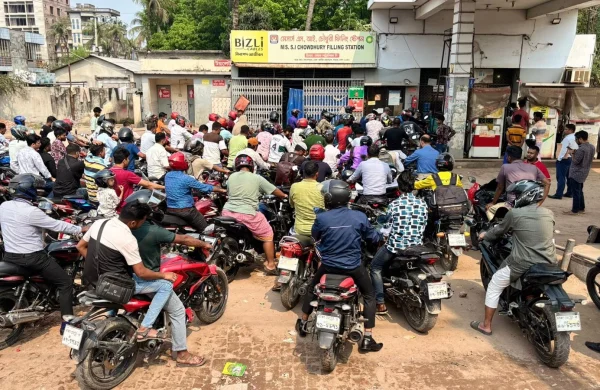
The country has been facing an acute LPG shortage for the past two weeks, with consumers unable to obtain gas cylinders even after paying between BDT 1,800 and BDT 2,000. This is despite Bangladesh Energy Regulatory Commission (BERC) having fixed the price of a 12-kg LPG cylinder at BDT 1,306. The gas shortage has also affected LPG autogas stations, industries, and other sectors.
In response, the Energy Division and BERC have already held meetings with LPG sector stakeholders and various trade bodies. Law enforcement agencies have also been conducting mobile court drives across the country to stabilise the market. However, the situation has yet to normalise.
According to the Bangladesh Restaurant Owners Association, around 120,000 tonnes of LPG are supplied nationwide each month. The gas is used across industries, households, private vehicles, and hotels and restaurants, with the latter accounting for about 25 percent of total consumption. Due to the recent price hike, fuel costs in the restaurant sector have increased by 25–30 percent compared with earlier levels.
At a press conference held yesterday at Dhaka Reporters Unity (DRU), business owners outlined a series of demands in light of the crisis facing the restaurant sector. They alleged that during the previous government’s tenure, gas connections to restaurants were suspended by citing an artificially created natural gas shortage. They further claimed that, through collusion between certain unscrupulous businessmen and officials, the LPG trade was effectively handed over to private syndicates, allowing them to monopolise the market.
Restaurant owners at the press conference also said that even after the mass uprising, the gas syndicate has not been dismantled. New gas connections remain suspended on various pretexts, while restaurants with existing Titas gas connections are still receiving inadequate supply. As a result, restaurants are being forced to cook with LPG purchased at inflated prices, sharply driving up operating costs. Owners say they are losing customers after being compelled to raise food prices, even as losses continue to mount.






Editor & Publisher: Golam Mostafa Jibon
News & Commercial Office:
Railgate, Sirajganj & 2 R. K Mission Road, Dhaka.
Hotline: 01715-319996, 01558-314179
E-mail : [email protected]