

The Chair of Power and a Fractured State
- Update Time : Tuesday, January 13, 2026
—Zillur Rahman—
-
When history becomes a commodity
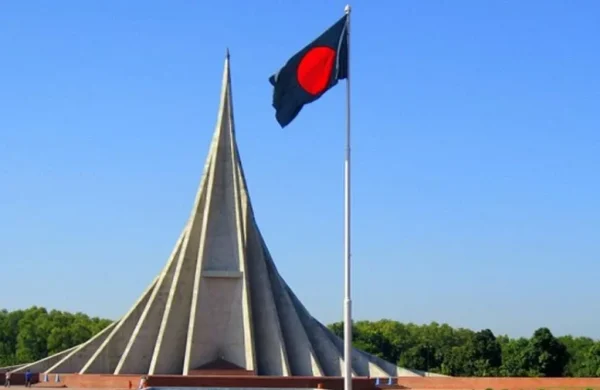
Our relationship with history in Bangladesh has always been complex. The Liberation War was once the nation’s moral foundation, the core pillar of our identity. Over time, however, that history entered the political marketplace. The Liberation War became a certificate of legitimacy for power, a weapon to silence opponents, and an ornament of rule. For fifteen or sixteen years, we witnessed how an epic struggle was turned into a political commodity.
Today, the same fear looms over the July mass uprising. July was an eruption of public anger—the courage of young people rising against discrimination, the aspirations of ordinary citizens taking to the streets demanding no more repression, no more injustice. The movement had two clear demands: an end to discrimination and the fall of the government. Yet after the uprising, a new narrative began to dominate—reform commissions, consensus commissions, and fresh political discourses—many of which were not part of the conversations on the streets.
Now the story of July, too, is moving onto stages, being printed on posters and sold through speeches. The memory of the uprising, the blood of martyrs, the courage of students—all seem to be turning into a new brand. Once again, history is entering the marketplace.
Globally, this tendency to commodify history is not new. In Latin America, many governments have come to power by invoking revolutionary movements; in Africa, memories of liberation struggles have been used to legitimise authoritarian rule; in the Middle East, the narrative of the Arab Spring has become an adornment of power in several countries. The most important question now is whether Bangladesh is walking the same path.
The problem is not history itself. The problem arises when history becomes detached from people’s lived realities. Any narrative that cannot connect with people’s suffering, security, dignity, and quest for justice eventually leads to fatigue. At that point, even a revolution becomes confined to a museum of memory.
This is where a deeper crisis of the state begins. When history becomes a commodity, the moral foundation of the state is weakened.
- The chair of power and a broken state
After history is commodified, the next step follows almost inevitably—the chair of power. There is a brutal truth in Bangladesh’s political culture: whoever goes to Lanka returns as Ravana. In opposition, everyone speaks the language of epic struggle and democracy; in power, everyone speaks like a ruler. Faces do not change—positions do. As a result, the character of the state does not change; only the name of the ruler does.
This reality is not unique to Bangladesh. In Africa, many liberation leaders turned into autocrats after assuming power. In Latin America, heroes of democratic movements became dictators. Even in Europe, we have seen how populist leaders, intoxicated by power, weakened state institutions.
Bangladesh reflects the same pattern. Whether political leaders or representatives of civil society, proximity to power changes positions, not principles. The state remains the same; only those in control change.
We have seen stark manifestations of this moral crisis in recent events. The arson attacks on the offices of two leading national newspapers were not merely crimes—they were direct assaults on freedom of expression. The question is: where was the state then? Where were the law enforcement agencies? Afterwards, there were expressions of sorrow, statements, phone calls. But the damage had already been done. When the state fails to protect citizens, expressions of regret by those in power cannot heal civic wounds.
Even more alarming is the growing tendency to legitimise mob culture. In a so-called stable country, six months on, the historic structure at Dhanmondi 32 was demolished—openly, in full view. No one intervened. No one resisted. When the state itself hands over the law to the crowd, where can citizens turn?
This is where commodified history and the chair of power converge. Those who sell history eventually begin to see the state as their personal property.
- Streets, campuses, and the politics of identity
When the state weakens, new forces rise on the streets. That is happening in Bangladesh as well. Religion-based politics is reorganising itself. Groups once on the margins are reclaiming space in rallies, processions, and speeches. Religious sentiment is becoming a dominant political language.
Globally, we see similar trends: the rise of anti-immigration right-wing parties in Europe, the resurgence of religious conservatism in the United States, and the reorganisation of Islamist politics in the Middle East. The politics of identity is gaining renewed strength everywhere.
Bangladesh is no exception. This trend is also reflected in campus politics. Recent university elections—particularly the Jagannath University Students’ Union election—show that the new generation is searching for alternatives beyond traditional party politics. Students are demanding solutions to real issues: accommodation shortages, safety, transport, and the quality of education.
The Jagannath University election is significant because it has long mirrored national politics. The way students are organising and the issues they are prioritising show that they no longer want politics to remain merely a space for slogans.
At the same time, identity-based politics is also gaining ground. When identity replaces ideology as the core language of politics, individuals become followers rather than citizens. History, the state, and society all become fragmented.
Here, the July narrative, the chair of power, and street politics merge. History is commodified, power owns that commodity, and new divisions are born on the streets.
- A brother’s grief and the meaning of relationships
Amid this crowd of state, politics, revolution, and power, life sometimes becomes suddenly personal.
10 January marked the eleventh death anniversary of my younger sister, Kamrun Nahar (Shilpi). She was an associate professor at Dhaka College. Teaching was her life; her students were her family. But to me, she was not only an academic—she was my younger sister, just two years younger, like my own child, the quiet strength of my life.
Sibling relationships are among the strangest in the world—containing friendship, guardianship, discipline, love, and a peculiar dependence. When a brother is older, he becomes more than a sibling; he becomes a refuge. When a sister is younger, she becomes more than a sister; she becomes the soul of the household.
Shilpi was exactly that. The most vibrant presence in our family—balancing study, teaching, and domestic life while lighting up everyone around her. Even today, when I have news to share, she is the first person who comes to mind; in moments of joy, I feel the urge to call her; in sorrow, I want her beside me.
Death does not take people away—it leaves memories behind. Memories sometimes make us cry; sometimes they strengthen us. Eleven years have passed, but the space of siblinghood remains empty.
This emptiness repeatedly reminds me that just as relationships with the state and with history are vital, it is ultimately human relationships that make us human.
When the state loses its relationship with citizens, when politics loses its connection with people, when history becomes detached from lived life, society collapses from within—just as a family collapses when a sibling’s voice suddenly falls silent.
Final word
Bangladesh now stands at a crossroads where history is being rewritten. The question is: who will write this history—power or people?
If the July uprising does not guarantee justice in people’s lives, it will remain locked in an album of memories. If political culture does not change, the chair of power will continue to consume people. If the political arena is captured by identity politics, democracy will weaken. And if we forget the value of relationships, emptiness will spread across the state, society, and family alike.
History can be commodified. Power can be seized. But the relationship between the state and the human heart cannot be built by force. That relationship is formed through justice, trust, and accountability.
Just as sibling relationships are not based on contracts, neither is the relationship between the state and its citizens. It is born of care and responsibility. Will we sell history once again, or will we make it the language of human liberation?
The answer to this question will determine whether Bangladesh becomes a just state or merely a power-centric system. This is the quadrangle—four dimensions, but one future.
——————————————————
The writer is President, Centre for Governance Studies.












Editor & Publisher: Golam Mostafa Jibon
News & Commercial Office:
Railgate, Sirajganj & 2 R. K Mission Road, Dhaka.
Hotline: 01715-319996, 01558-314179
E-mail : [email protected]