

UGC to be dissolved, ‘Bangladesh Higher Education Commission’ to be formed
- Update Time : Sunday, December 28, 2025
TDS Desk:
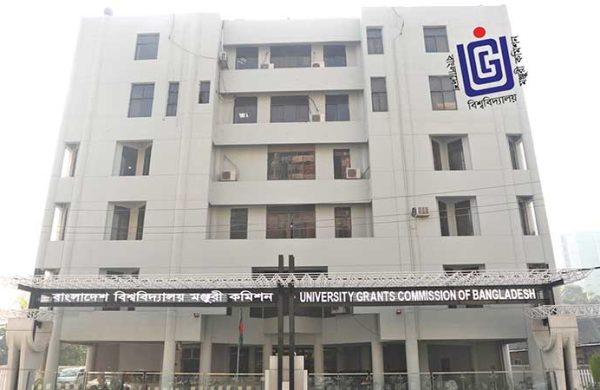
The interim government has moved to dissolve the University Grants Commission (UGC) of Bangladesh and establish a stronger, statutory body titled the Bangladesh Higher Education Commission. On December 10, the Secondary and Higher Education Division of the Ministry of Education released a draft of the Bangladesh Higher Education Commission Ordinance, 2025, seeking opinions from stakeholders. Once the ordinance comes into force, the University Grants Commission of Bangladesh Order, 1973, will be repealed.
According to the draft ordinance, the Higher Education Commission will be formed with a chairman, eight commissioners, and 10 part-time members. The chairman will enjoy the status of a cabinet minister, while the eight commissioners will hold ranks equivalent to judges of the Appellate Division of the Supreme Court. The chairman and commissioners will be appointed by the President. To ensure transparent appointments, the ordinance provides for a three-member search committee to be headed by a former chief justice or a retired Appellate Division judge. The committee will propose names of qualified candidates for appointment.
The draft ordinance states that transforming the UGC into a Higher Education Commission has become essential to develop universities into institutions aligned with international standards and to ensure transparency, accountability, and good governance in higher education institutions.
The proposed ordinance grants the commission wide-ranging powers. In addition to formulating policies to improve the quality of higher education, the commission will be responsible for preparing budgets for public universities and ensuring financial transparency. For the first time, the ordinance introduces a legal obligation to determine and publish university rankings. Rankings of all universities will be prepared and published every three years. To ensure transparency and accountability in the financial management of universities, the commission will oversee budget implementation and examine, audit, and evaluate all development plans of universities.
The commission will also determine the necessity, importance, and priority of establishing new universities. It will set minimum requirements for establishing new universities or for introducing new departments, faculties, institutes, programmes, or courses at existing universities.
The commission will have the authority to inspect the activities of any university and conduct investigations into allegations of irregularities. If necessary, it will be empowered to suspend funding allocations to public universities, revoke approval of academic programmes, and even halt student admissions to specific courses. The commission will also be responsible for formulating a unified recruitment and promotion policy for teachers and staff, as well as determining the equivalence of foreign degrees.
In addition, the commission will be able to form any number of committees, subcommittees, inspection teams, cells, and units, along with setting their terms of reference. The draft stipulates that an annual report on the preceding fiscal year must be prepared and submitted to the President by September 30 each year, after which the President will arrange for it to be placed before the Jatiya Sangsad.
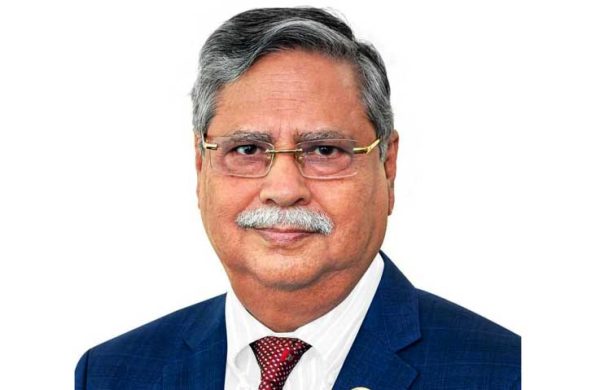
Bangladesh University of Engineering and Technology (BUET) Pro-Vice-Chancellor Professor Dr. Abdul Hasib Chowdhury believes the very name “University Grants Commission” is unacceptable. Speaking to journalists, he said, “Is the UGC dispensing charity to universities by giving grants? This is the responsibility of the state. The name itself is problematic. In the past, higher education institutions in the country were established with political motives. Universities were set up in almost every district. There are buildings, but no teachers. Such practices have damaged education. Not everyone needs higher education. Departments have been opened that contribute neither intellectually nor productively. If the new Higher Education Commission can address these issues, it will be welcome.”
United International University (UIU) Vice-Chancellor Professor Dr. Md Abul Kashem Mia said that changing the name alone is not enough; a shift in mindset is also essential. He told journalists, “Pakistan changed the name of its UGC to a Higher Education Commission long ago, and Bangladesh should have done the same much earlier. The existing UGC was created to oversee just six universities. Now it is expected to oversee more than a hundred universities, public and private combined, which is beyond its capacity. Just look at the full name — University Grants Commission. It provides grants to public universities, which does not align with the nature of private universities.”
UGC member Professor Dr. Mohammad Anwar Hossain believes that establishing a Higher Education Commission will significantly enhance institutional capacity. He told journalists, “At present, we at the UGC are not really able to make decisions independently. We have to rely on the government for decision-making in many areas. With the formation of a Higher Education Commission, the distance between education policymaking and the state will be reduced. It will create an opportunity to work more closely with the government to ensure education serves the needs of society. We firmly believe this will be a positive development.”






Editor & Publisher: Golam Mostafa Jibon
News & Commercial Office:
Railgate, Sirajganj & 2 R. K Mission Road, Dhaka.
Hotline: 01715-319996, 01558-314179
E-mail : [email protected]