

2025: A year of disappointment for the private sector
- Update Time : Tuesday, December 30, 2025
TDS Desk:
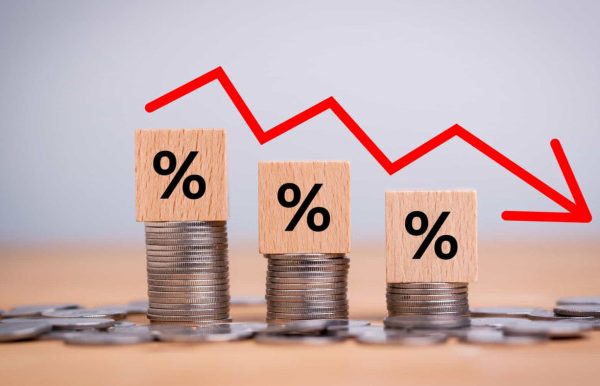
On the one hand, a stagnant business environment; on the other, allegations of corruption against small and large entrepreneurs alike. Many businesspeople spent much of their time entangled in court cases. At the same time, high interest rates and elevated inflation kept investors away from new ventures. Taken together, 2025 turned out to be a year of frustration for Bangladesh’s private sector.
Data from Bangladesh Bank show that private-sector credit growth fell to just 6.23 percent in October 2025 — an economic indicator that directly reflects a crisis of confidence in the sector. The strain is evident in decisions to defer investment and business expansion. Between July and November 2025, settlements of letters of credit for capital machinery imports declined by 16.77 percent, raising questions about the future pace of industrialisation. At the same time, growth in new foreign investment (equity capital) dropped by 16.90 percent in the fiscal year that ended in June.
Sector representatives and analysts say weak credit growth was one of the major challenges this year. Owing to central bank policies and market volatility, lending to the private sector declined. Investment activity also slowed sharply. There was little new investment, particularly a fall in capital machinery imports, which is a cause for concern for long-term economic growth. High inflation pushed up the prices of essential goods, eroding consumers’ purchasing power and raising operating costs for businesses. Political uncertainty and various policy decisions taken by the interim government also had a negative impact on the private sector.
Overall, private-sector representatives who are disappointed with 2025 say there was a growing distance between the interim government and businesses. The gap between policymaking and on-the-ground business realities widened further. Although there has been some improvement recently, law and order have remained poor for much of the year. Many banks were in a fragile condition. While the situation has improved now, foreign exchange reserves were under strain at the beginning of the year. Investors — both domestic and foreign — consider such factors before committing capital. They are waiting for a stable, elected political government. Energy security is another major concern: the lack of an assured energy supply discouraged investors from moving forward. Although inflation has eased somewhat, it remains elevated.
Metropolitan Chamber of Commerce & Industry (MCCI) President Kamran Tanvirur Rahman told journalists yesterday, “This is an interim government. Once it holds elections and a democratically elected government takes office, we hope they will certainly discuss with us. It would have been very helpful if the current government had advanced the path to resolving our problems through dialogue.”
He added, “Creating a supportive economic environment requires confidence. Confidence doesn’t automatically return with a new government. A government must come in and then listen to the private sector. Ultimately, we have to increase employment, and the government alone cannot do that. Job creation must come through the private sector.”
Shahjalal Islami Bank Managing Director Mosleh Uddin Ahmed believes 2025 was a particularly poor year for private-sector investment. Speaking to Journalists, he said, “I haven’t heard of any entrepreneur opening a new factory in 2025. Private-sector credit growth has fallen to around 6 percent, and even that figure reflects the impact of overdue interest and higher interest rates. Imports of industrial raw materials and capital machinery have dropped sharply. Export growth has been negative for five consecutive months. This situation cannot be described as favourable for the private sector in any way.”
He added, “Interest rates were raised in the name of controlling inflation. Doing business in this country at such high interest rates is extremely difficult. Even CMSME entrepreneurs are now paying 14–15 percent interest on loans, in addition to service charges and various other fees. If the current situation continues into the new year, the overall economic outlook will deteriorate further.”
Industrialists argue that policy ambiguity, weaknesses in the energy and banking sectors, and a lack of consistency in decision-making are eroding investor confidence. In the absence of structural reforms, it has not been possible to restore meaningful momentum in investment.
Bangladesh Cement Manufacturers Association (BCMA) President Mohammed Amirul Haque told journalists, “The government should be a friend of the private sector, not its master. He said, “The current attitude of the government runs counter to a cooperative relationship.” According to him, the private sector has always sought solutions through dialogue, but the scope and environment for such discussions have narrowed.
Amirul Haque added, “A certain distance has developed between the current government and businesspeople. Bureaucratic complexities have also emerged as one of the biggest obstacles to development. Businesses are struggling to operate at interest rates of 15 percent, yet there are no effective initiatives to reduce the cost of doing business. While the NBR and Bangladesh Bank are making some efforts, overall the private sector feels neglected.”
Bangladesh’s economy is heavily export-dependent, with the readymade garment (RMG) sector being its largest labour-intensive industry. Industry insiders say the effects of political and economic dislocation have become clearly visible in this export sector as well. During the first 11 months of the current fiscal year, garment export growth was negative in five months, reflecting a combined impact of production constraints and stalled investment. Sector representatives have publicly stated that their proposals to hold discussions with policymakers on this situation received no response. According to them, no meaningful dialogue with the government has been possible on any major issue.
Multinational companies have long been operating in the Bangladeshi market, and many of them traditionally outperform local firms in both business scale and financial strength. However, recent economic stagnation, an investment drought, and declining consumer purchasing power have begun to negatively affect the operations and profitability of multinational companies as well.
At present, 13 multinational companies are listed on the country’s capital market. According to their published quarterly financial statements, profits declined for six of them during the current year, while two companies incurred losses. Bata Shoe Company (Bangladesh) Limited reported a slight increase in revenue during the January–September 2025 period, but its net profit fell by nearly 48 percent. British American Tobacco Bangladesh Company Limited (BATBC) saw its net revenue decline by 17 percent and net profit by almost 46 percent during the same period.
Berger Paints Bangladesh recorded a marginal increase in revenue between April and September this year, but its net profit declined by 4 percent. Grameenphone’s revenue fell by 1 percent and net profit by nearly 21 percent during the January–September period. Heidelberg Materials saw sales decline by about 2 percent and net profit by around 44 percent. Although RAK Ceramics and Singer Bangladesh reported revenue growth during the January–September period, both companies incurred losses. Linde Bangladesh also experienced declines in both revenue and net profit during this time.
Among the listed multinational companies, Unilever Consumer Care, LafargeHolcim Bangladesh, and Reckitt Benckiser Bangladesh recorded increases in both revenue and net profit during the January–September period. Robi Axiata saw a slight decline in revenue but an increase in net profit. Meanwhile, during April–September in 2025, Marico Bangladesh reported growth in both revenue and net profit.
Masud Khan, chairman of Unilever Consumer Care Limited and an independent director on the boards of Singer Bangladesh, Marico Bangladesh, and BATBC, told journalists, “Overall business performance has weakened for both multinational and local companies. High interest rates and minimum tax requirements have significantly increased business costs, which have affected profitability across the board. Economic growth remained sluggish during this period. Although inflation has eased somewhat, it is still above 8 percent, while consumer incomes have not increased proportionately. As a result, many consumers have been forced to cut back even on food consumption. The interim government often creates uncertainty about what lies ahead. Investment has almost fallen to zero. The velocity of money is declining. Altogether, a sense of frustration prevailed throughout the year.”
Analysts believe the growing distance between the government and the private sector has evolved from a mere confidence gap into an institutional problem. In such a situation, expecting this divide to be bridged quickly — even after a new government takes office — may not be realistic. What is required instead are policy clarity, effective reforms in the energy and financial sectors, and consistency in decision-making. Otherwise, prolonged stagnation in the private sector could exert deeper pressure on the economy and employment in the long run.
Dr. Zahid Hussain, former lead economist of the World Bank’s Dhaka office, told journalists, “Assessing what the interim government could or could not achieve requires consideration of several factors. When the government assumed office, many state institutions were dysfunctional — something rarely seen before. The law and order situation has yet to improve to the desired level, which is crucial for business activity. Under such circumstances, it wasn’t possible for the government to accomplish much. Rather than trying to address too many issues at once, the government might have been more effective by selecting a few critical, ground-level priorities and ensuring their full implementation.”






Editor & Publisher: Golam Mostafa Jibon
News & Commercial Office:
2 R. K Mission Road, Dhaka & Railgate, Sirajganj.
Hotline: 01715-319996, 01558-314179
E-mail : editor.thedailysky@gmail.com
news.thedailysky@gmail.com